Introduction + Day 1:
While visiting new countries is interesting to me, I have always been fascinated by remote islands. There is something about a small outcrop of human civilization surrounded by nothing but unforgiving seas that I think so beautifully shows what humans are capable of.
I have been off-put about doing long sea voyages because I was worried about getting sea sick. The only time I have really been out on the open ocean was the 24 hour ferry from Tokyo to the Ogasawara Islands in Japan., On that trip I was pretty uncomfortable, especially on the journey down. However, I would like to build my “sea legs,” so when MTP announced that they would be offering a trip from Svalbard in the arctic to Tromso in northern Norway I jumped at the chance.
Even more exciting is the fact that this trip would stop on Bjornoya, or Bear Island: an uninhabited island just about halfway between Svalbard and Tromso.
Longyearbyen, the main city of Svalbard is easily accessible with multiple flights a day from Oslo (the capital city of Norway) in the summer months. I flew from Germany to Oslo and then onwards to Longyearbyen.
Due to the Svalbard Treaty, the archipelago is a visa-free zone for all nationalities. That also means it is not part of the European Economic Area like Norway is, so we had to go through passport control at Oslo Airport. However, on arrival in Longyearbyen there is no passport control at all.
The flight up to Longyearbyen was quite comfortable with excellent Starlink internet onboard. On arrival, I took the public bus to my accommodation. I was able to pay the bus fare with credit card on board.


I stayed at the quirky Mary Ann’s Polarigg which is built in an old mining style. I took a single room with shared bathrooms, but there are also rooms with private bathrooms.
In the evening I met with some friends from my boat trip (and those who had just arrived to Longyearbyen with the same boat) for a nice dinner at the hotel. I had the trio of smoked meats (seal, whale, and reindeer) as well as an excellent reindeer steak. To celebrate my 100th UN country visited and making it to the arctic, I had an excellent Irish coffee to round off the dinner.


Day 2:
One of the interesting parts of Svalbard is that the Soviet Union had multiple coal mining operations set up in the archipelago. One of them, Pyramiden, was closed in 1998 during the difficult economic times in Russia. However, another one, Barentsburg, is still operating today.
This morning we took a 3 hour boat ride to Pyramiden to visit the ghost city. The original state owned company that operated Pyramiden in the mining days, Arctic Ugol (Ugol means coal in Russian), now runs the tourism initiatives in Pyramiden.
On the way to Pyramiden the boat stopped in front of a large glacier which allowed us to see the ice and also see the path that people take via snowmobile to reach Pyramiden from Longyearbyen in the winter. It looked like an incredible ride, and definitely is something I will consider for another trip in the future.


When we arrived in Pyramiden we began by going to the hotel and having a nice lunch of vinagret and chicken.
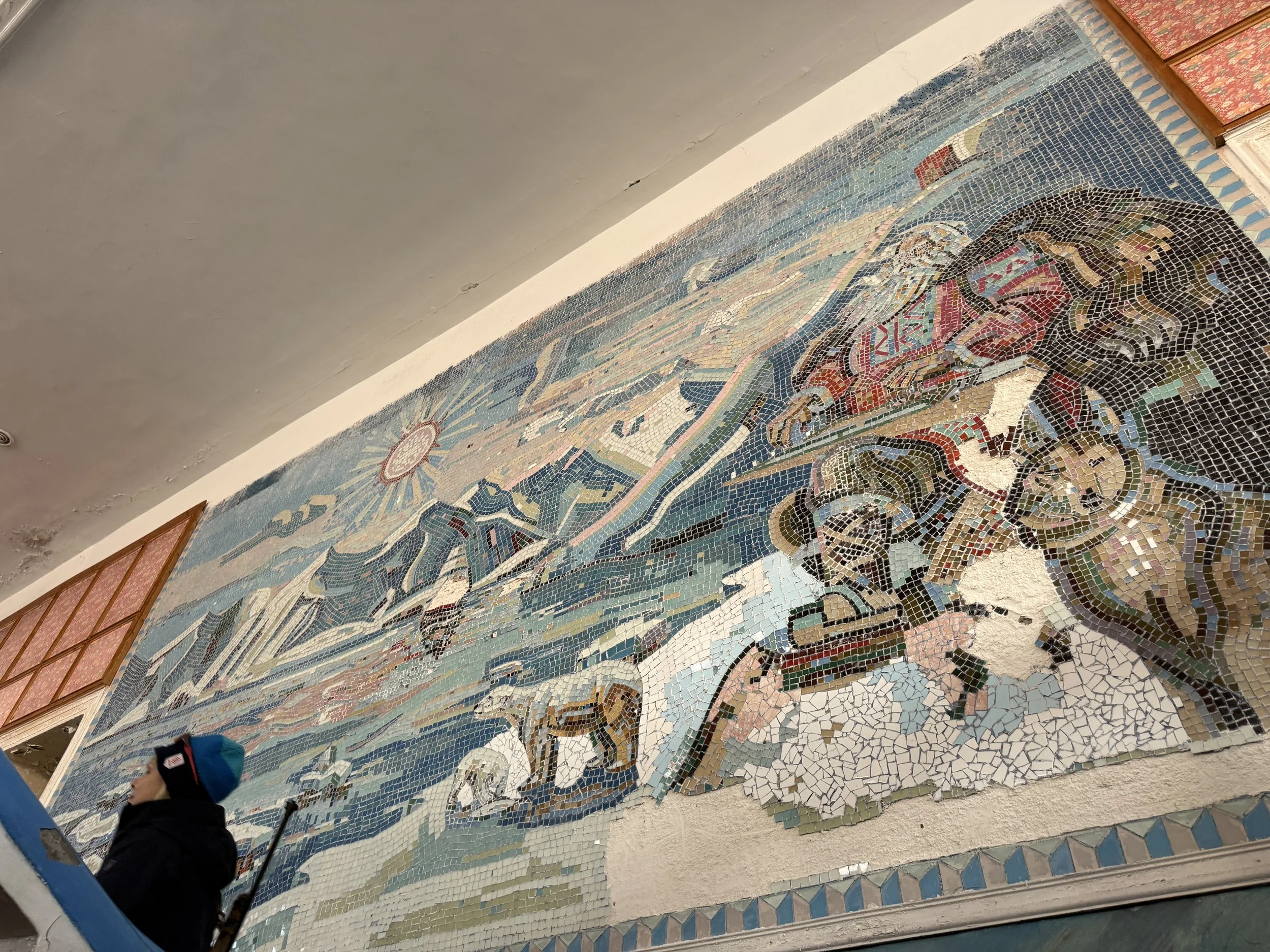
Then, we began our walking tour through the settlement. Our first stop was the canteen. It is built in a striking Stalinist style and is beautifully appointed inside. For example, the handrails leading upstairs are heated. There is also a grand mural above the staircase. The dining hall was grand. and the kitchens were impeccably equipped (the canteen ran 24 hours a day to accommodate the mining shifts which were around the clock).



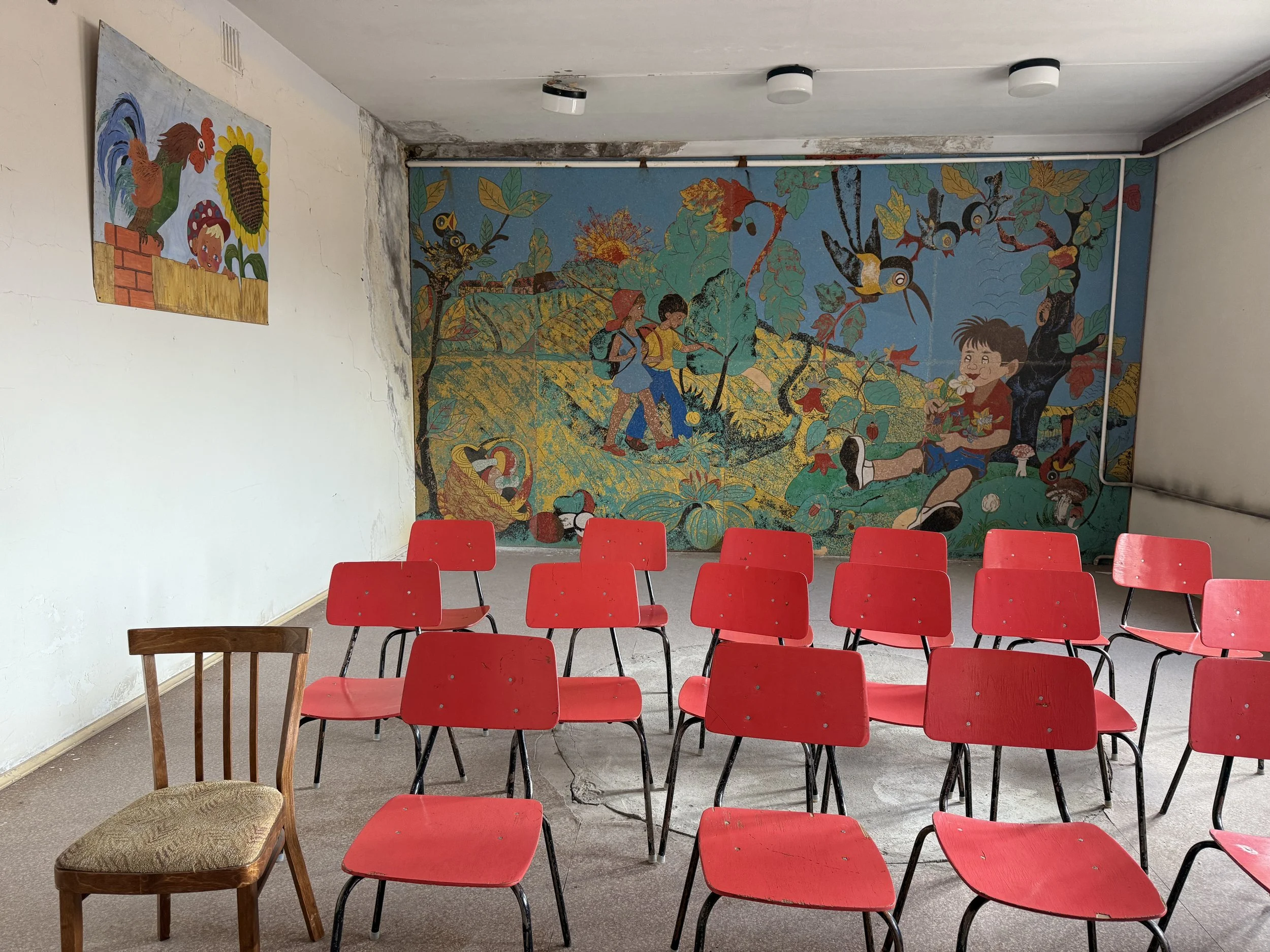
We then headed into the school building to see the old classrooms. Originally, Svalbard did not host any families, but over time the communities had single men + women as well as families with children based there. These days, no one can be born on Svalbard due to Norwegian regulations, but in Pyramiden it was possible to give birth.
One interesting thing about the school buildings is that the classrooms of the younger students were put upstairs since that was the warmer part of the building.

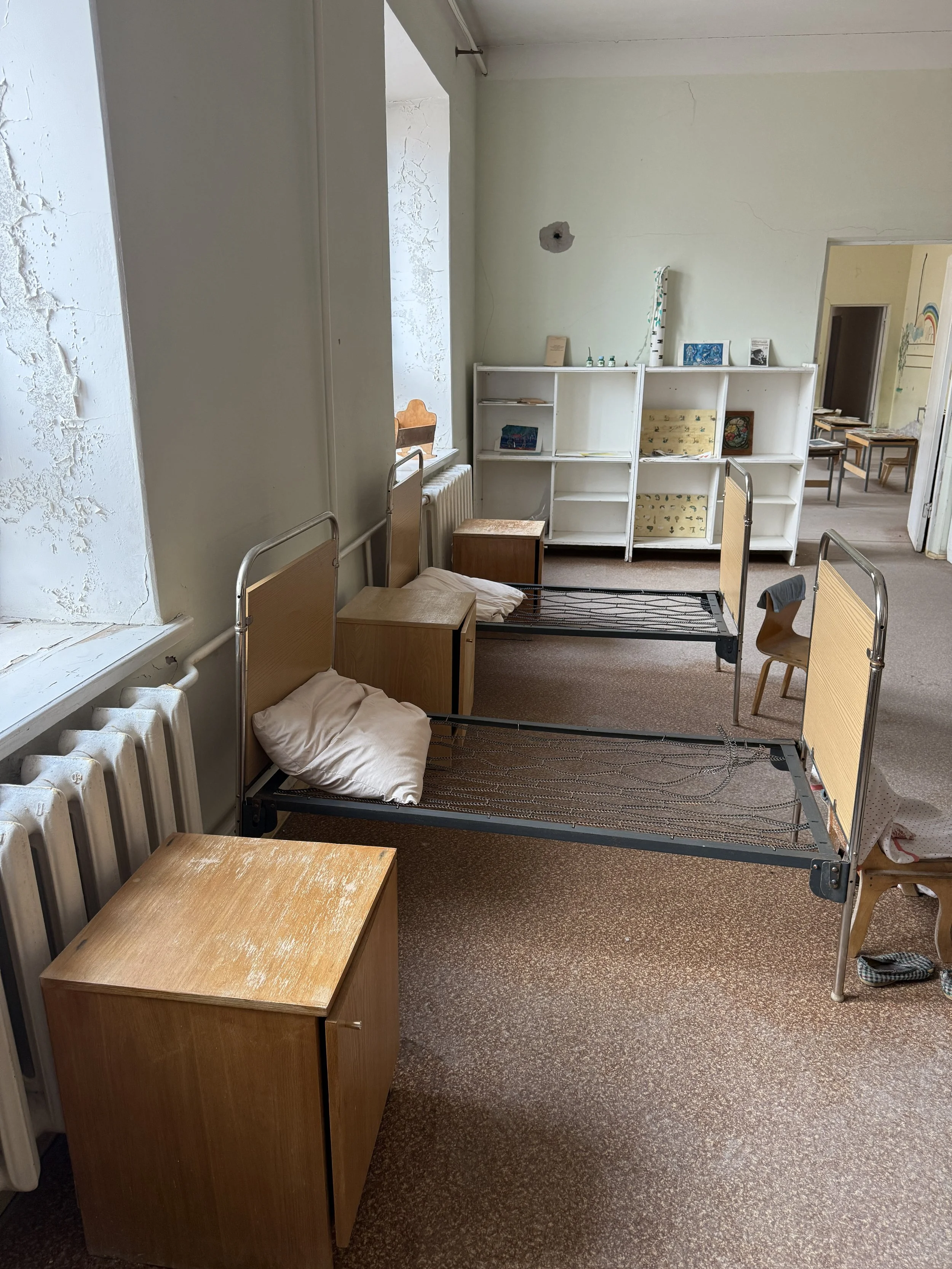

We then entered the apartment building where originally single women were housed. However, over time men and women were allowed to live together here. Unfortunately,, many of the apartments were in bad shape since vandals broke into the buildings after Pyramiden was abandoned.
We were lucky enough to go onto the rooftop of this building also to get a nice overview of the city and surrounding nature.


We then walked into one of the administrative buildings where people would collect their monthly payments. People were paid not in Soviet Rubles entirely but also coupons which allowed them to spend in foreign currency shops in the USSR and buy extras for themselves in Pyramiden.
The top floor of this building is also where the KGB office. It was explained that since in Svalbard the Soviet citizens had substantial contact with Norwegians the KGB had to endure no sensitive data was being spread nor any intimate relationships happening with Norwegians.


We then visited the indoor pool which was traditionally filled with heated salt water.
The final building was the Cultural House outside of which lies the northernmost bust of Lenin. In the cultural house there is a large movie / performance hall, a gym, and a library.


Soon enough, it was time to head back to the docks for the ride back to Longyearbyen. We said goodbye to our impeccable guides Anastasia and Daria, both of whom were from St. Petersburg.
In town we went to a Thai restaurant for an incredible meal to round off a perfect day.
Day 3:
We did not need to meet at the boat until 15:30, so I enjoyed a relaxed morning of packing my bag, enjoying a breakfast at the hotel, and exploring the Svalbard Museum.
It is a beautifully put together museum and very cozy. Most visitors choose to remove their shoes (they can also put on booties) as they walk through the exhibits.
The museum has displays honoring the early settlers of Svalbard who came from many different countries, including the USA. There are also great examples of life-sized wildlife such as the iconic polar bear.


After my time there I met with a few friends at a nearby cafe before heading to the sailboat that would be my home for the next week on the way to Tromso (in the Norwegian mainland) via the the uninhabited Bear Island (Bjornoya).


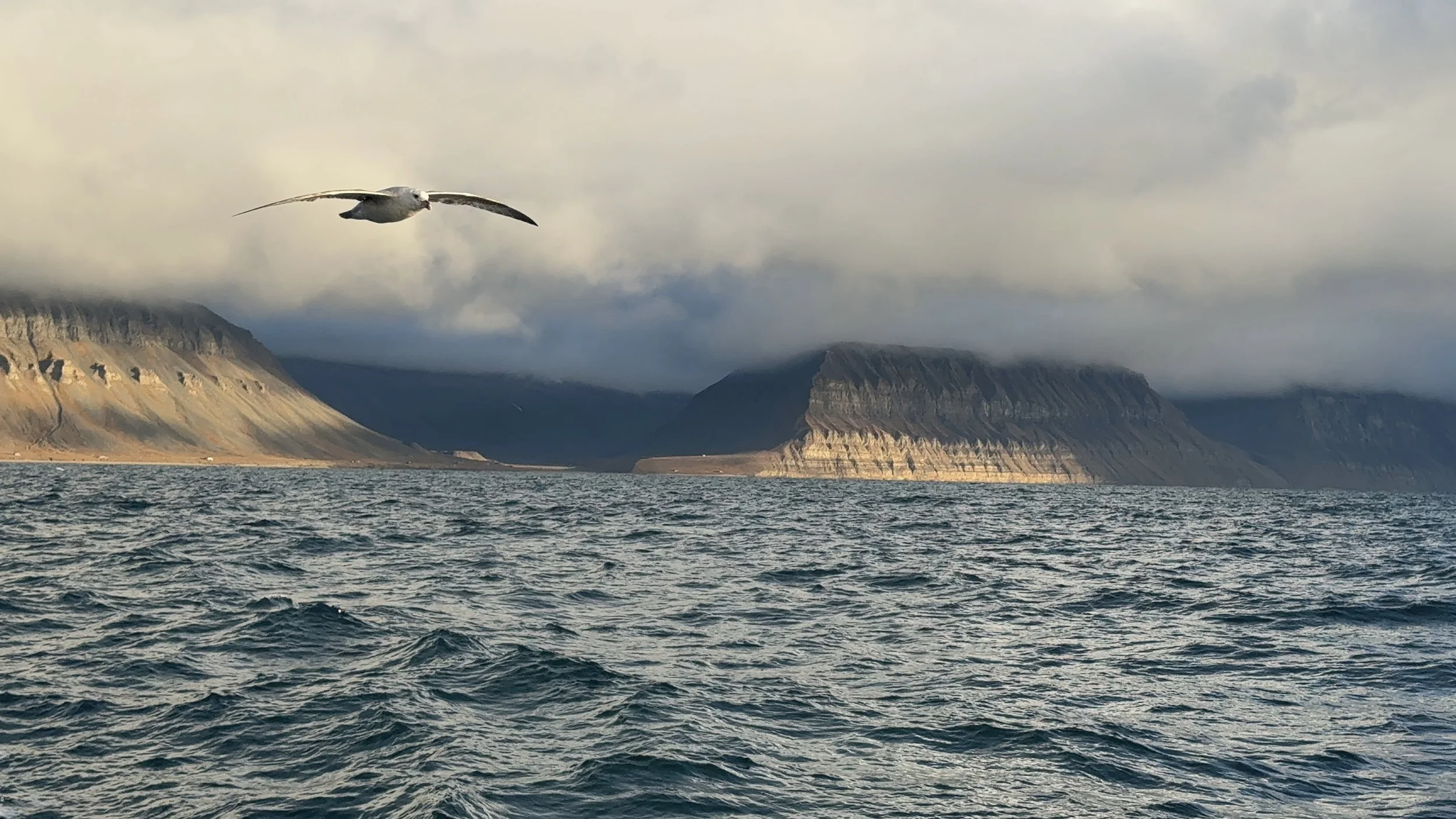
The journey to Bear Island is continued here.