Robinson Crusoe Island
When people think of Chilean islands, Easter Island (Rapa Nui) comes to mind straight away. However, the much lesser known Robinson Crusoe Island still offers much to intrepid tourists.
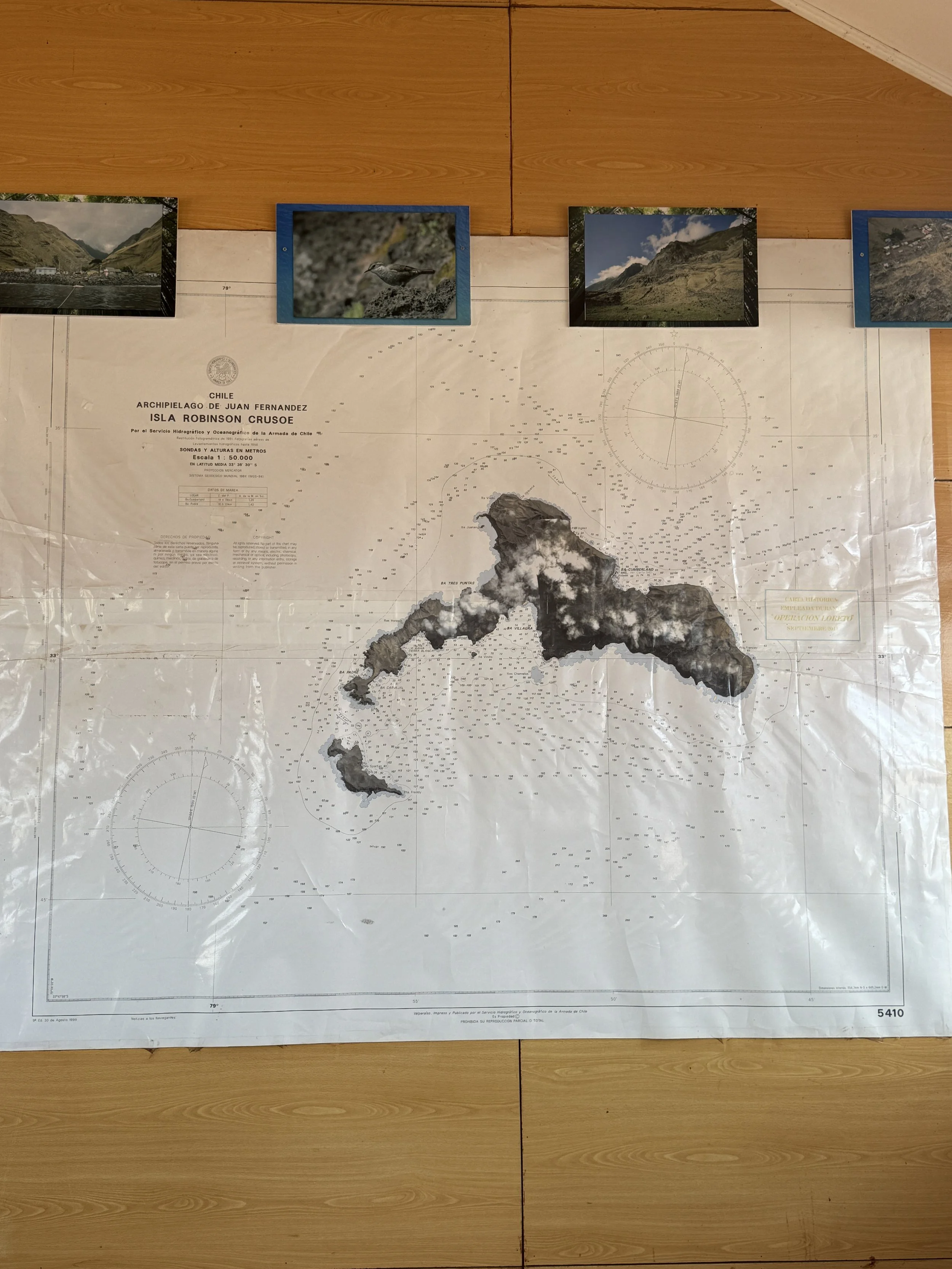
The archipelago where Robinson Crusoe Island is is called Juan Fernandez. The Chilean government named the island Robinson Crusoe Island in the 1980s to draw more international attention and tourism. The famous Robinson Crusoe book is based on the story of the Scottish sailor Alexander Selkirk who was stranded on the island after saying that the ship he was traveling with was not seaworthy. Originally, more sailers agreed to join him in order to get the captain to approve making repairs. But in the end, the others gave in, and he was left alone.
At the time of Selkirk’s stay on the island it was under its original Spanish name “más a la Tierra” (more towards the land), since it is the island in the archipelago closer to the South American mainland.
The archipelago has 3 islands in total: Robinson Crusoe, Santa Clara (a small, uninhabited island right off the coast of Robinson Crusoe), and Alexander Selkirk Island which can only be reached by a once monthly overnight ferry.
Transport:
The island is located around 470 miles flying out of Santiago due west over the Pacific on a 2 and a half hour flight. Alternatively, there is a ferry that takes around 3 days.
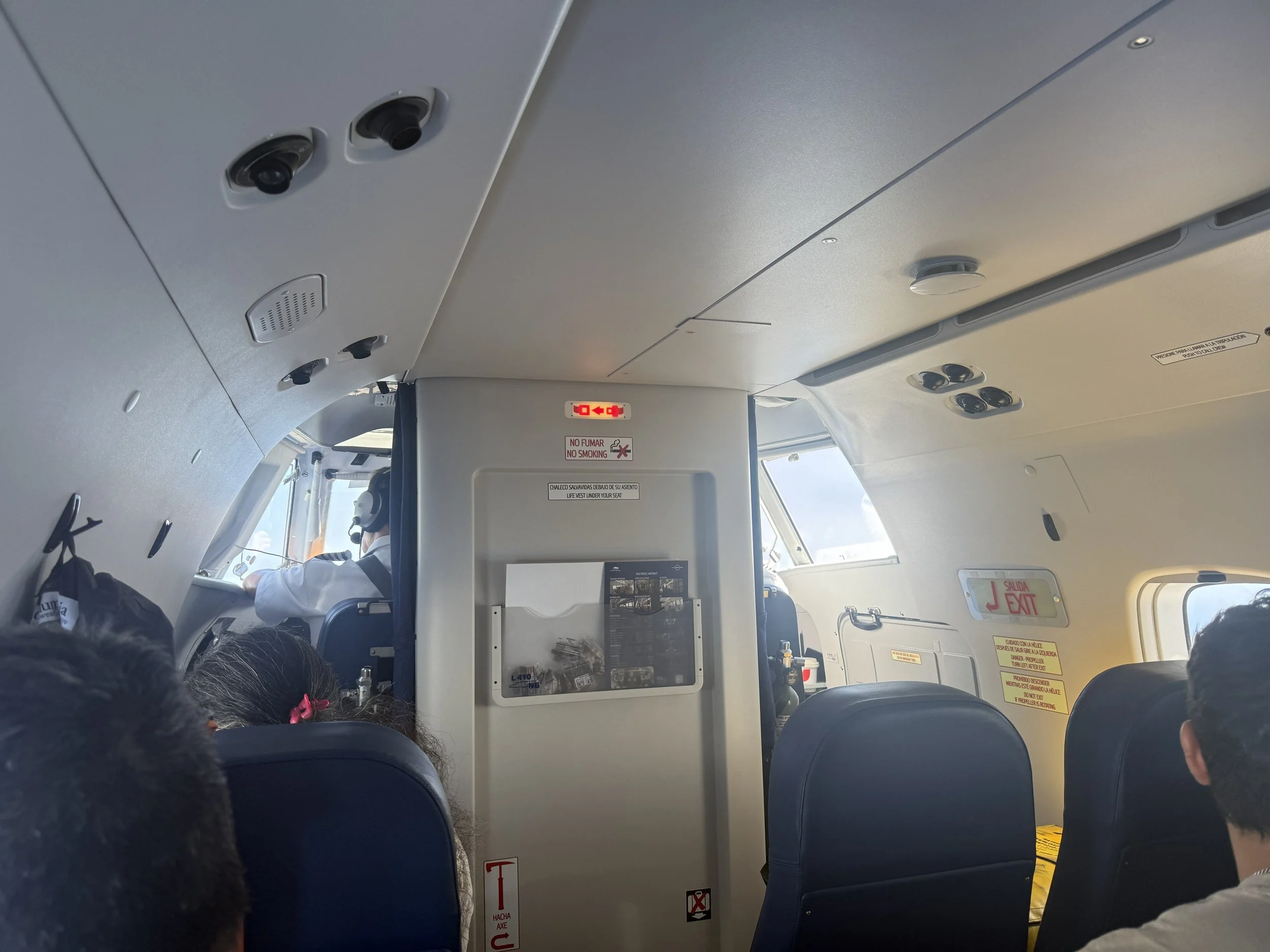
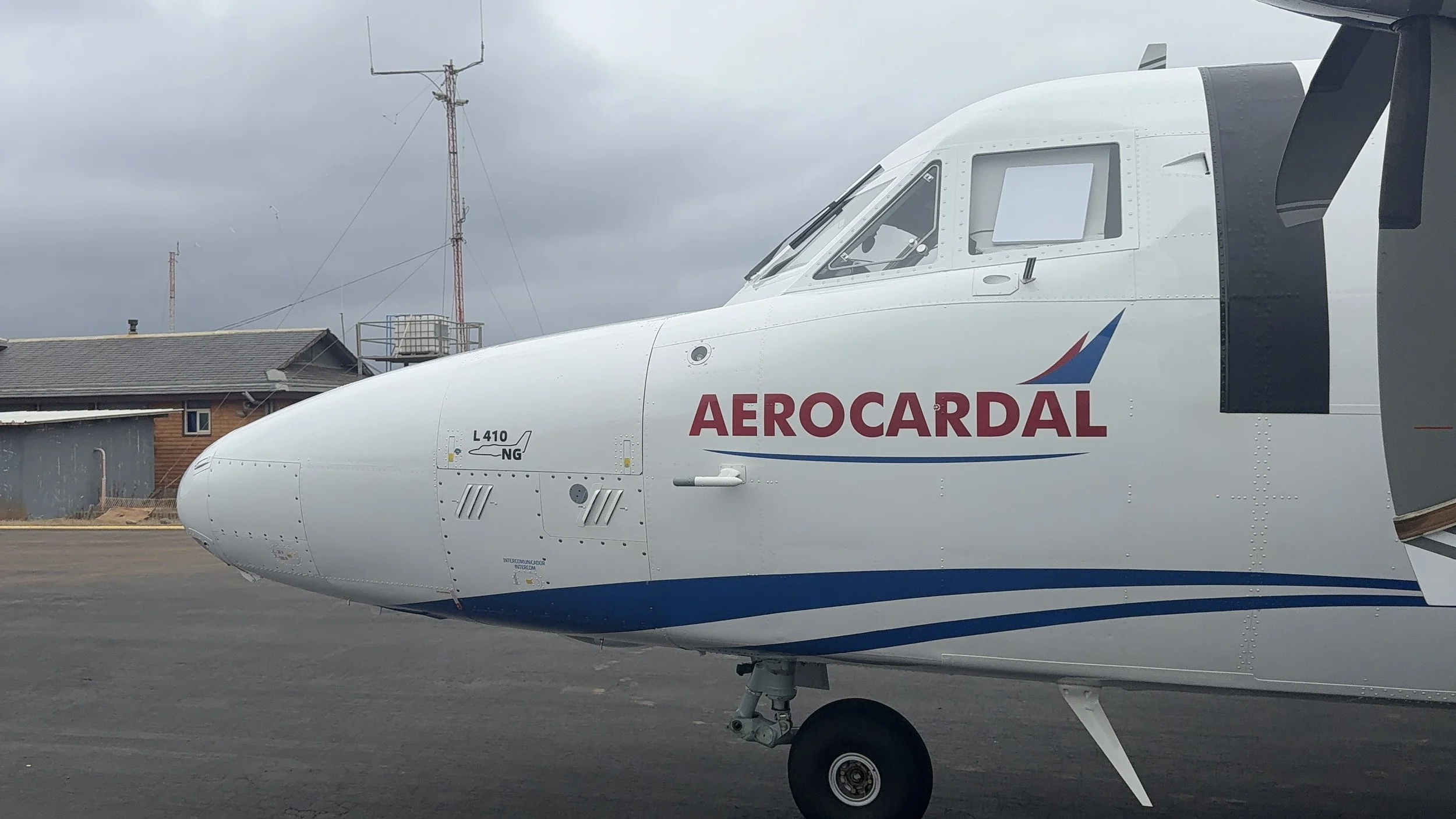
We opted to go by plane. There are multiple flights per week in the high season of the southern summer. We booked with the airline AeroCardal via email for a cost of around $1,200 USD round trip per person on board a L410 plane, the same type of plane I was on to get to Abyei a few months before.
We spent the night at the Holiday Inn at Santiago airport, but since this flight leaves from the maintenance/ private part of the airport, we had to take a taxi out there.
The check in was easy, but we had to fit into a strict 10kg of baggage per passenger and they asked about our body weights. There was a quick security check before boarding also.
Soon enough, we took off and each passenger had a small bag with water and snacks at the seat. Seats could be freely selected. However, since there is no bathroom on this plane I was not drinking much.

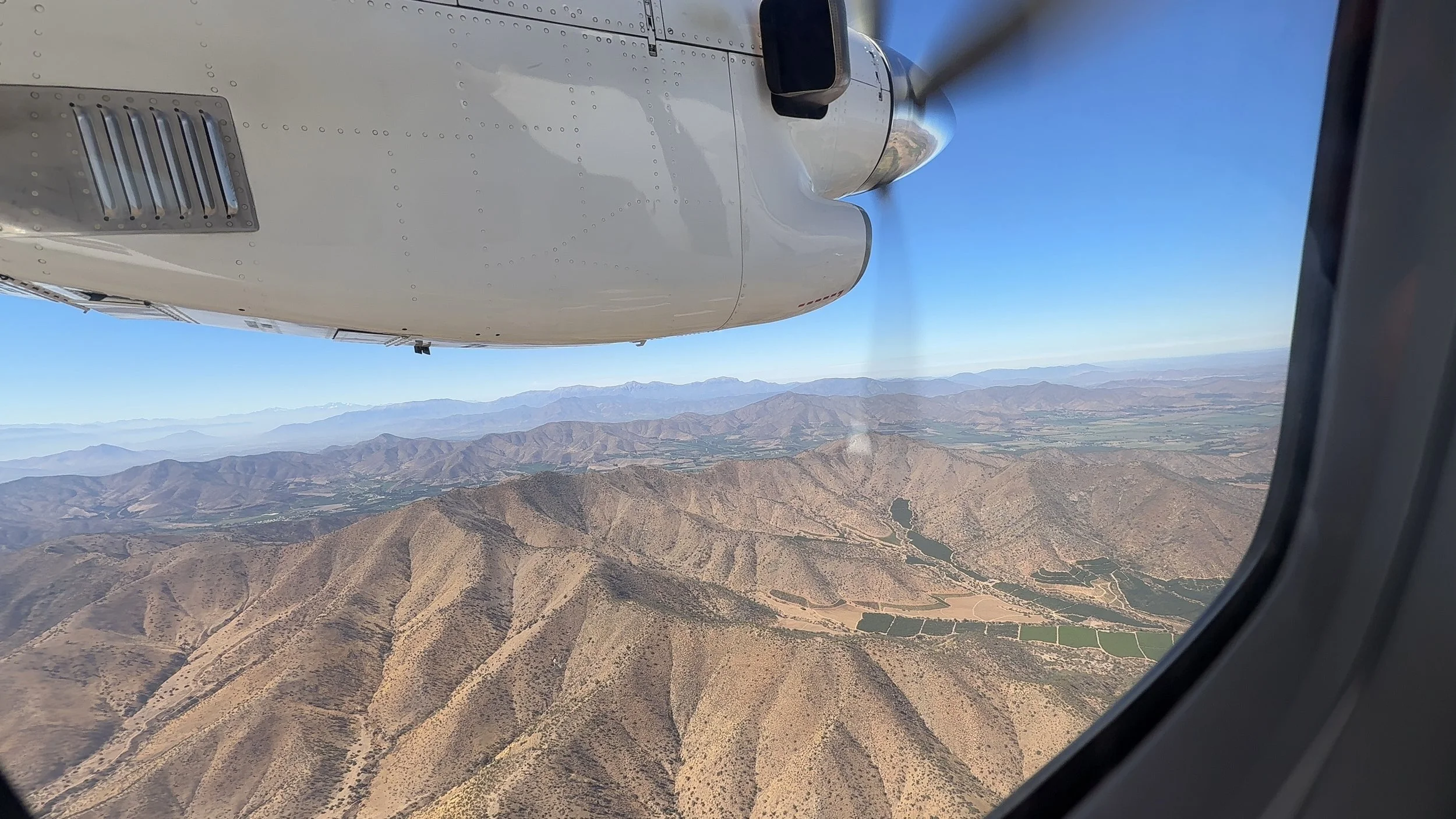
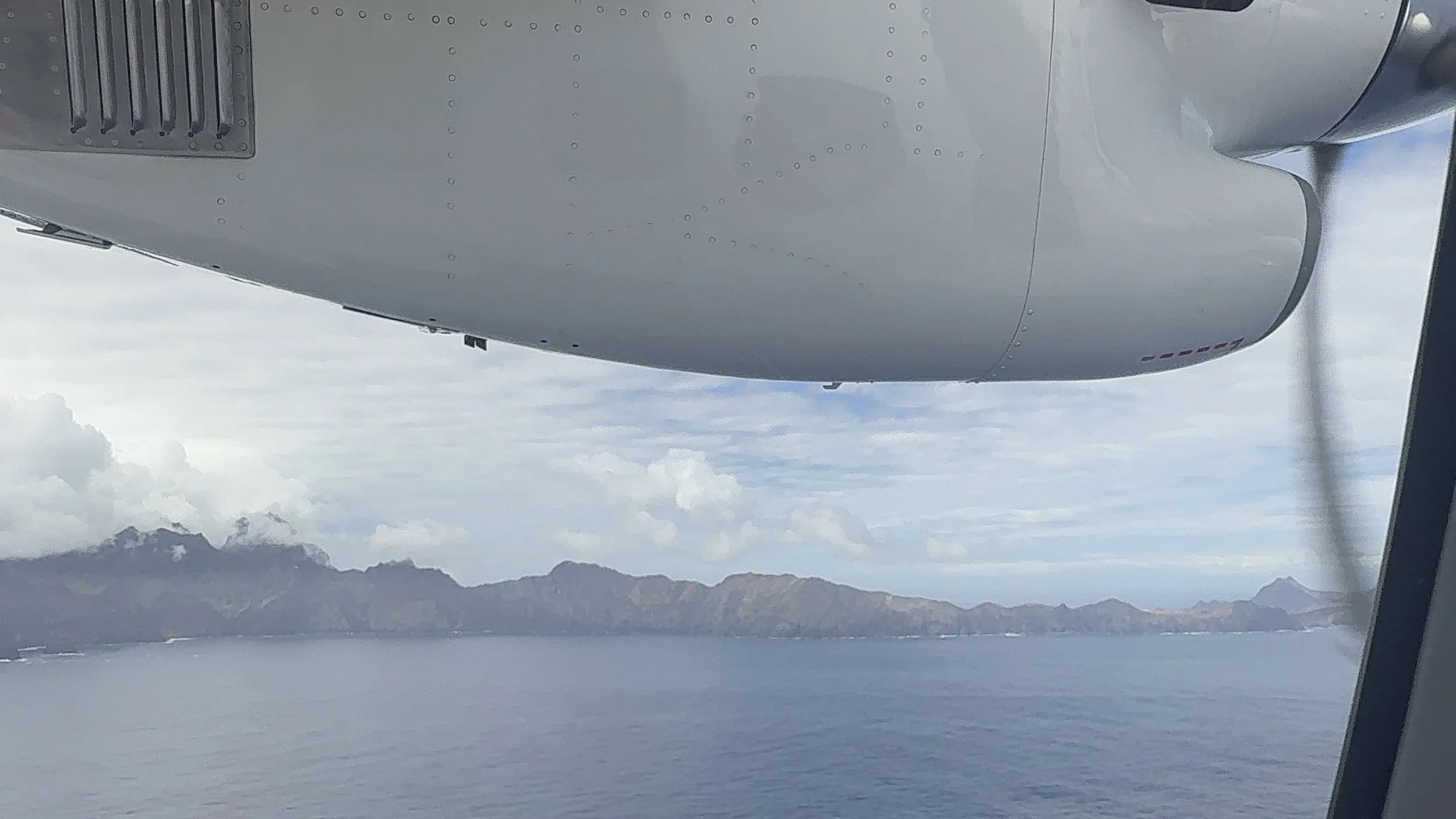
One surprise was the lightning fast WiFi onboard provided by Starlink.
Arrival to Robinson Crusoe:
There is no road for vehicles from the air strip on Robinson Crusoe to the town of San Juan Bautista. On arrival we had a fun hello to two of our Travelers’ Century Club (TCC) friends (JoAnn and Sherri) who were just finishing up their stay on the island. We tried to book to do the trip with them, but their flights were unfortunately sold out when we were making the arrangements.
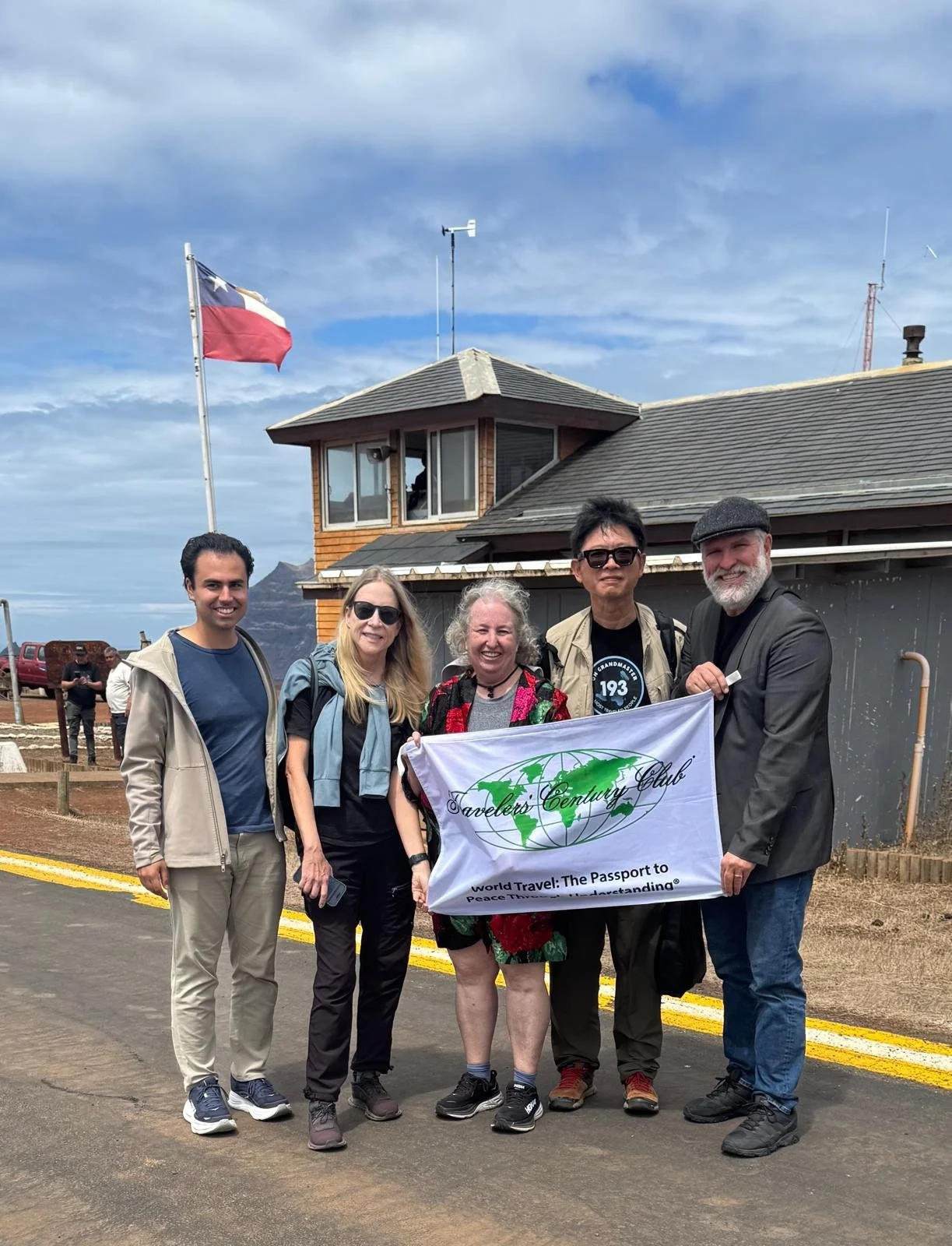
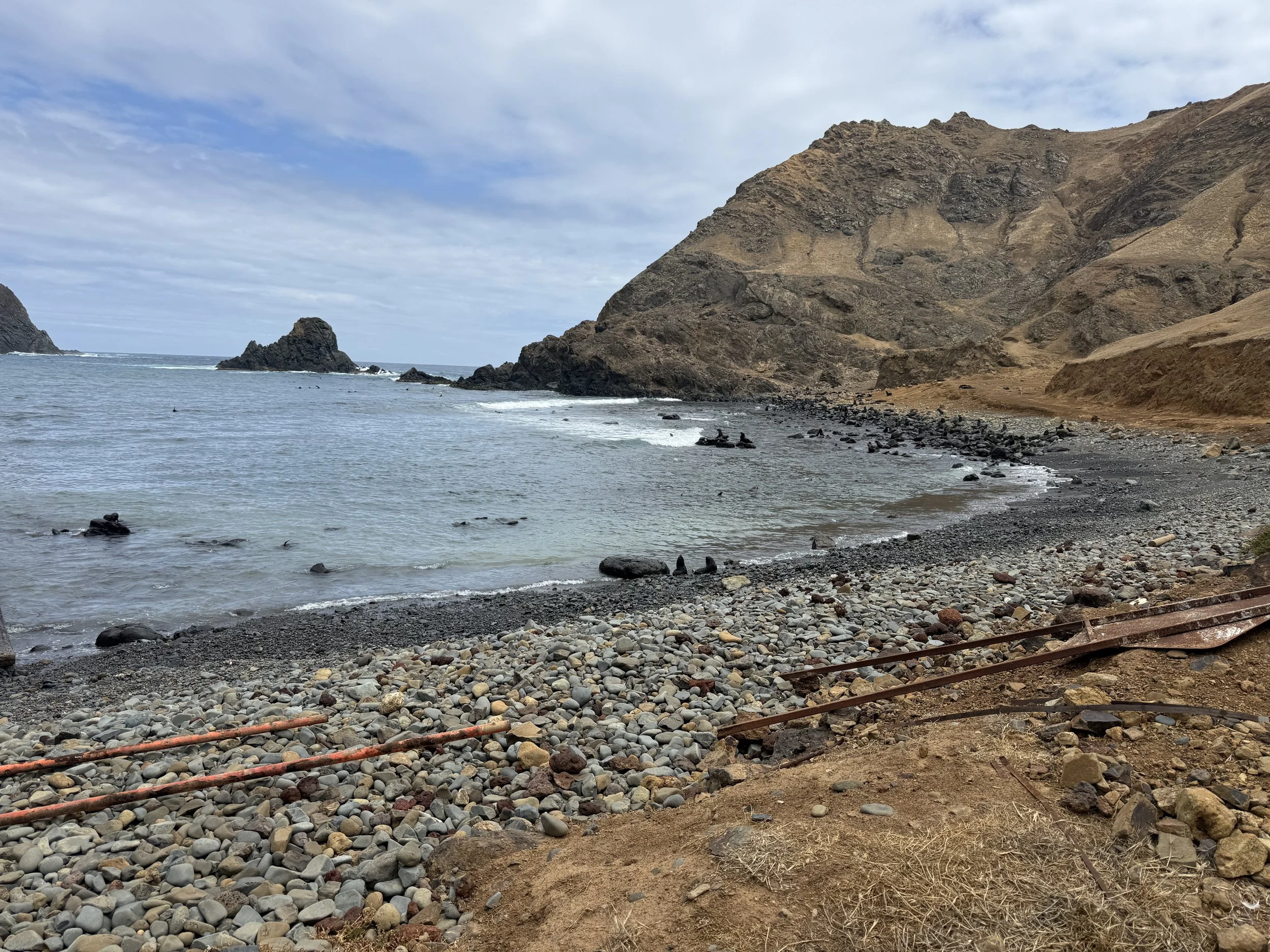
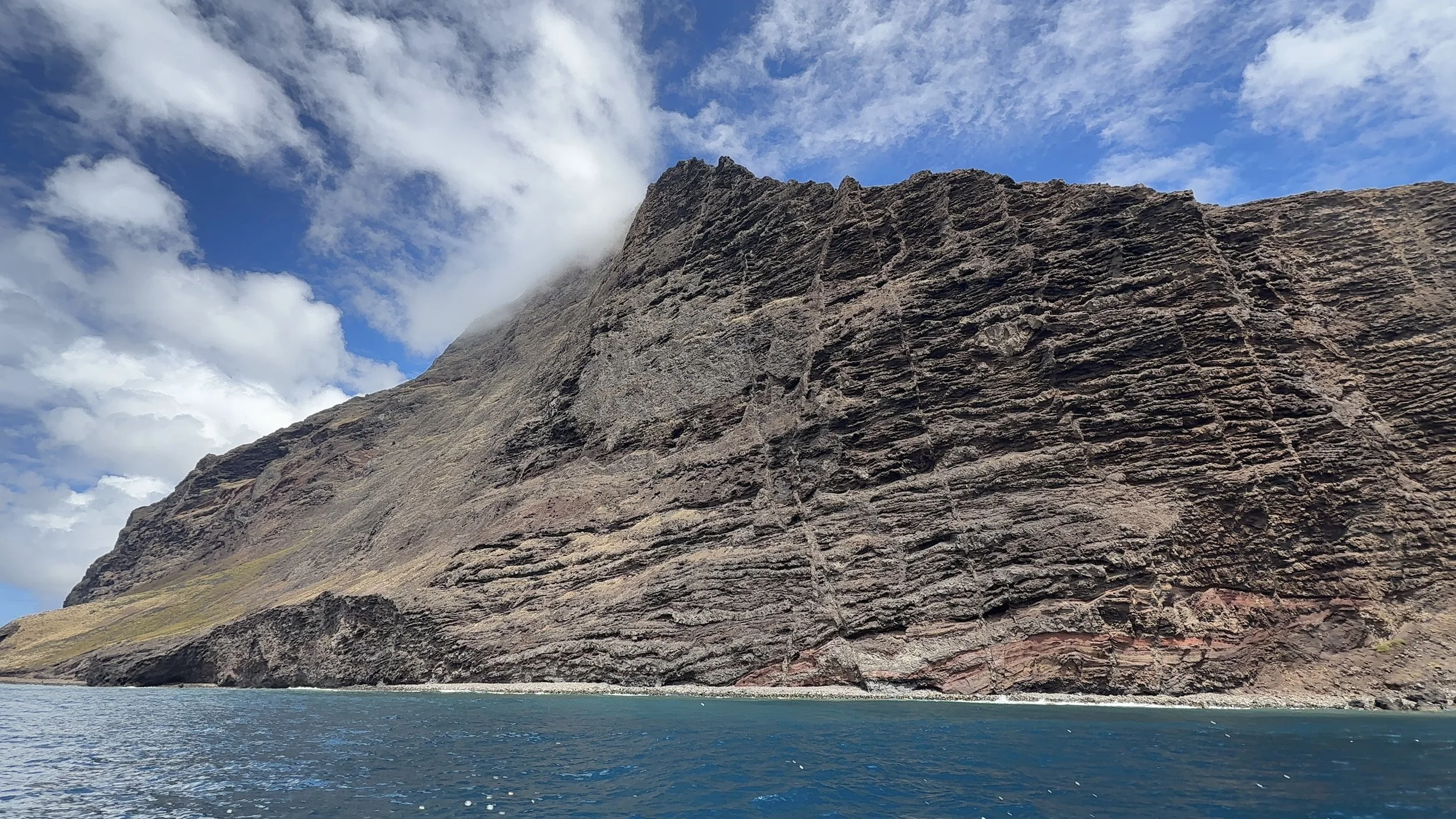
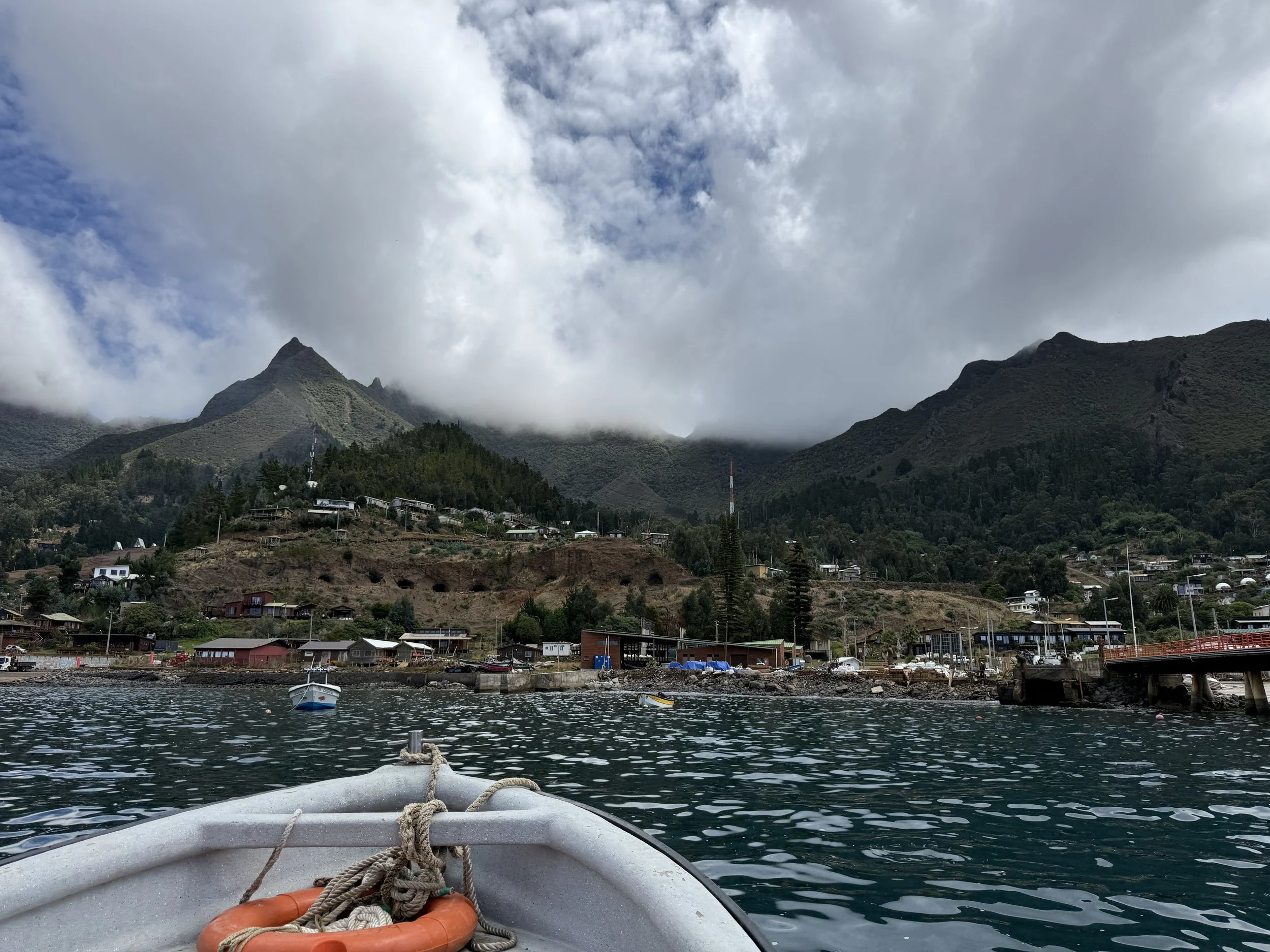
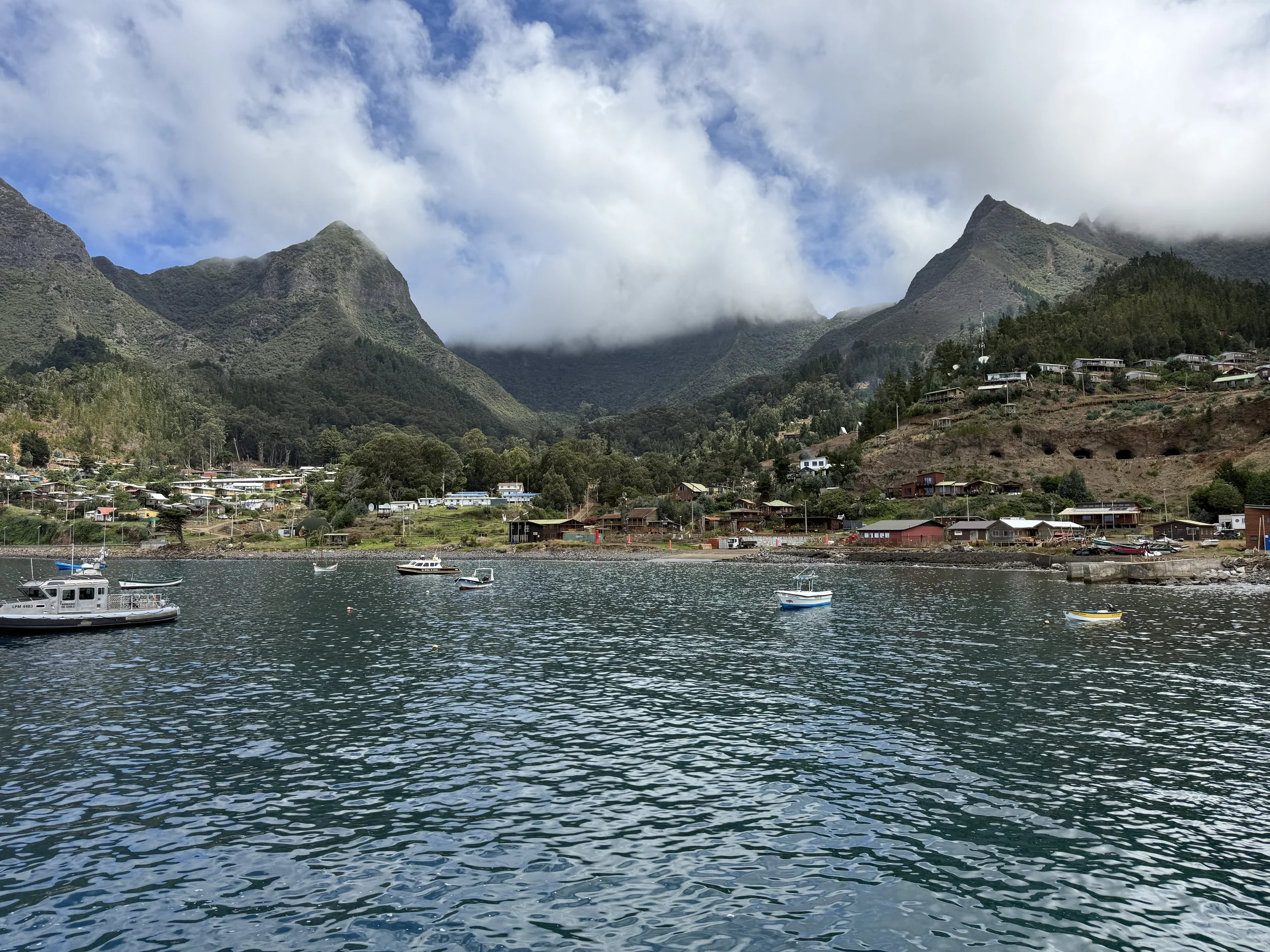
Then, we hopped into a pickup truck to go down to the dock. I got to ride in the bed of the truck for an even better view. Down at the docks there were a ton of young seals enjoying the day. The driver explained to us that the seals were born in November. From here the boat ride to the town takes a bit over an hour.
Day 1:
On arrival at the town’s dock we got into a car to take us to our accommodation for the next few nights, Refugio Náutico. I was in an updated room with a nice view of the water. I should note however there is no air conditioning. My friends had one but it was supposedly under maintenance. The hotel does have one floor fan it can offer guests.
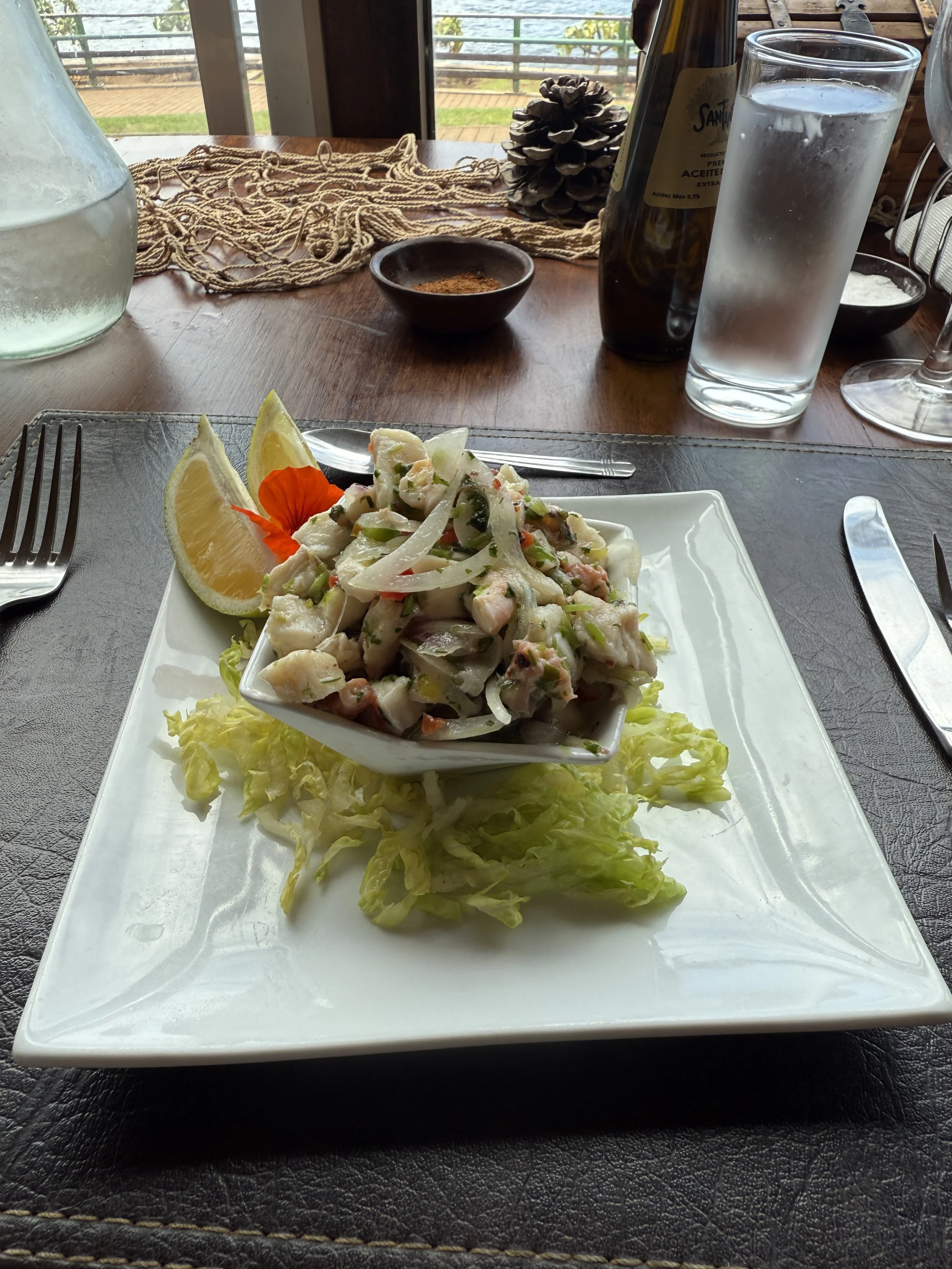
The driver from the airport to the dock is named Marcelo, and he runs the hotel. So, he arranged for lunch to be ready for us on arrival. It was an excellent ceviche and lightly fried fish meal.
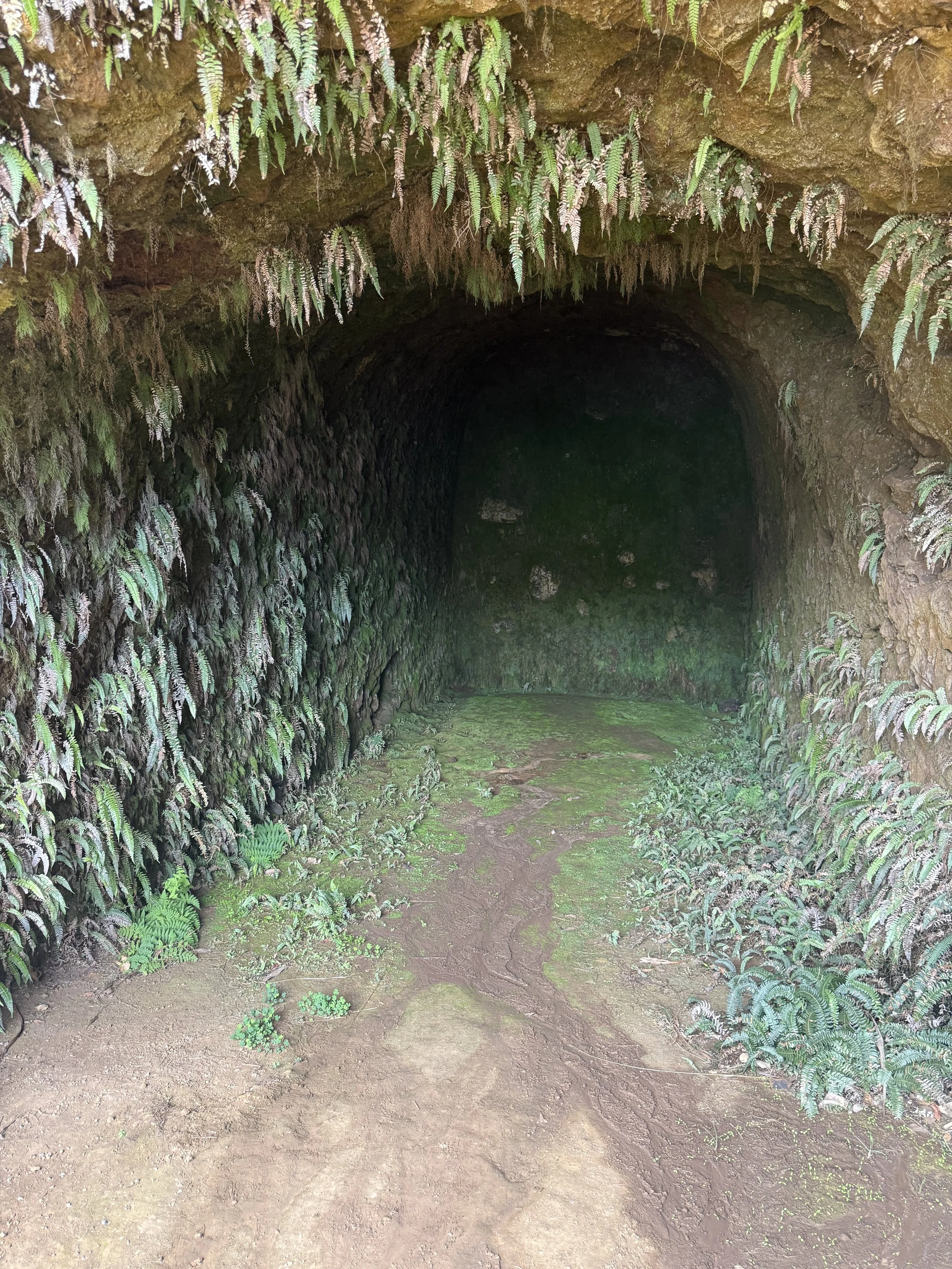
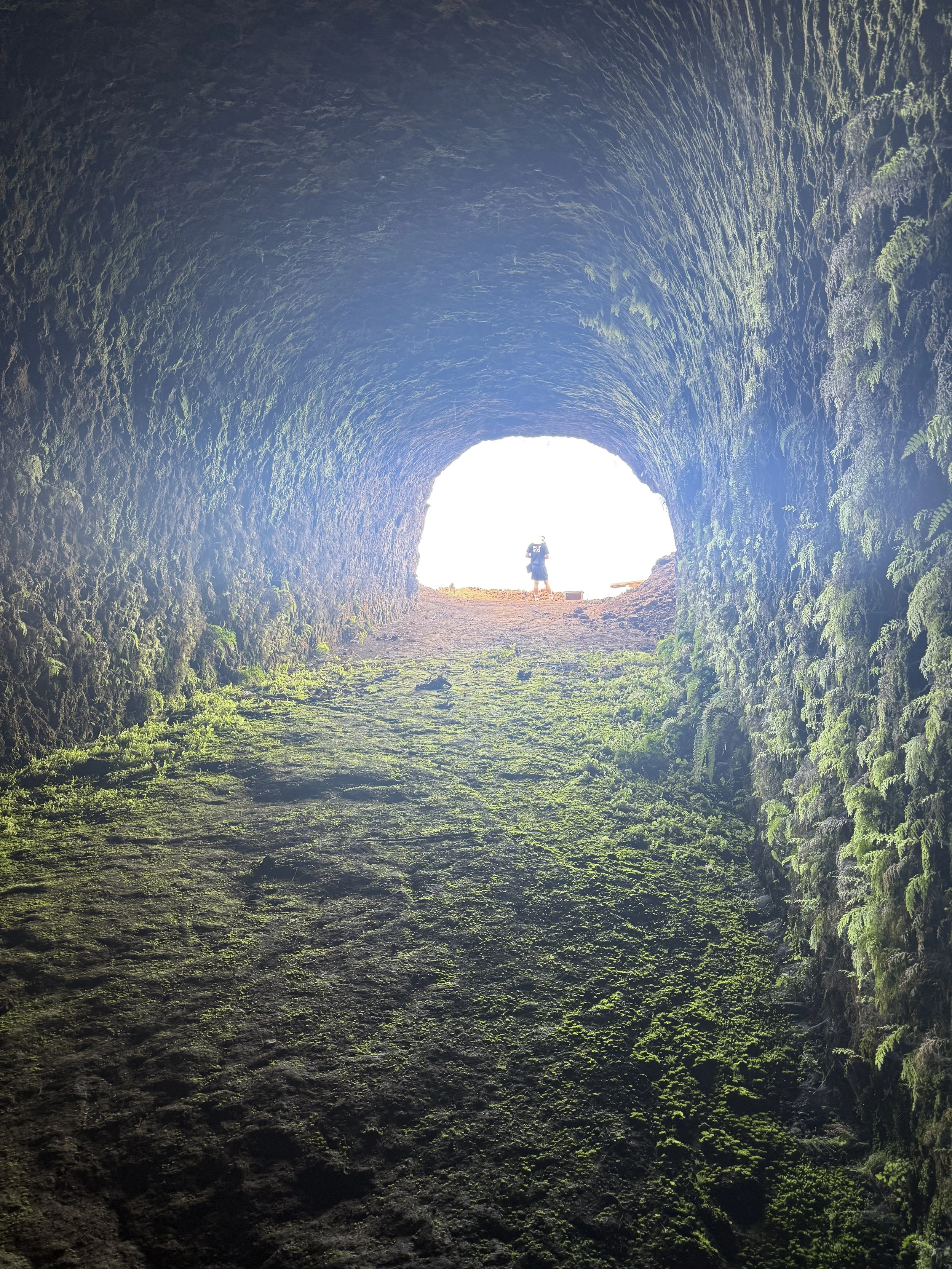
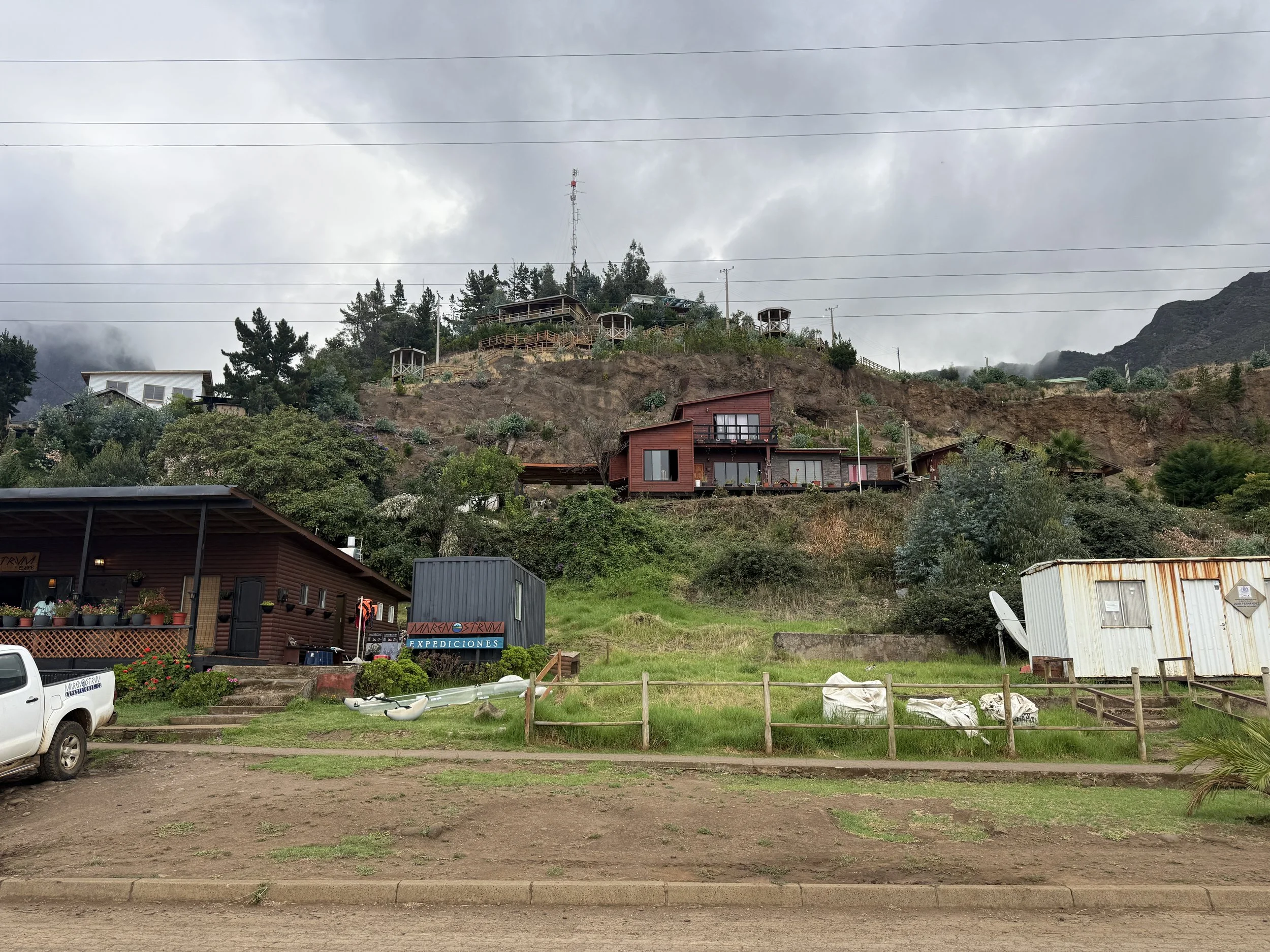
Then we headed on the 15 minute walk to town. We started with exploring the caves of the freedom fighters. This is where those who were fighting for the independence of Chile from Spain were locked up.
Then we visited the Spanish fort— Fuerte Santa Barbara— just to the side.
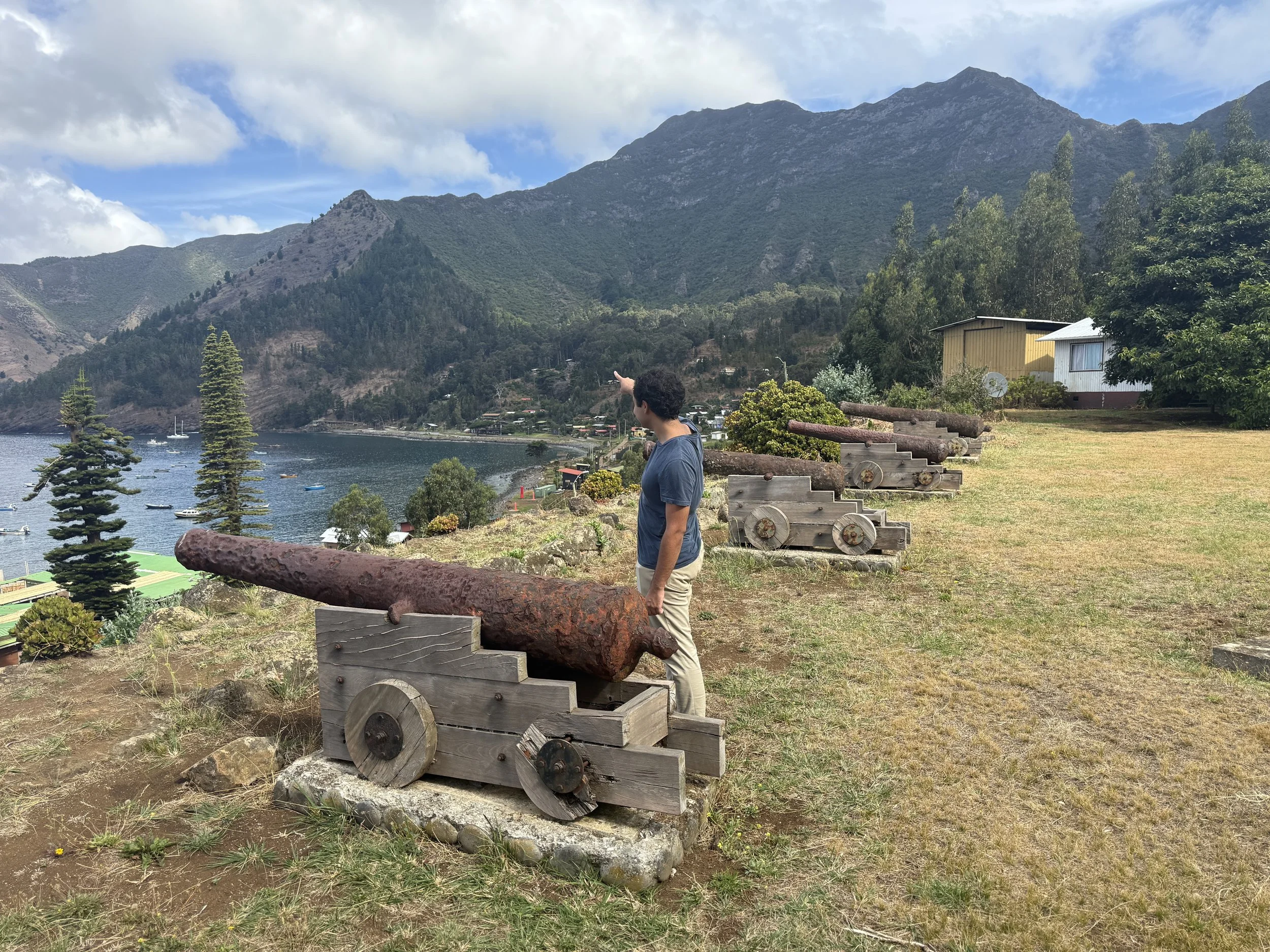
Then we visited the Spanish fort— Fuerte Santa Barbara— just to the side.
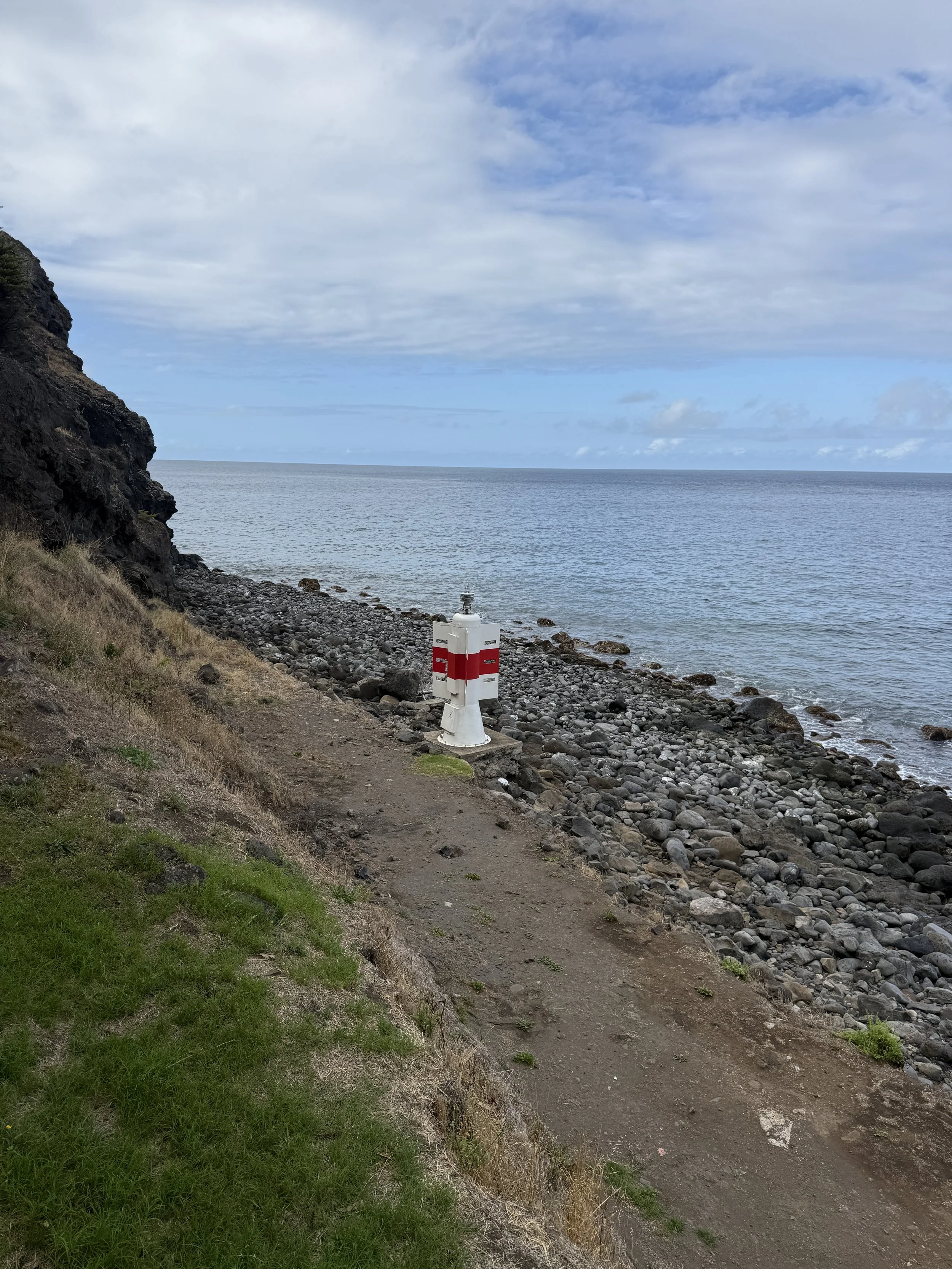
Afterwards we visited the small lighthouse at the far end of town and also see where the shells of the SMS Dresden hit the side of the island in WWI. The ship was in bad condition and came to neutral Chilean waters for safety, but the British ships in the area decided to pursue the boat anyway, causing the crew to release its artillery.
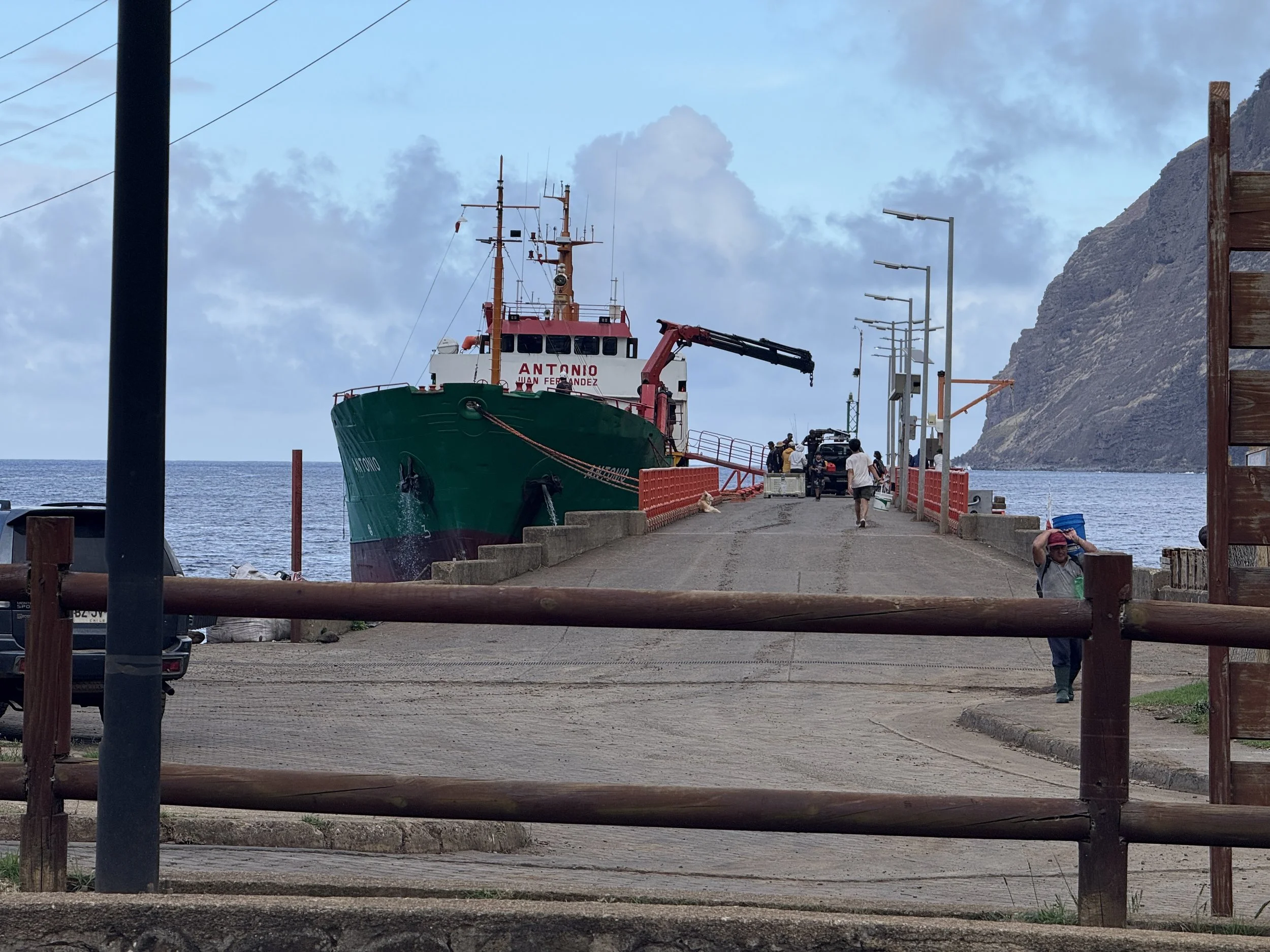
We then sat a while in the central park of San Juan Bautista where we saw the Antonio boat that goes to the mainland as it was beginning its journey.
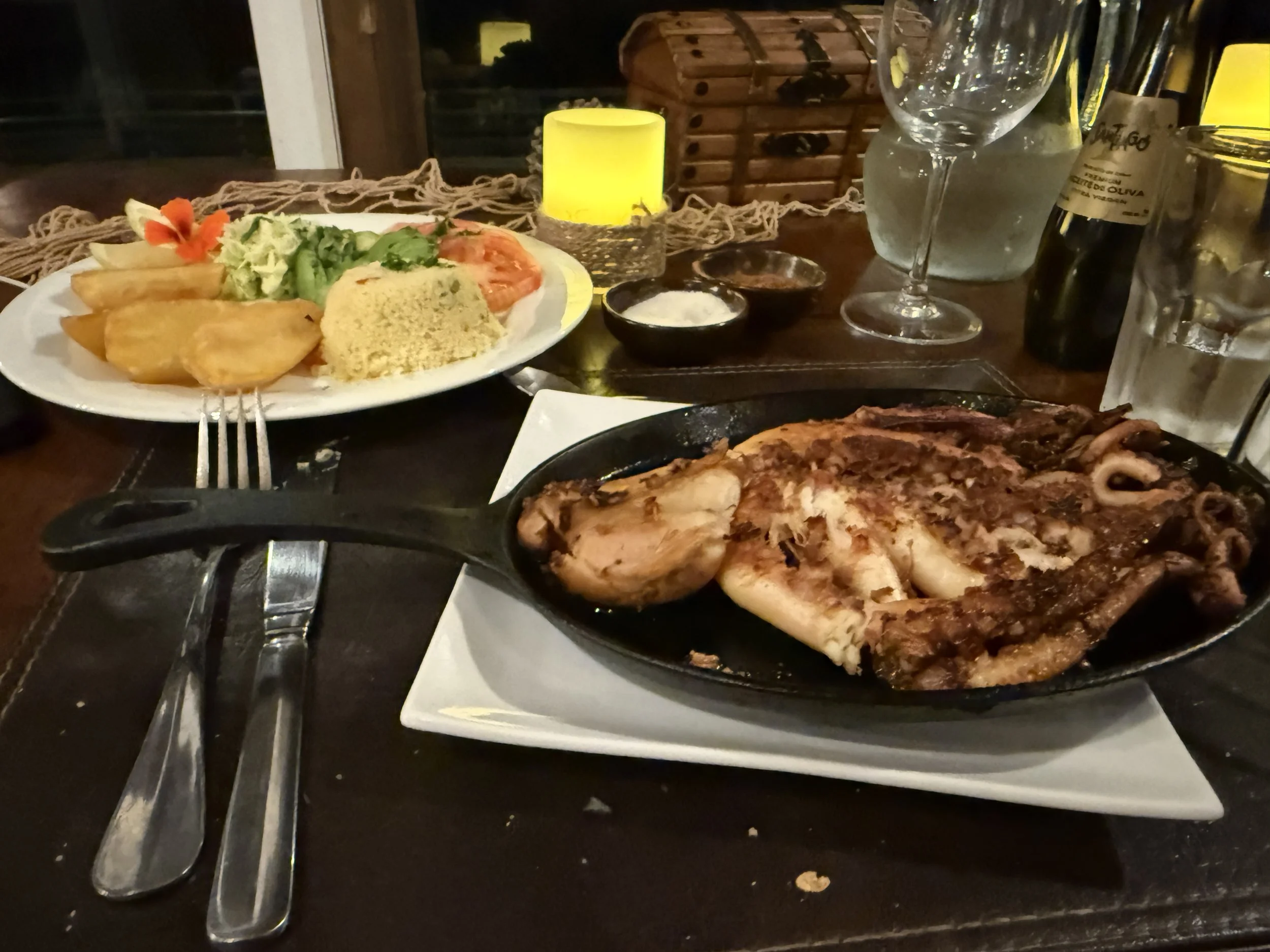
For dinner we had crab empanadas (a first for me!) and octopus with a bit of garlic.
Day 2:
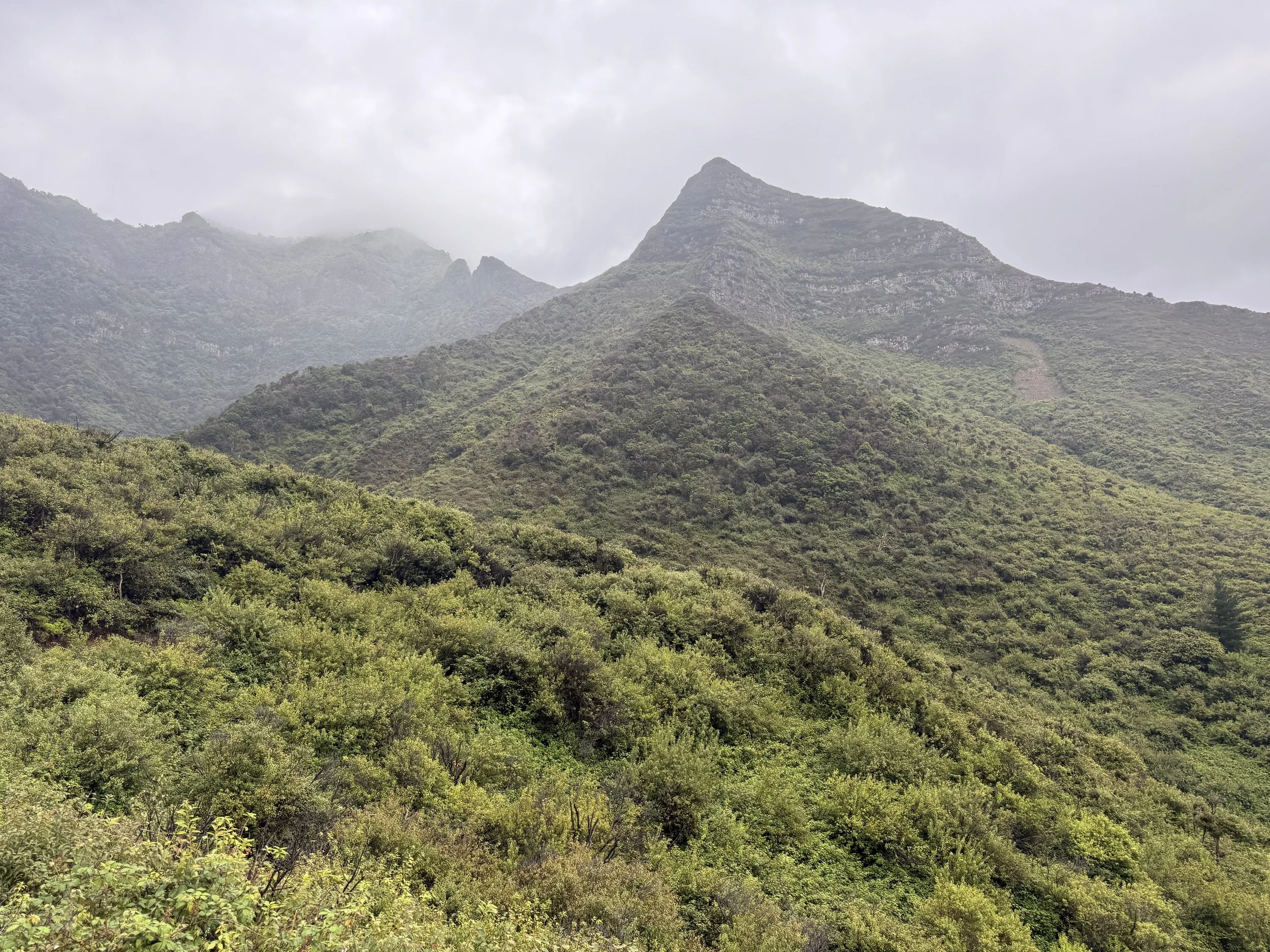
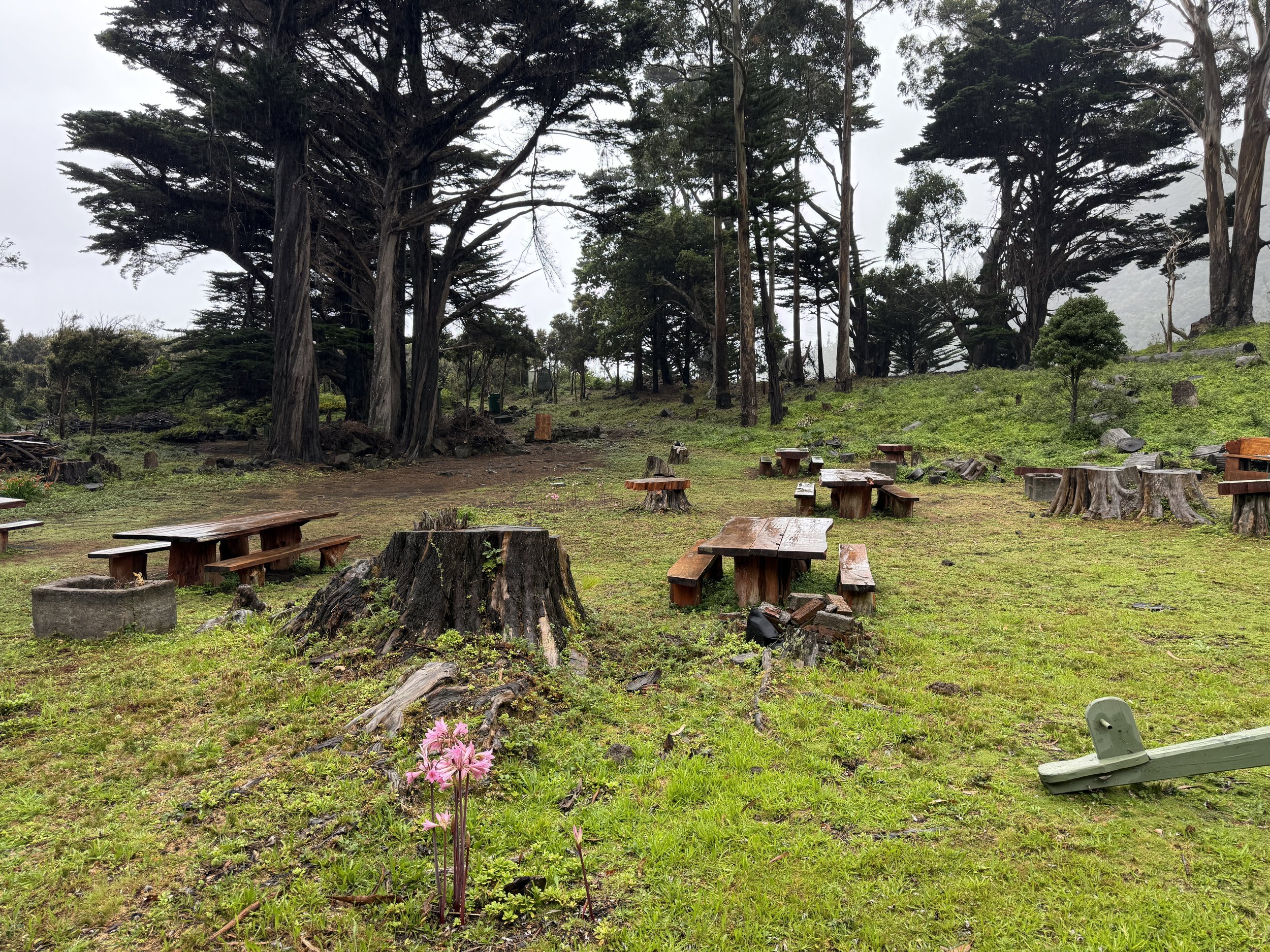
After a quick breakfast we headed to the Plazoleta el Yonque. The walk up here took about 45 minutes and placed us in the great park surrounded by the mountains. This would be an excellent place to spend the day having a picnic with the family.
There is also an impressive wooden walkway that goes through the wooded areas so we could see local plants and birds. It is a great place to feel immersed in the island’s interior nature.
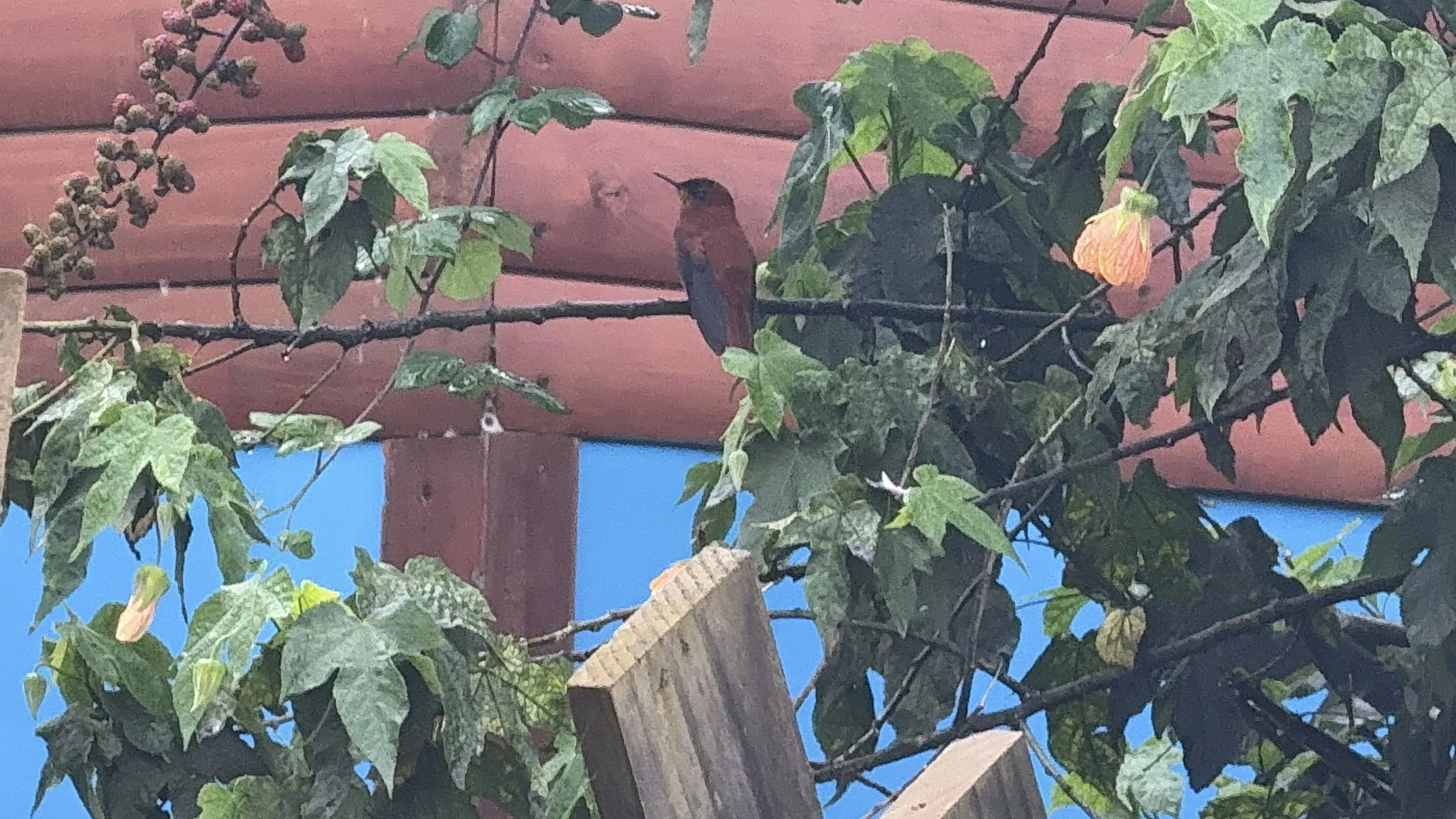
While walking in the woods we looked for the iconic red Juan Fernandez hummingbird. Unfortunately, we did not see it. However, on the walk to town we passed many impressive home gardens and started looking to see if we could spot one.
To our amazement, we saw more than one in the flower bushes people had in their gardens. What a treat!
Back in town we sought a place to eat and came across Restobar Cumberland. When we sat down the very friendly lady said she did not have any fish but she could call around to some fishermen to see if they have some. Sure enough, they did, and in about 40 minutes we had our fresh lunch.
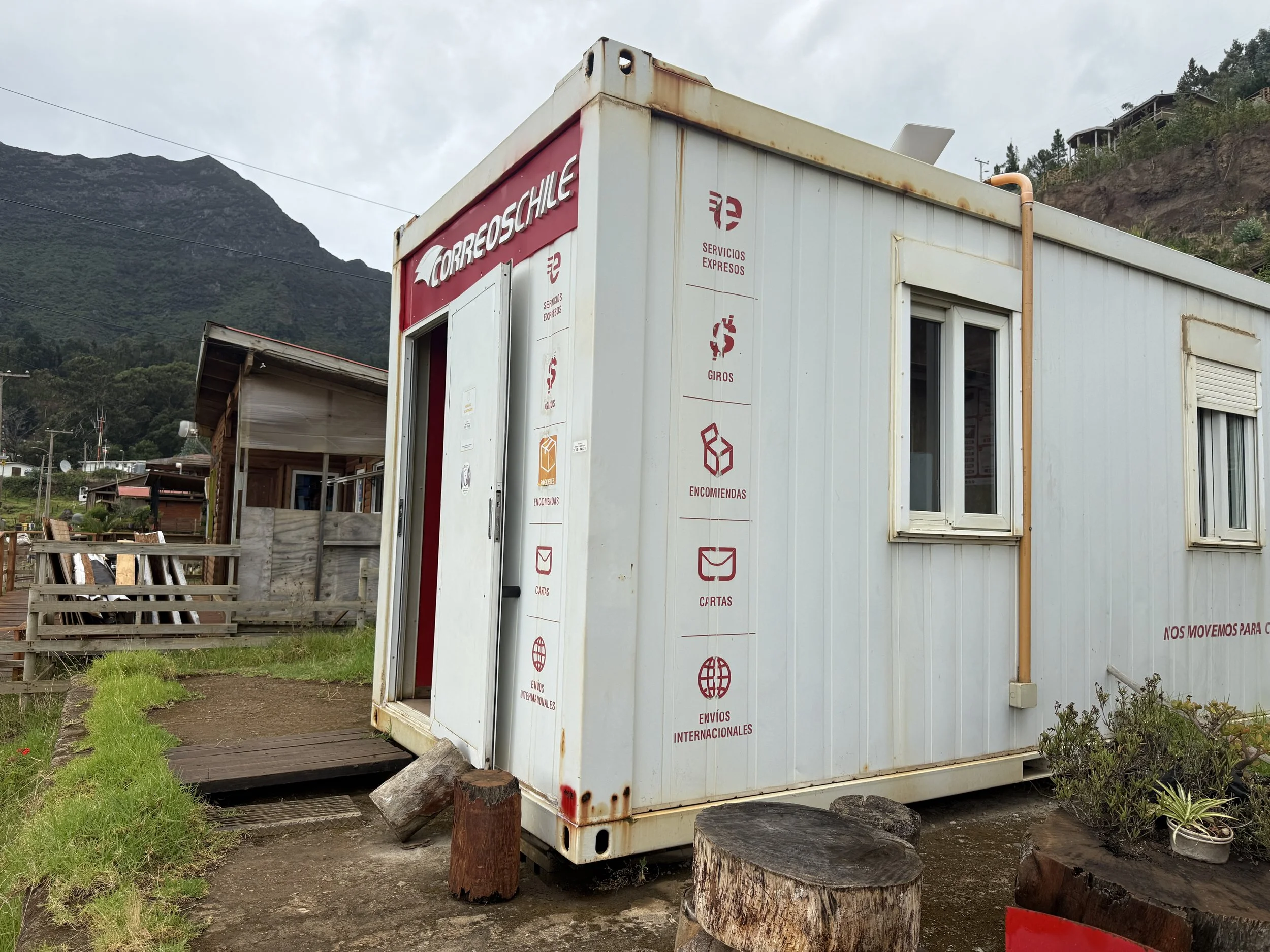
After lunch we made a quick stop at the post office and then hiked to a location where there is a seal colony. It is super close to town, but given the mountains it requires about a one hour hike to make it there. We were not 100% sure where to go, but thankfully some kids riding their horses were able to point out the right path for us to take before we hit the fork in the trail.
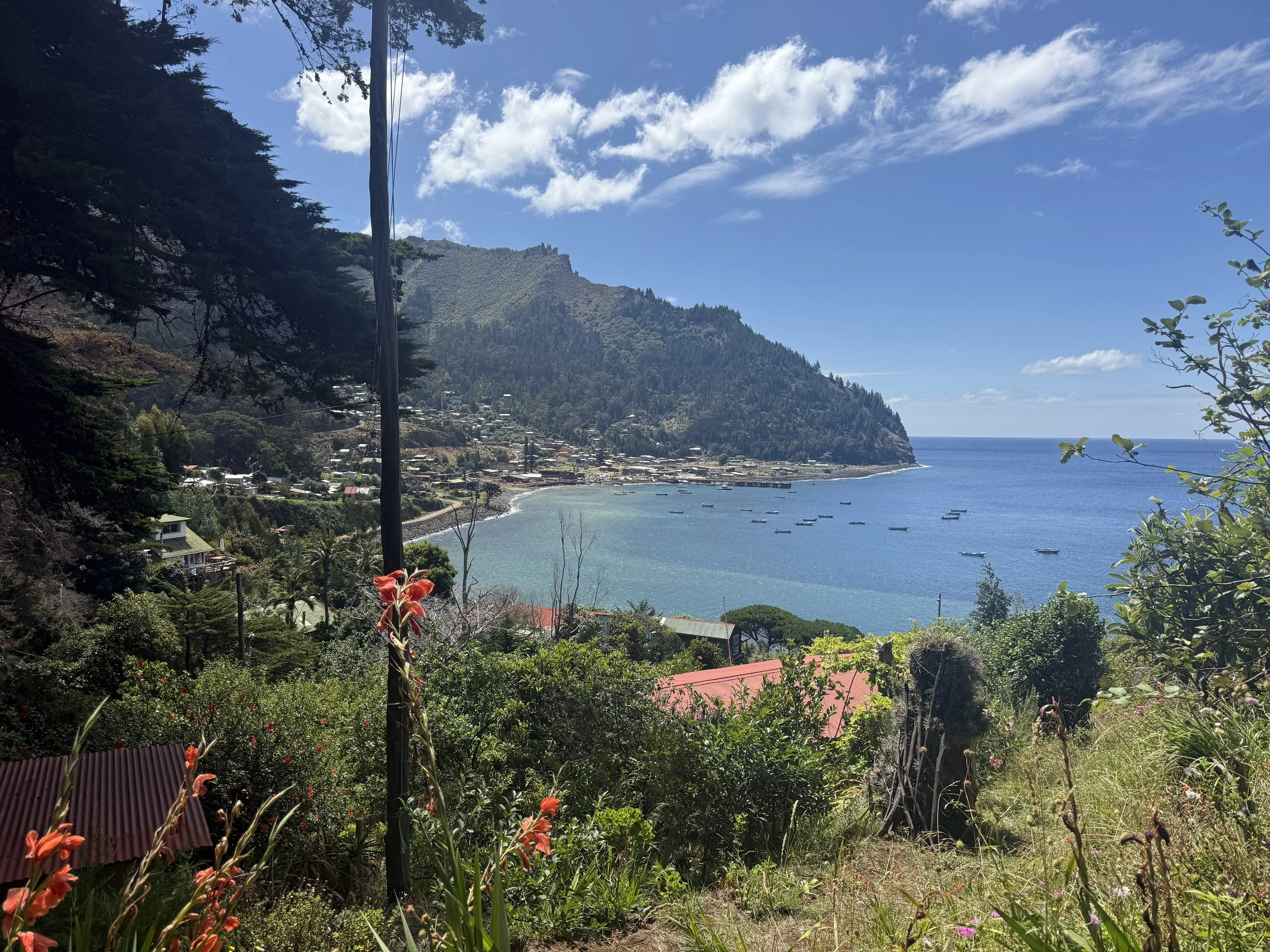
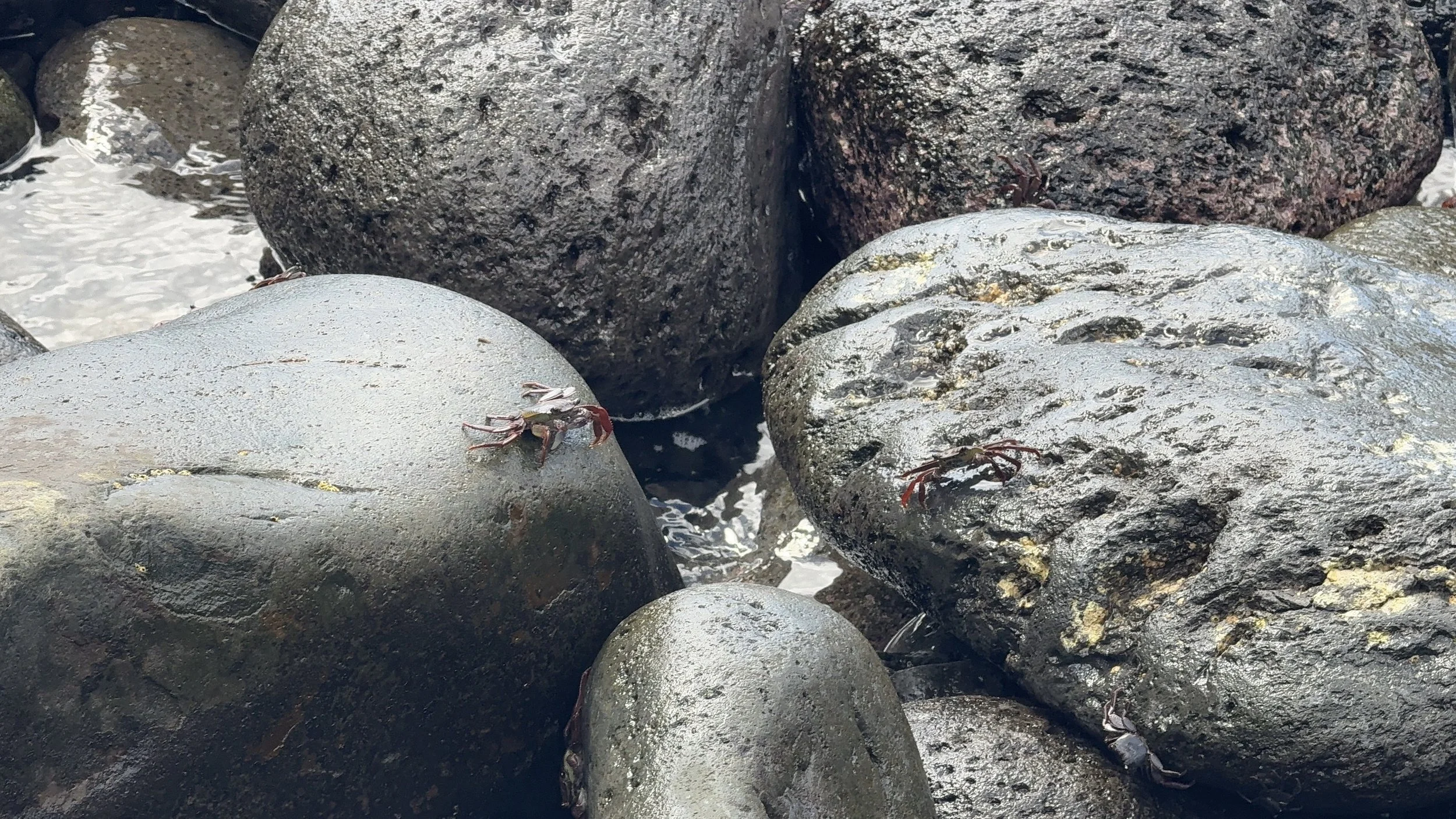
There were not many seals there when we arrived, so instead we took the opportunity to enjoy the views, see the many crabs hanging out on the rocks, and take a small dip.
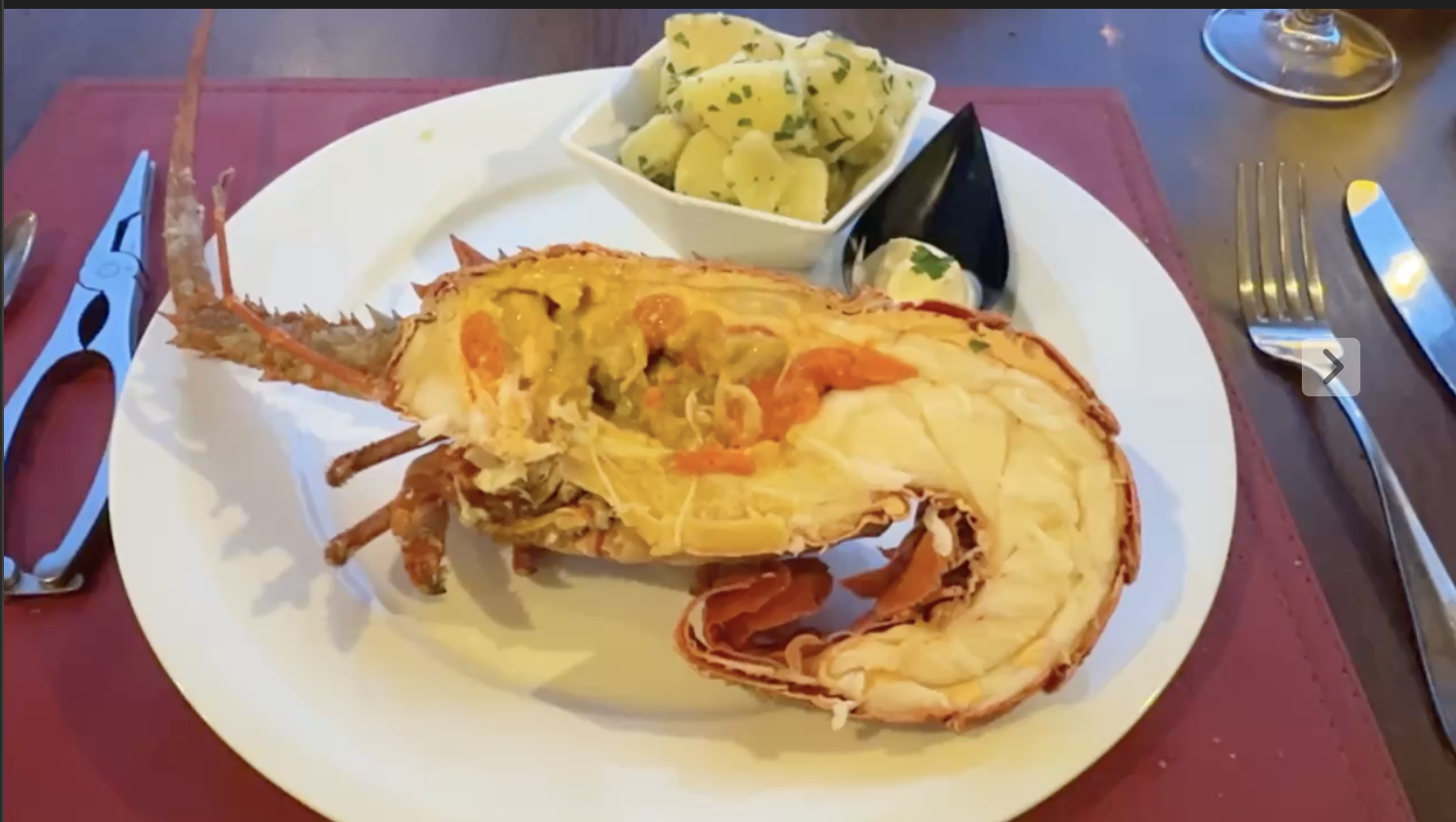
For dinner we were able to try the local lobster. Among the travelers who come here this is quite famous.
Day 3:
In the morning I revisited the Spanish fort and location of the Dresden shells with Michael who didn’t see them before. We also visited the cemetery which has memorials for those who died in the 2010 tsunami that hit the island and a support plane that crashed in the wake of the tsunami. There is also a memorial for the German soldiers of the SMS Dresden.
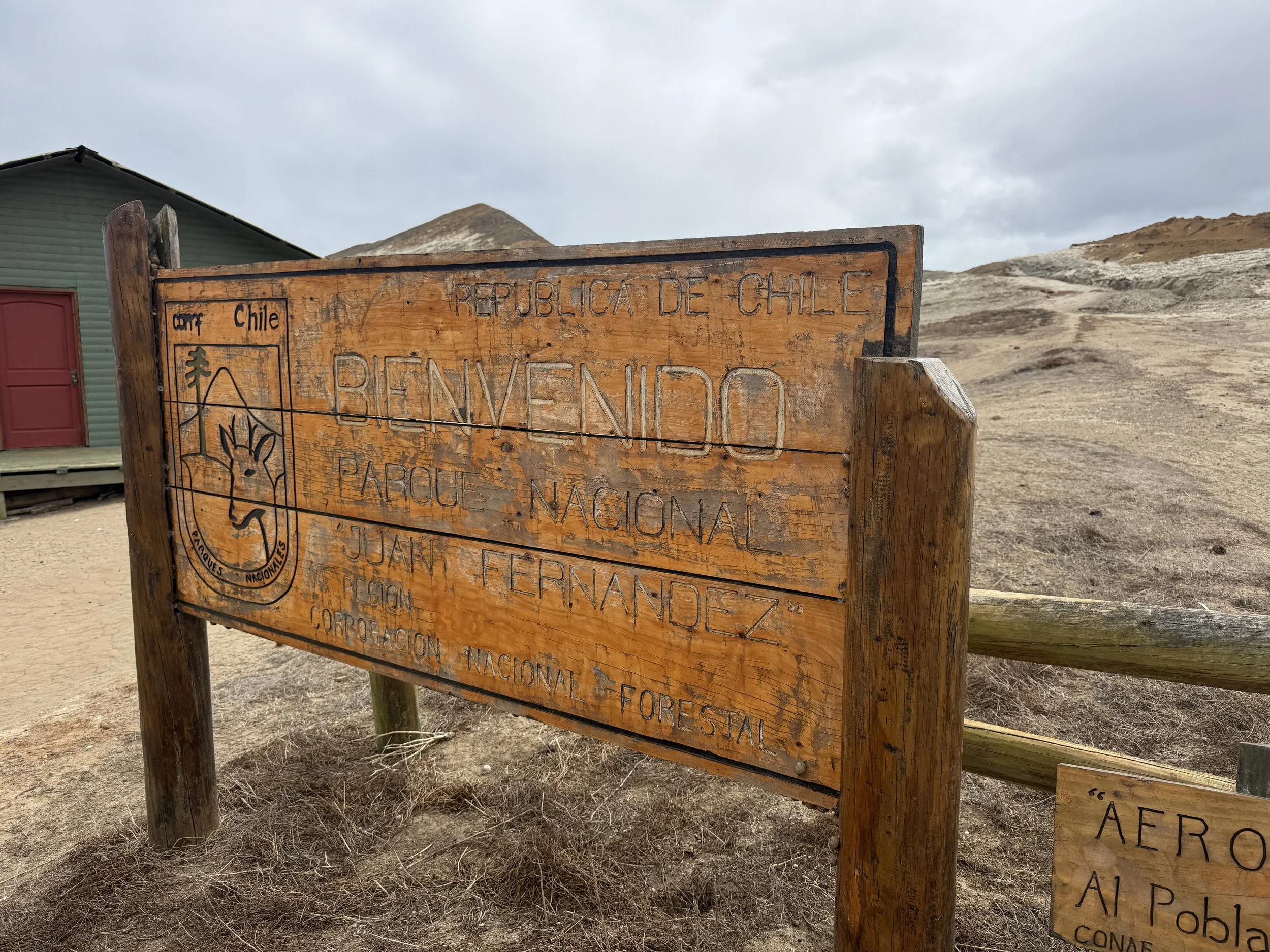
Afterwards, we began the hike to the Salsipuedes lookout. Since this hike is inside of the national park, we registered our entrance in town. Almost all areas outside the town and airport are part of the national park, so you need to buy a ticket (which can be done online). Also, it is necessary to log your entry with the park ranger in town when you are entering the park. If you are doing a trip with a guide, he / she can register the entry for you remotely.
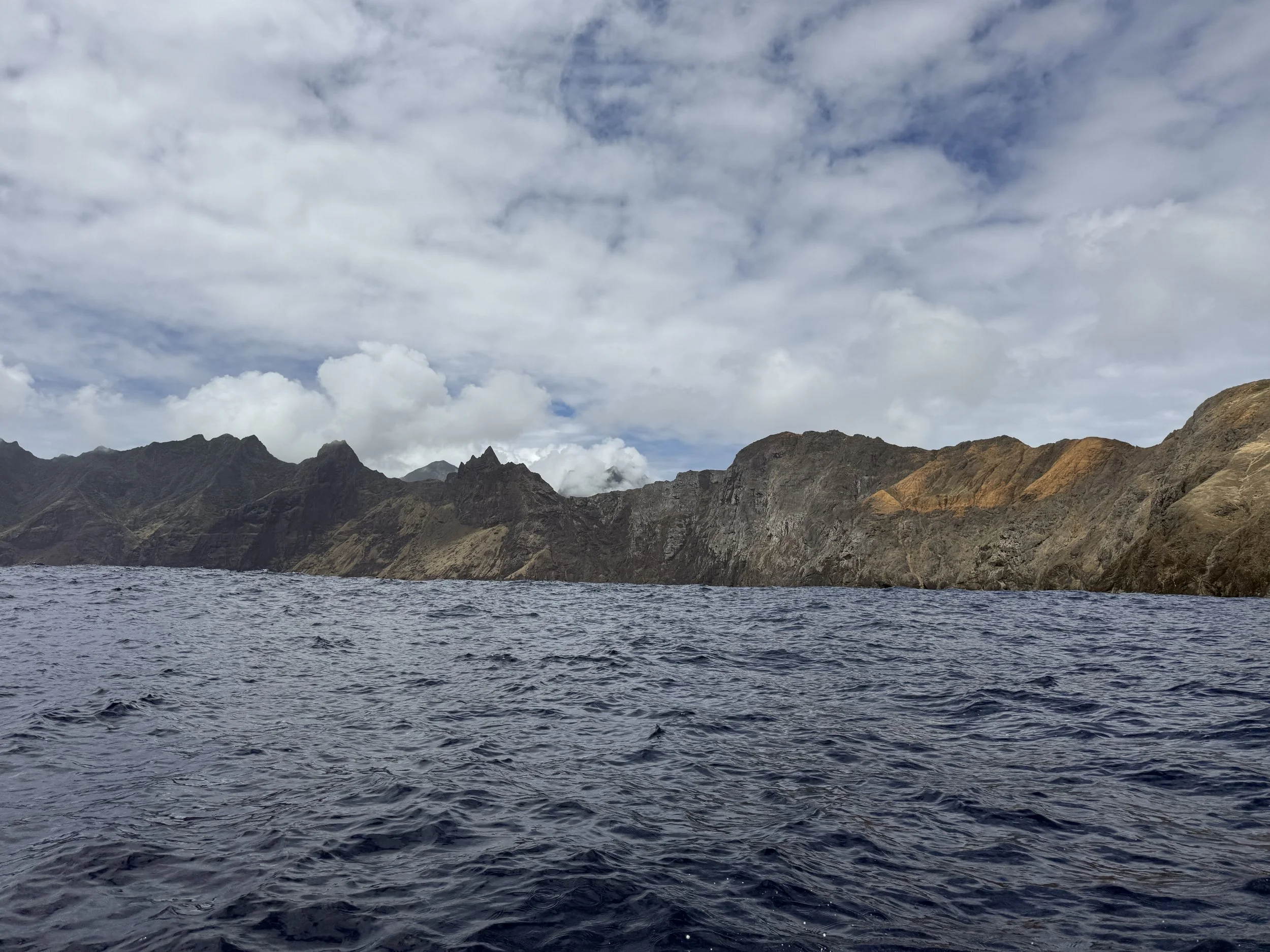
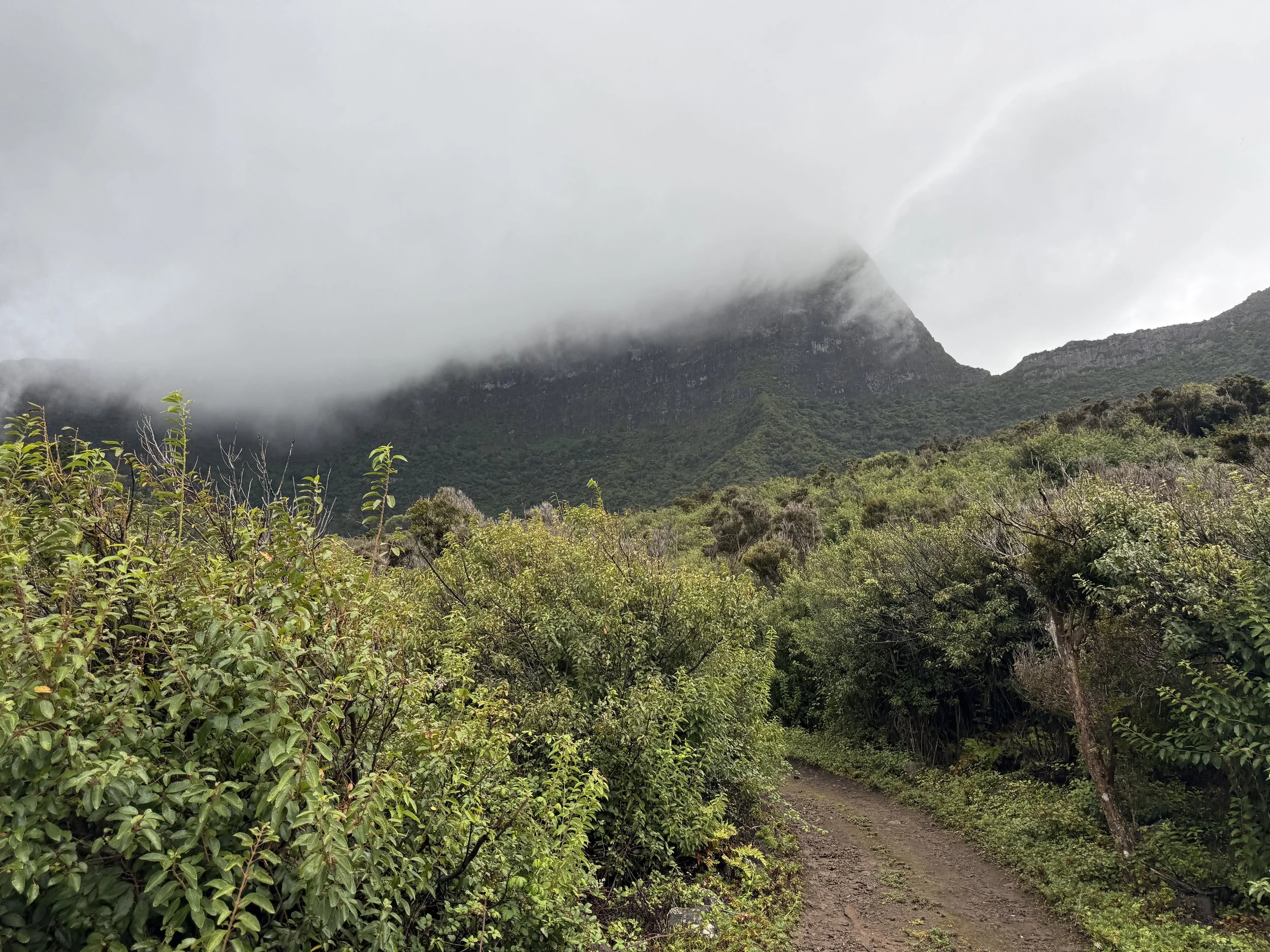
The walk from the town to the trailhead is a bit of a hike of its own on a very steep incline dirt road. Right as we reached the trailhead a very friendly dog decided to lead us up the trail. The hike starts out giving great views of the town before giving views down the other side of the island that we passed when coming in on the boat. My objective for this day had been to arrange a boat to this side of the island so we could visit the beach called English Port, but rough seas prohibited that.
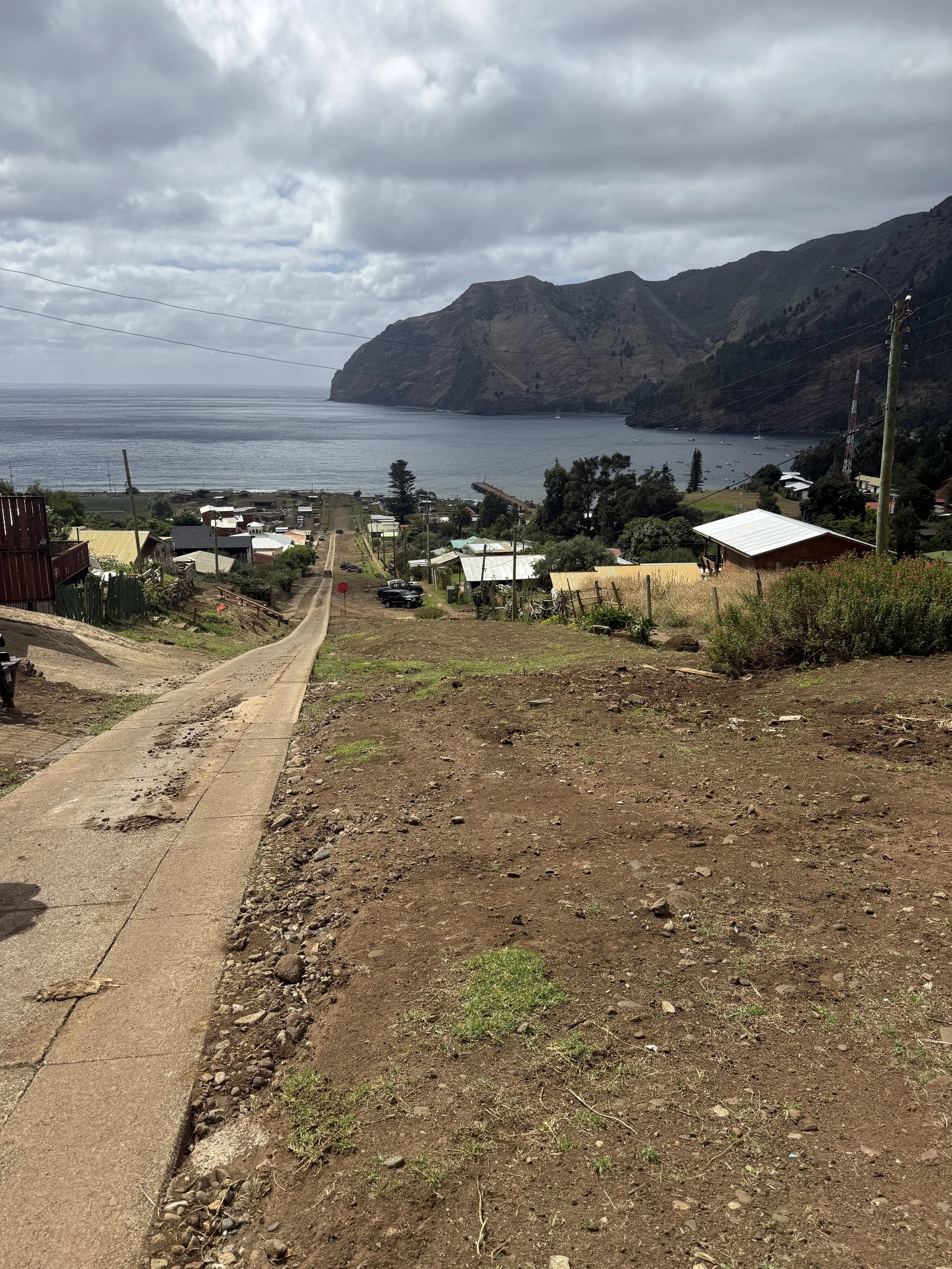
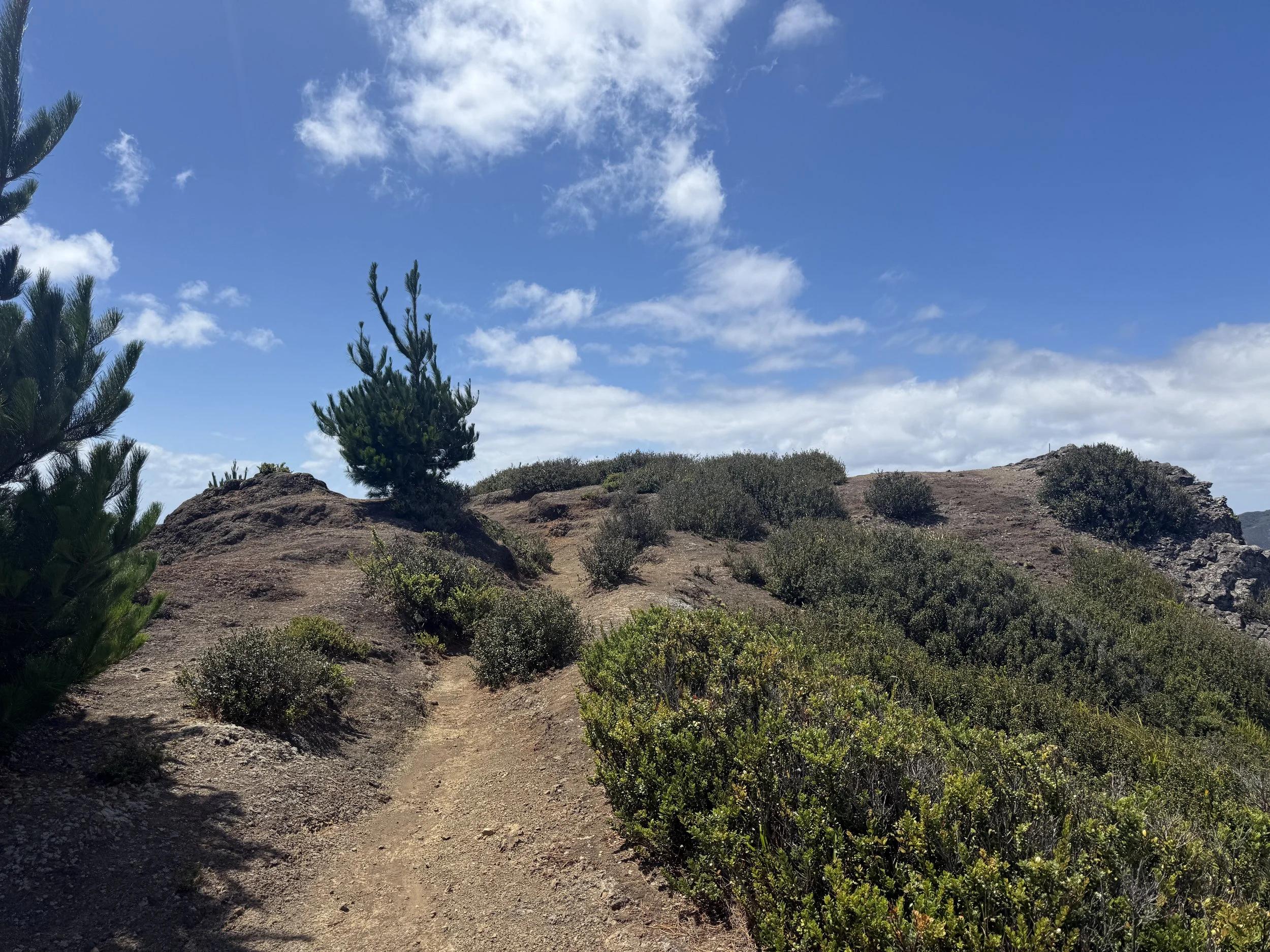
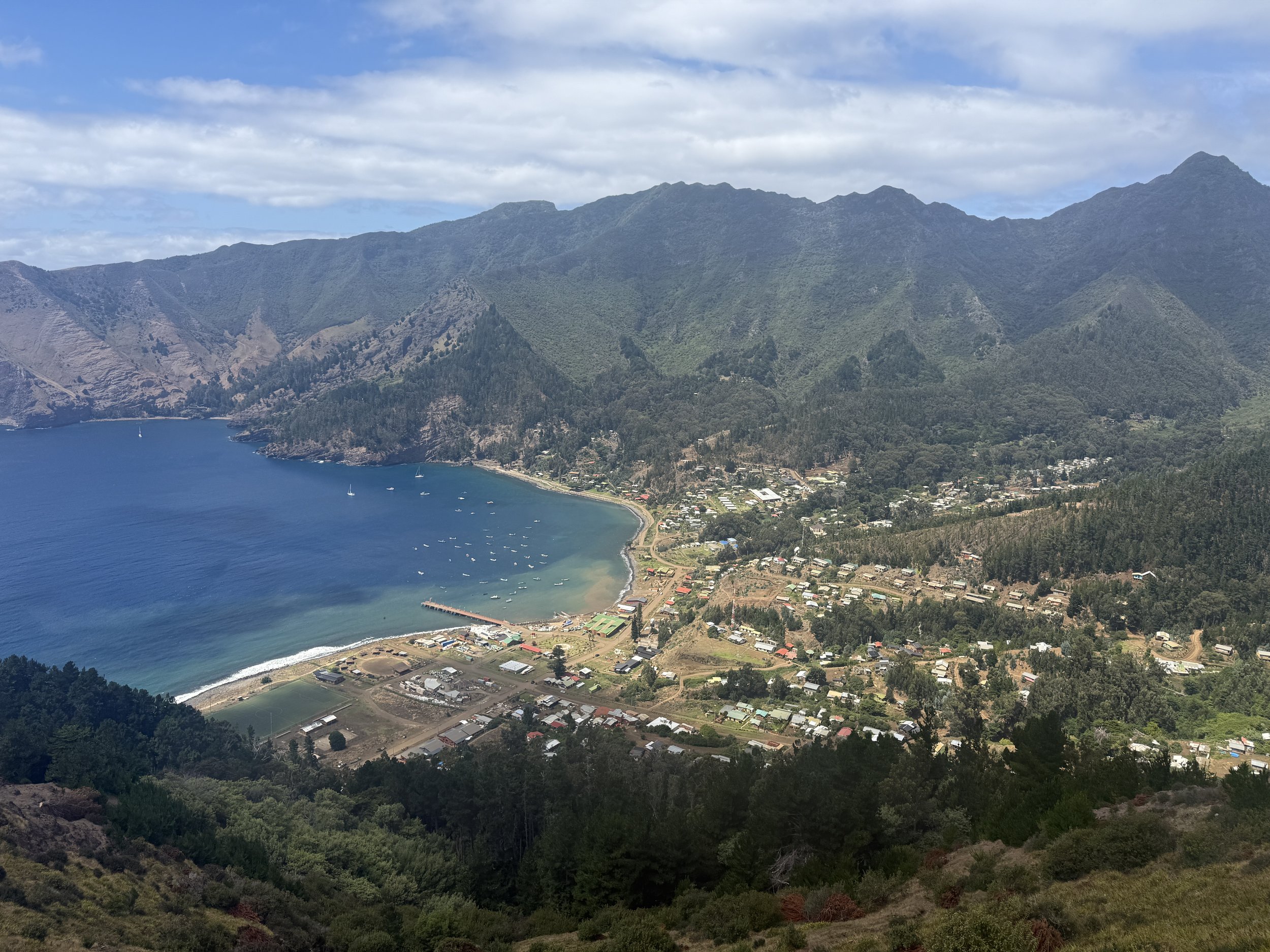
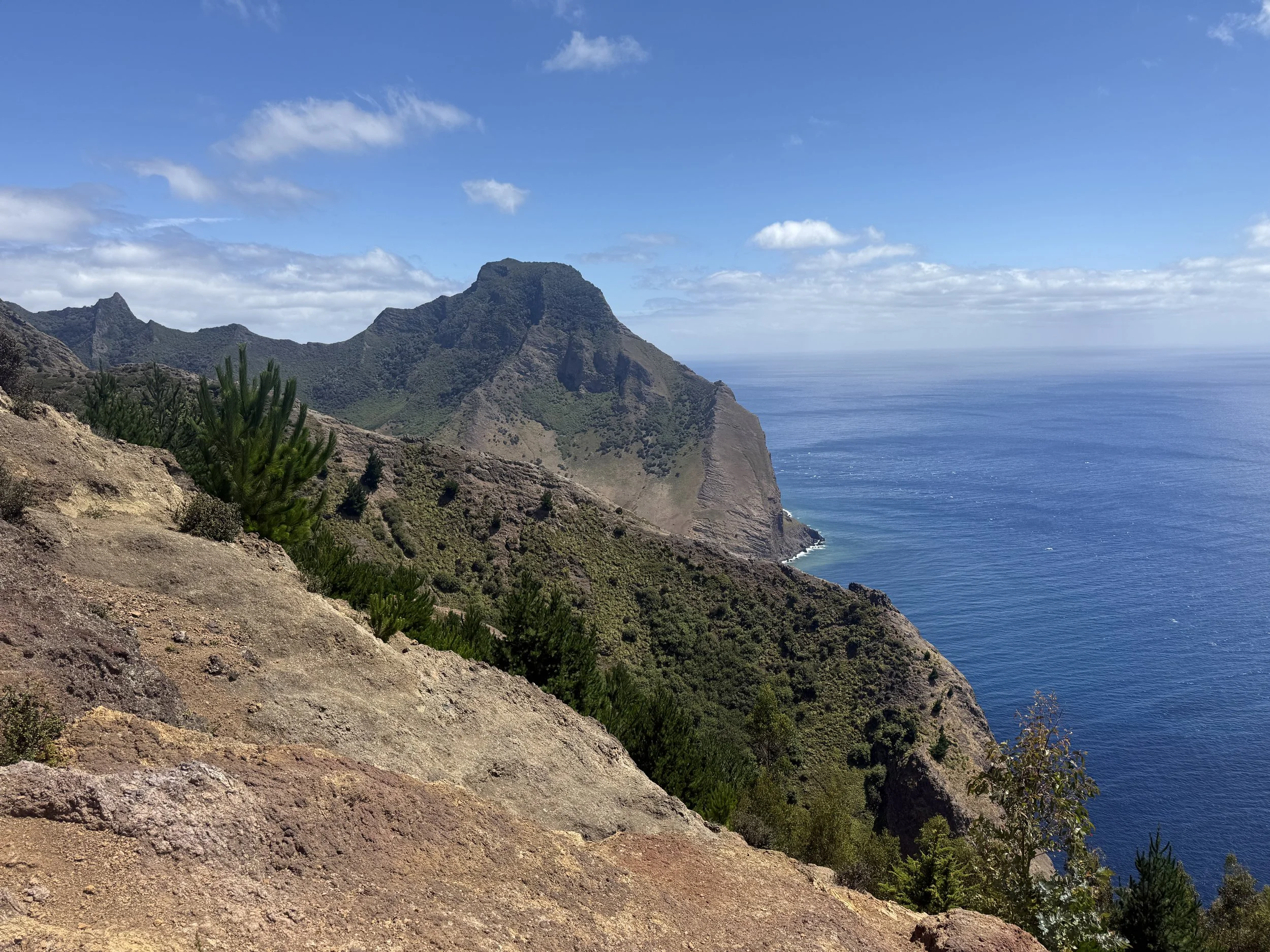
The guide told us there was a chance we could arrange this boat for the following morning on our way to the airport.
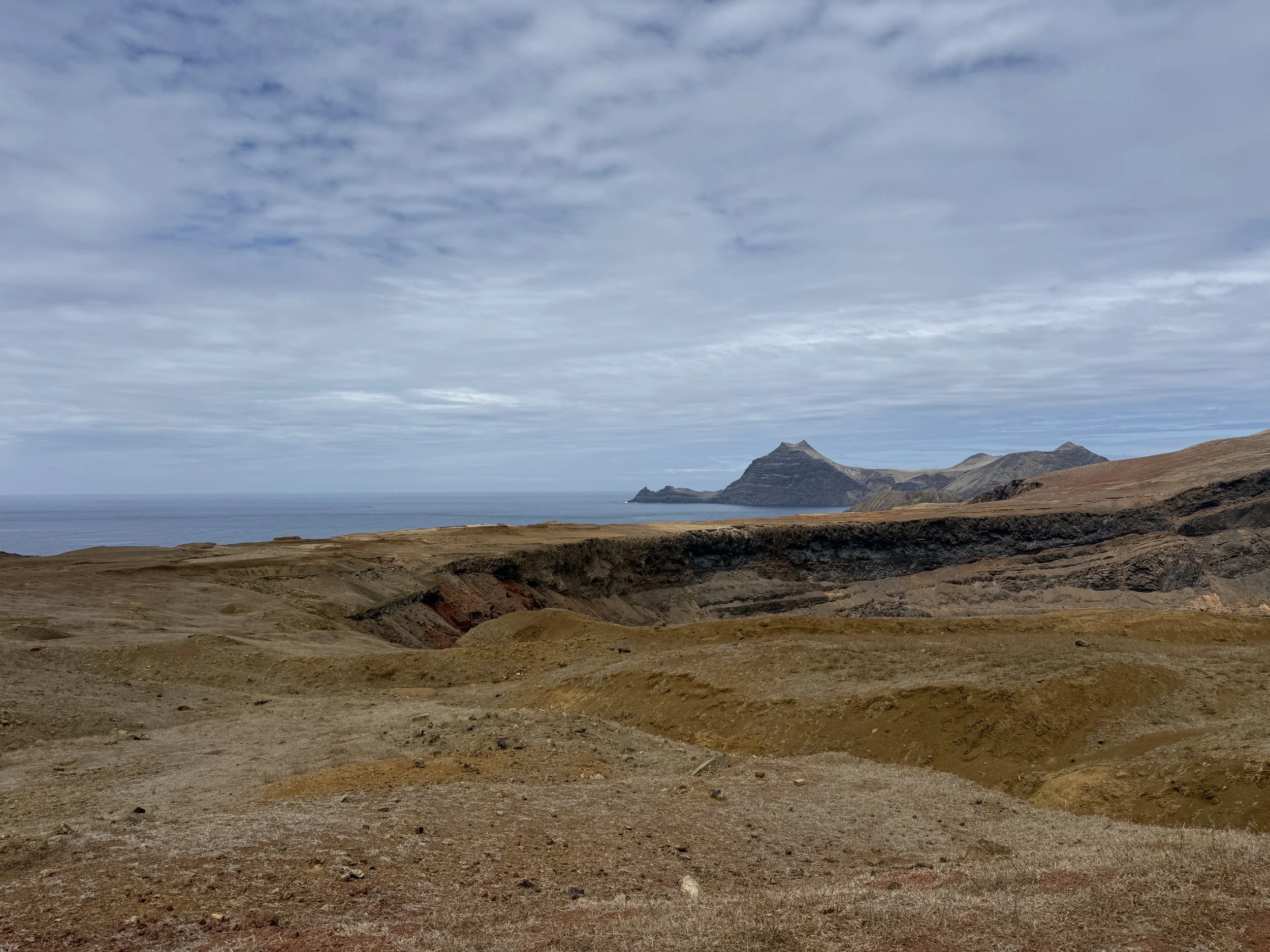
So, with plenty of time left in the day, we decided to do an even more significant hike, this time up to the Selkirk Viewpoint (Mirador de Selkirk in Spanish). This is supposed to be the point where Alexander Selkirk would come to look for passing ships.
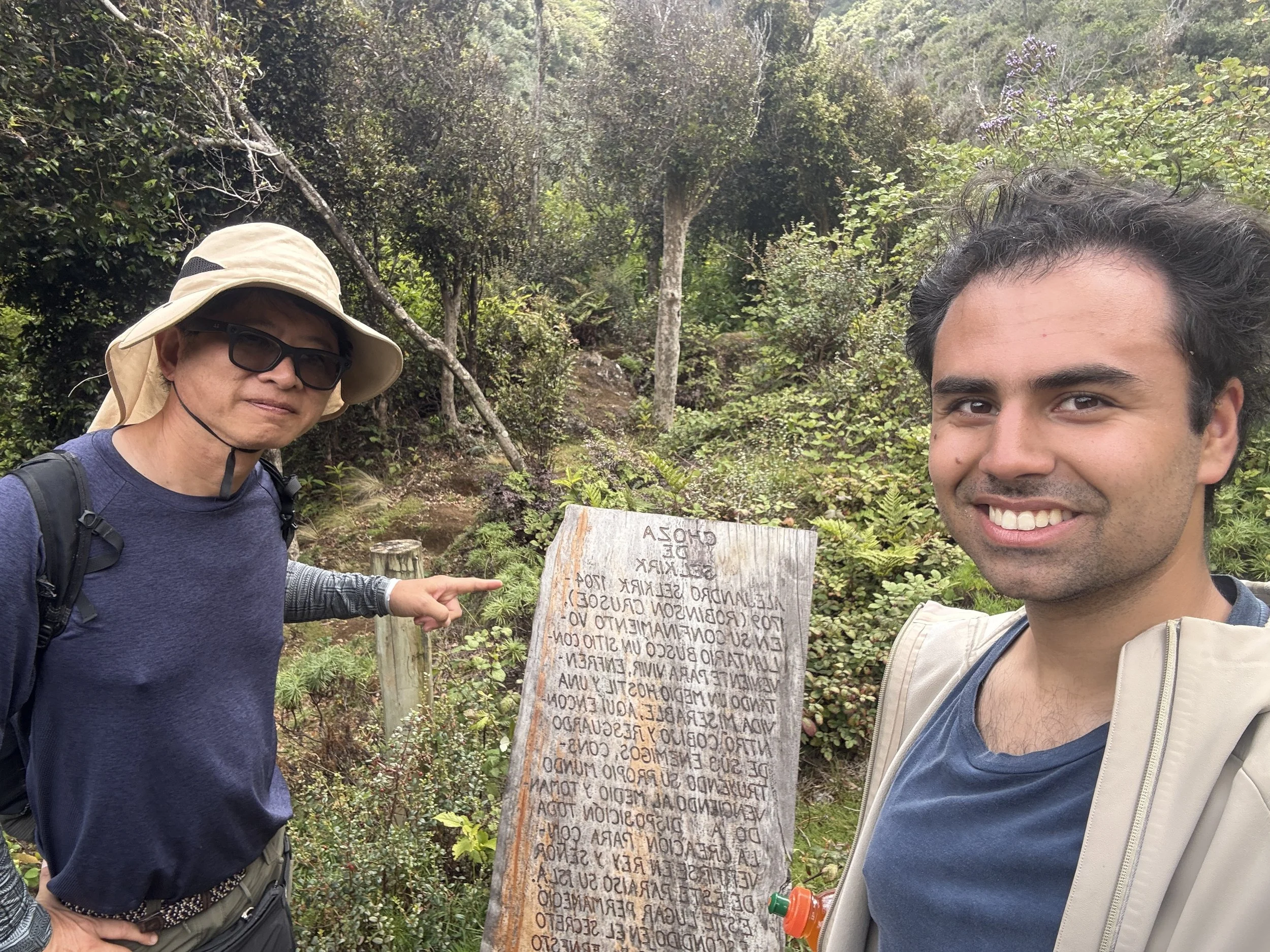
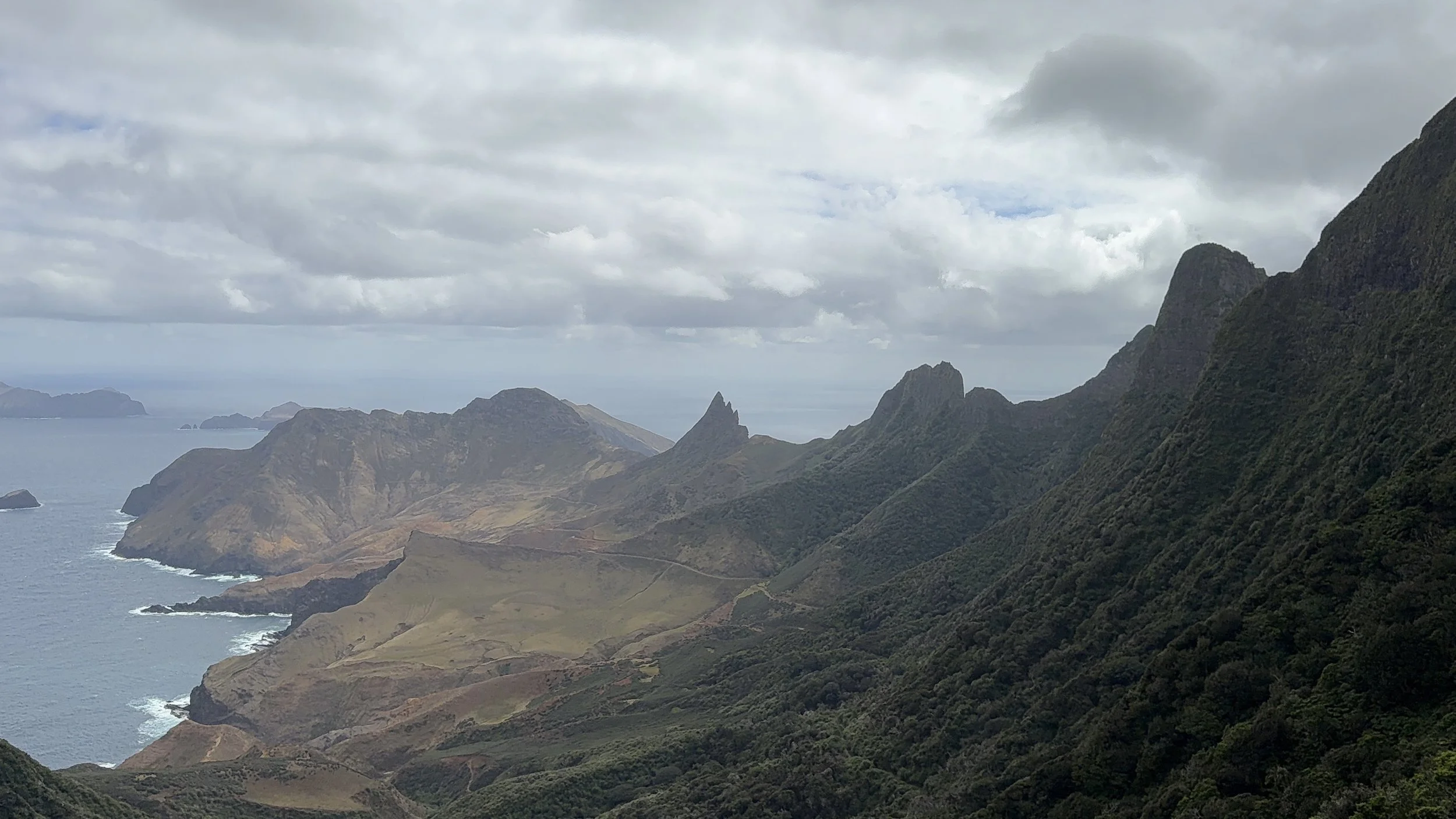
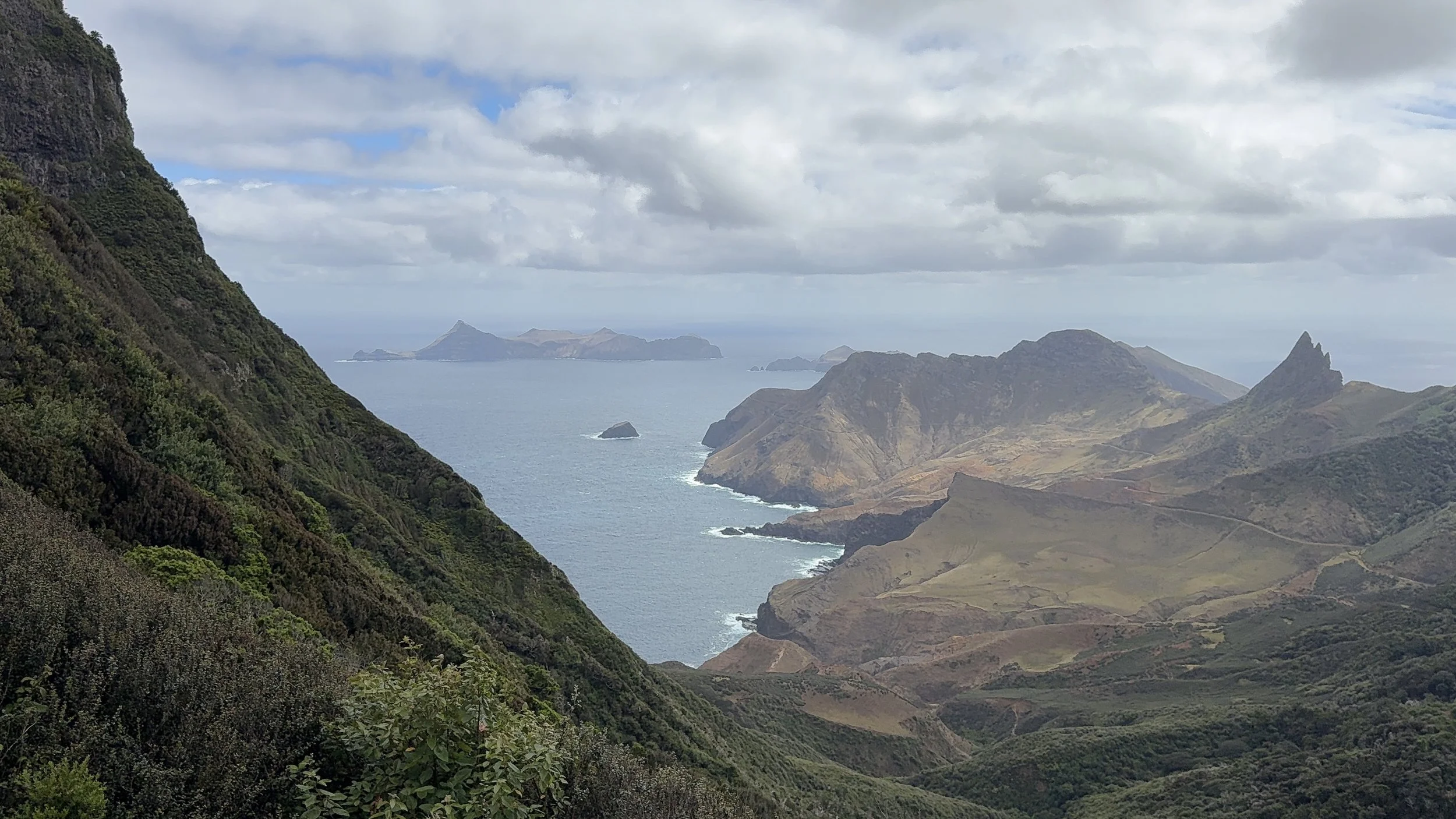
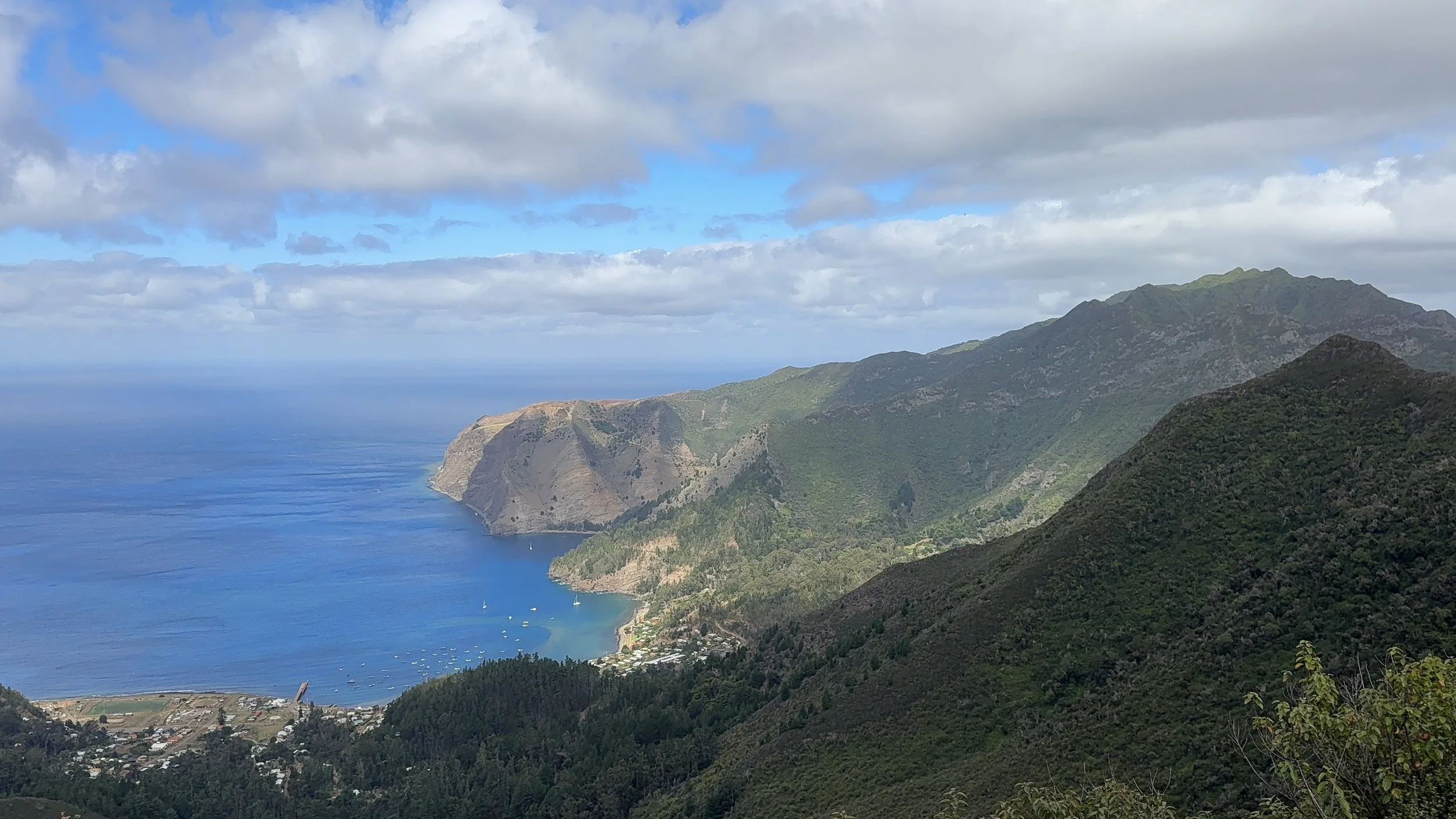
Since Selkirk was a British sailor, he was very concerned about passing Spanish ships as they would imprison or kill him if found. This point allows viewers to see both sides of the island.
Day 4:
After hiking up to the Selkirk Viewpoint the day before, I did not have any plans to hike to the airport. I was trying to arrange a boat to make a stop at a beach called English Port, but unfortunately the water + wind conditions made landing not possible. So, I decided to do the hike to the airport with my friends.
To get to the airport you hike all the way back to the Selkirk Viewpoint (up the mountain), and then another 13km which thankfully does not have as much climbing.
Any hike past the Selkirk viewpoint does require a guide, so we hired a great one through the hotel named Hernan. He told us this was the first time he took tourists from the town to the airport. People normally don’t do it due to time stress, so they opt to do a hike to town on arrival instead.
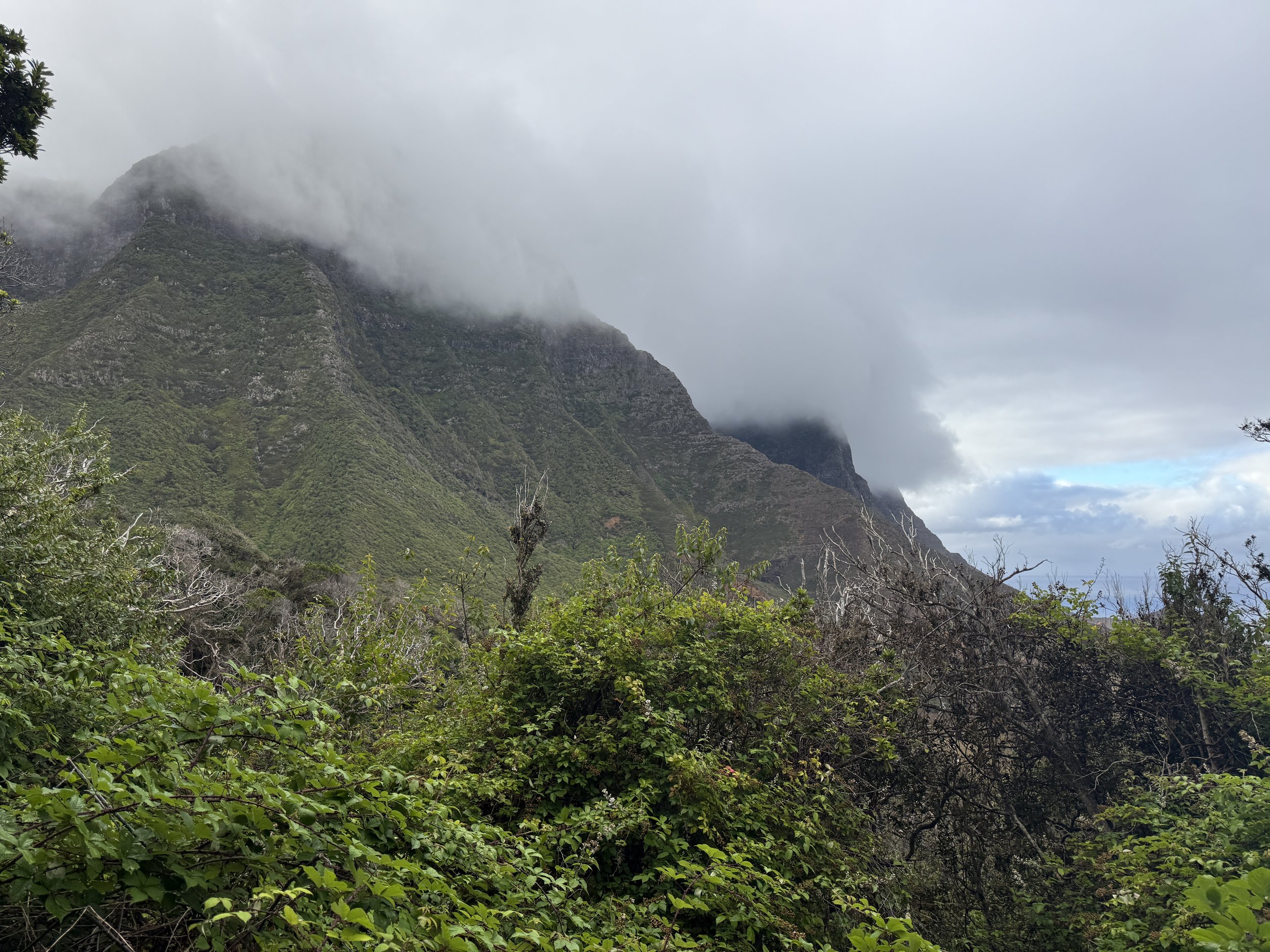
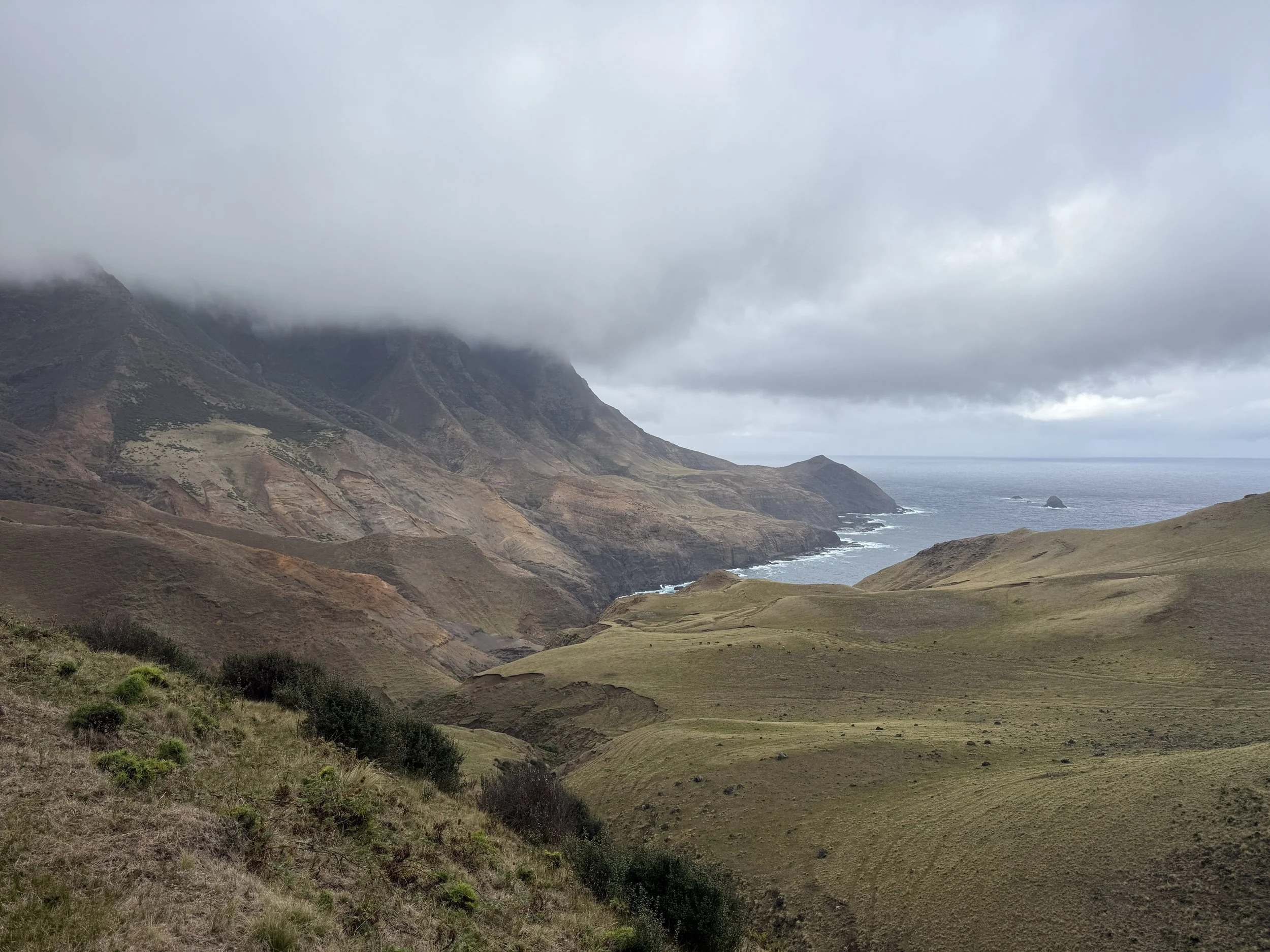
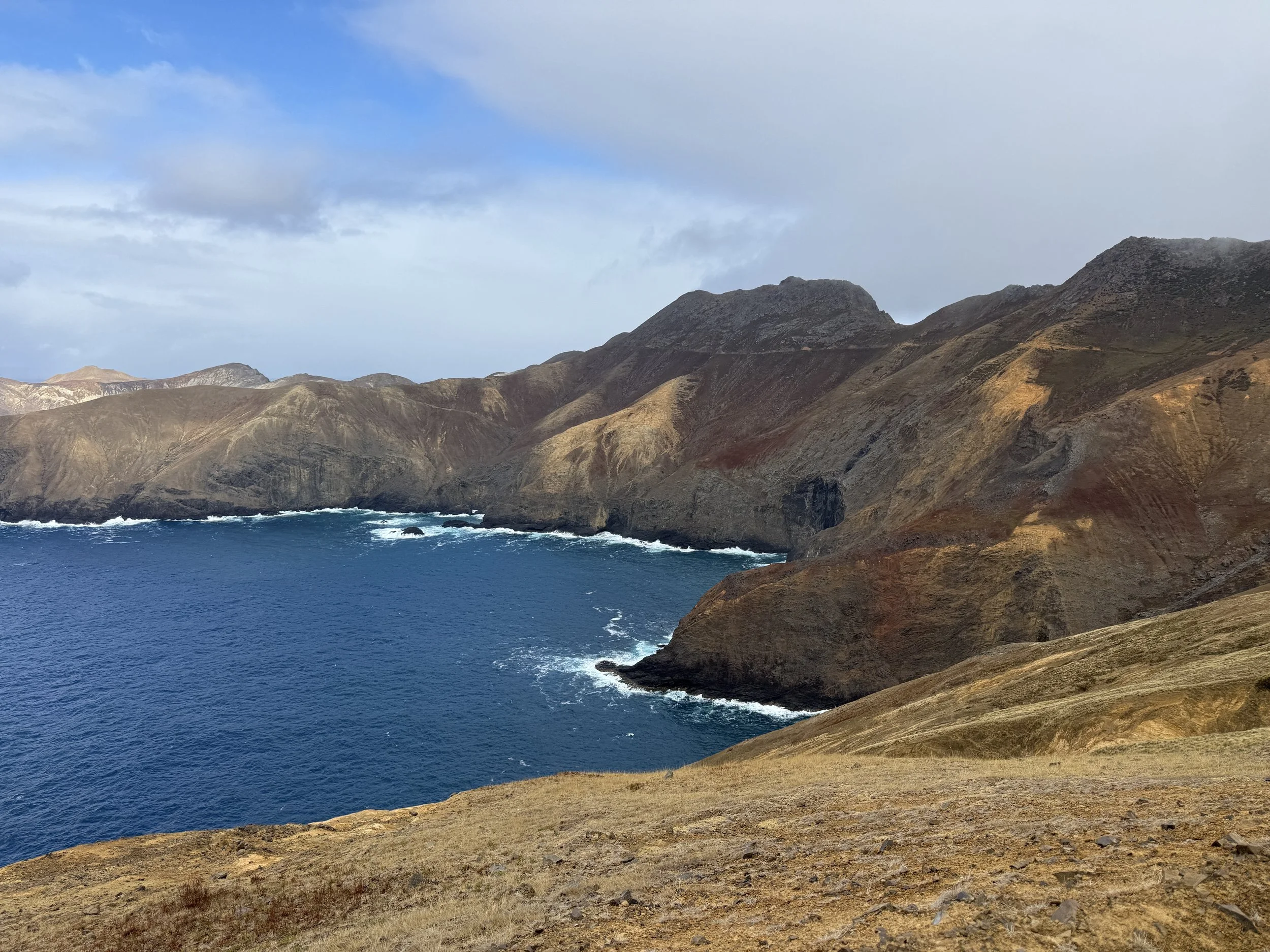

The hike was quite excellent honestly. The first part wasn’t so enjoyable since I had just done it the day before, but it was worth it in the end given we got to see how quickly the island changes from lush to dry after the Selkirk viewpoint.
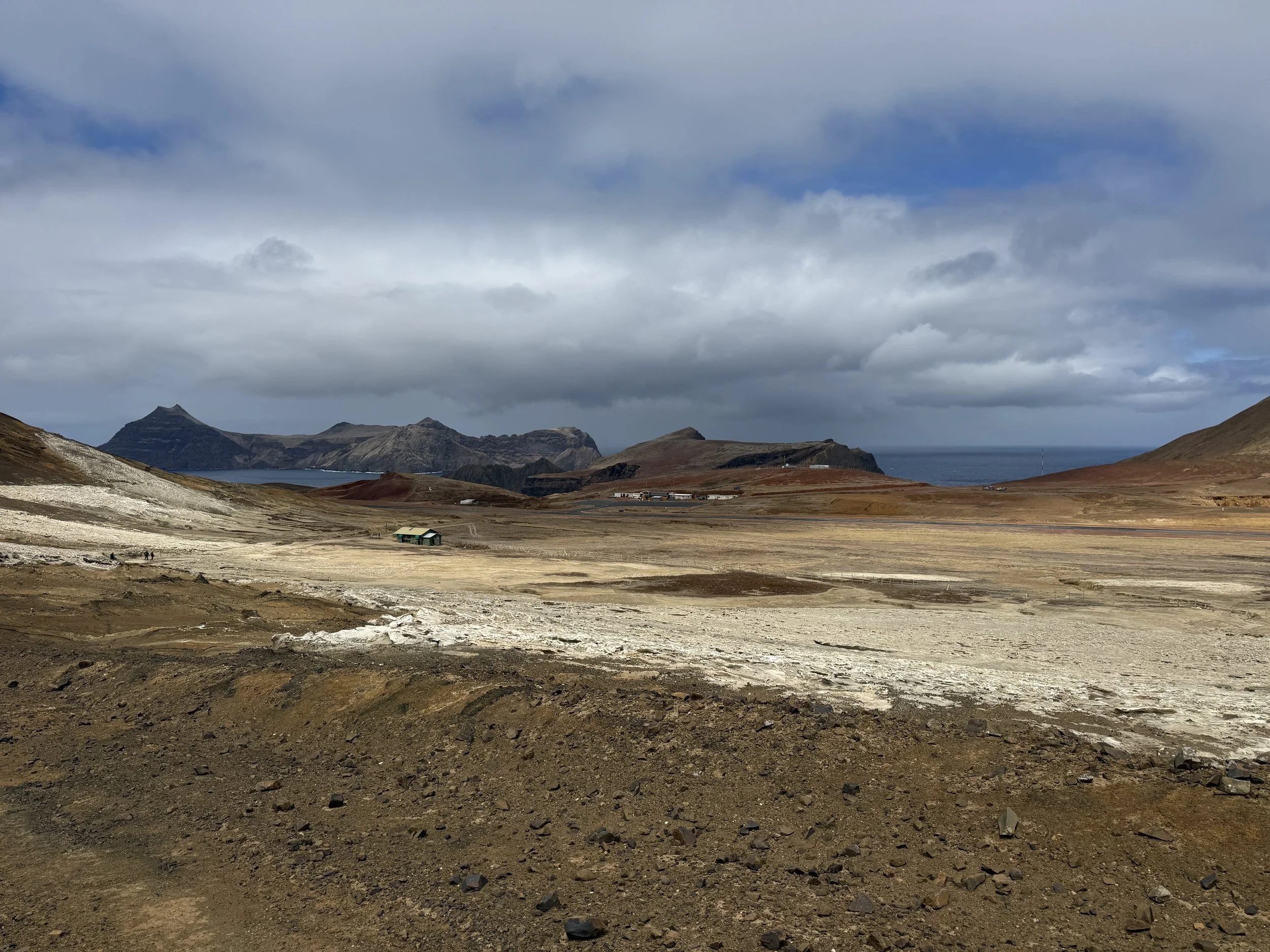
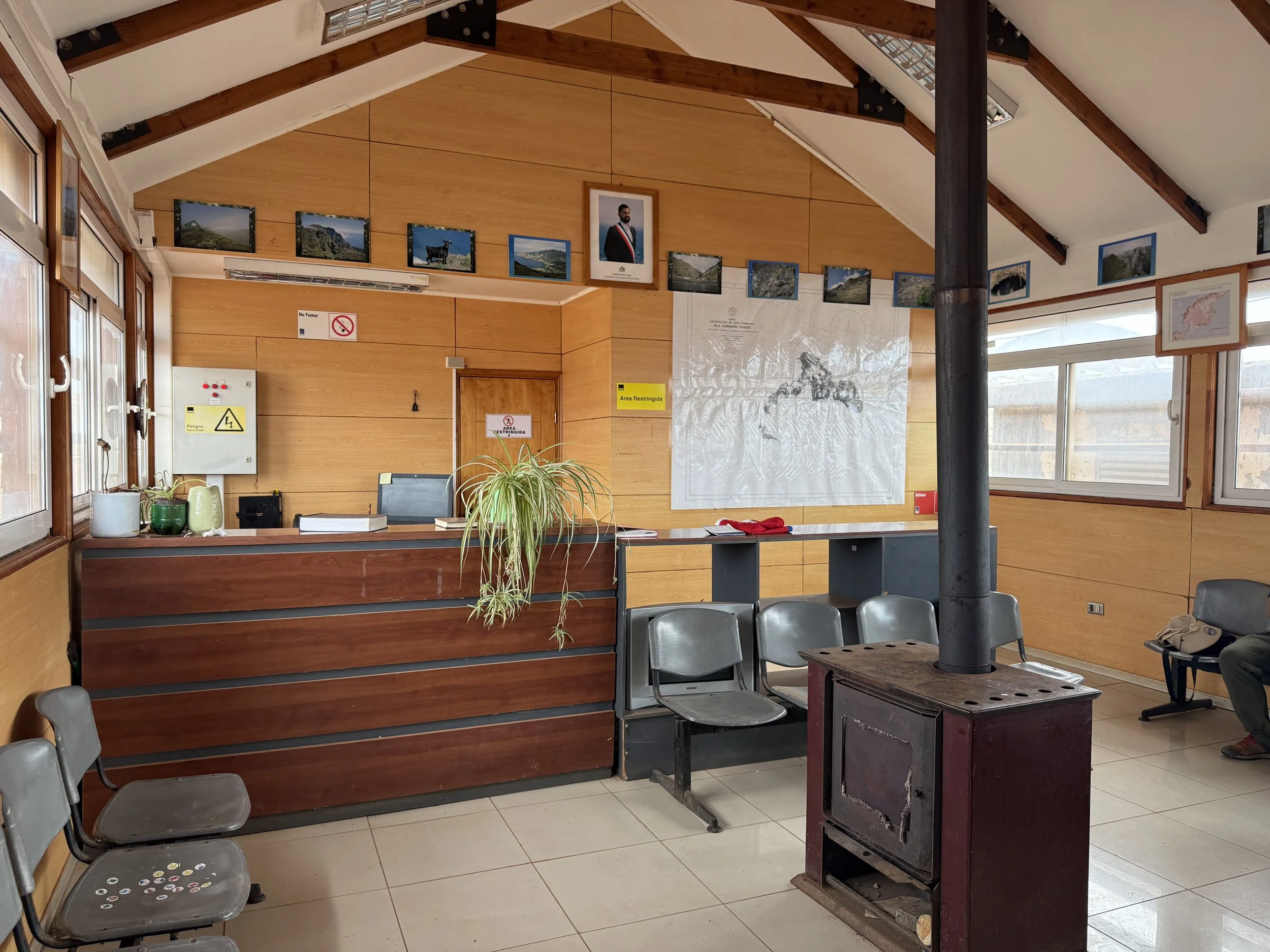
Thankfully there were just a few moments of rain and wind, and after passing some incredible lookout points we made it to the airport. We had to signal to the watch tower that we were there in order to get the permission to cross the runway.
Landing at Robinson Crusoe is not easy given the cloud cover that often engulfs the island, the wind, and limited services. In fact it is not uncommon for the plane to make it to the island, circle, and then turn back due to impossible conditions for landing. Thankfully, not too long after crossing the runway our plane for the flight back to Santiago arrived.
Unfortunately, when taking the luggage out of the truck brought everything from the city by boat my bag hadn’t made it. Somehow it was left in the lobby, though my other bag which was right next to it did come.
I thought it need to wait in Santiago a while until my bag could come on another flight, but thankfully there was another flight with a different airline that afternoon and on arrival a driver had been arranged to bring me to get my bag. It was a mad dash from one private terminal to another and then to the main terminal, but with minutes to spare I made it for my connecting flight to La Serena.
Recap:
For those seeking only impressive sites or relaxing resorts, your time is better spent elsewhere. However, for those who enjoy a bit of adventure and time in nature not spoiled by crowds, then the Juan Fernandez Archipelago offers a unique experience quite close to South America.