Caracas, Venezuela
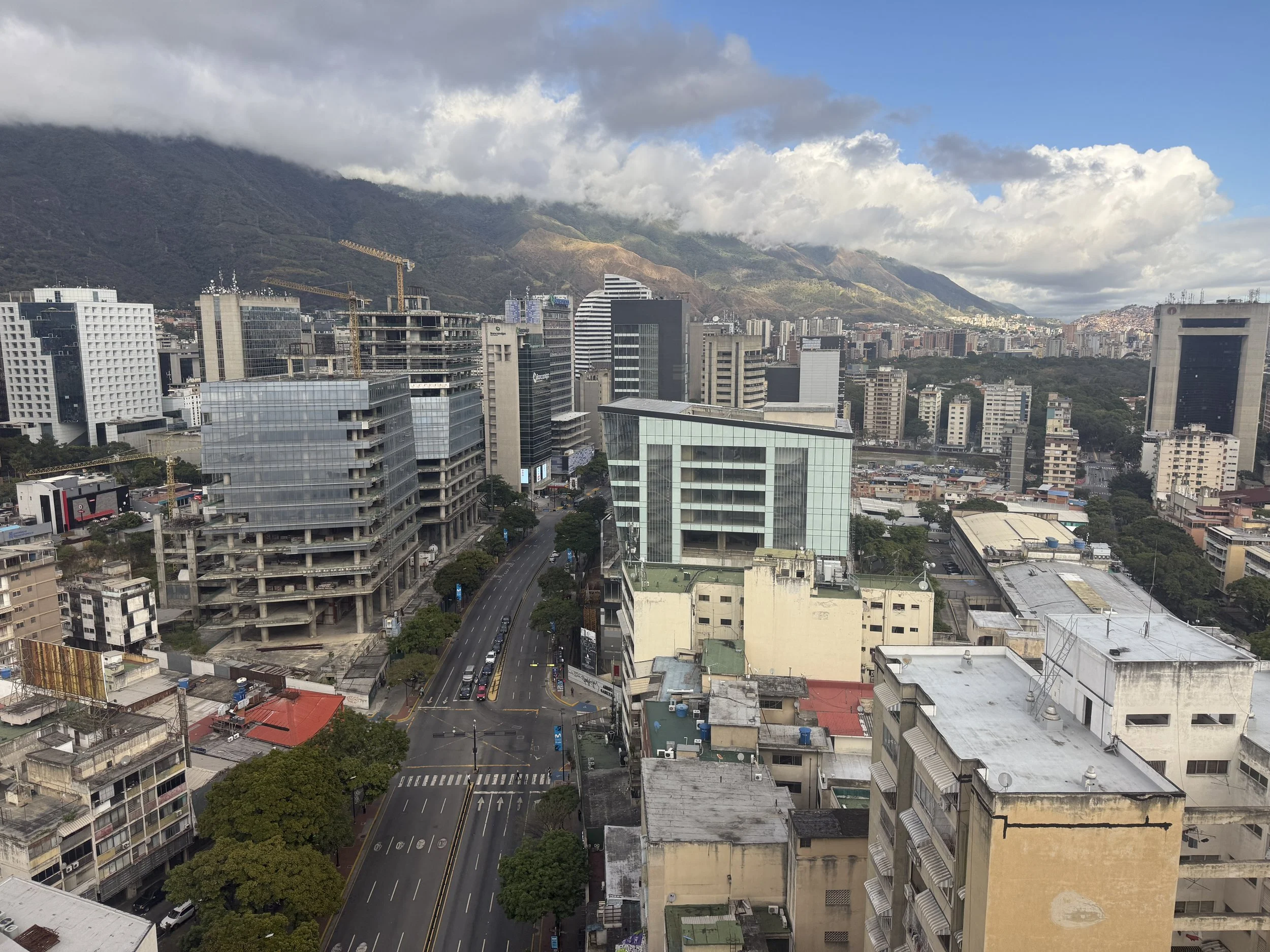
Our flight left Isla Margarita before the scheduled time of 9, and it was short so by 9:30 we had landed at Caracas Simon Bolivar Airport. We did not have any checked bags, so we quickly hopped in the car and headed on the 30 minute drive towards the city. My friend Scott was kind enough to connect me with his friend Irene who is from Caracas and lives there. She offered to meet us in her part of town and give us some context on life in Caracas.
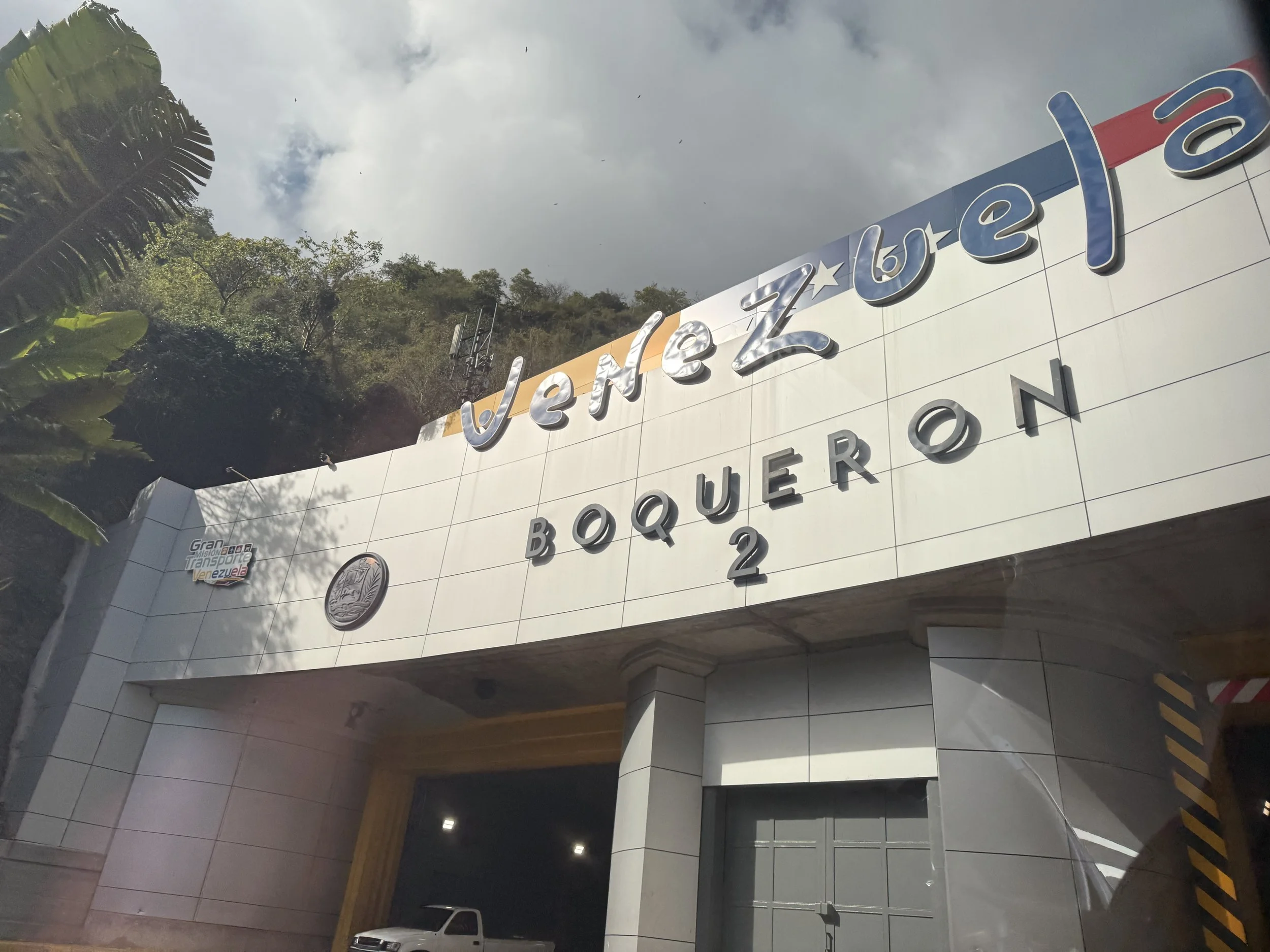
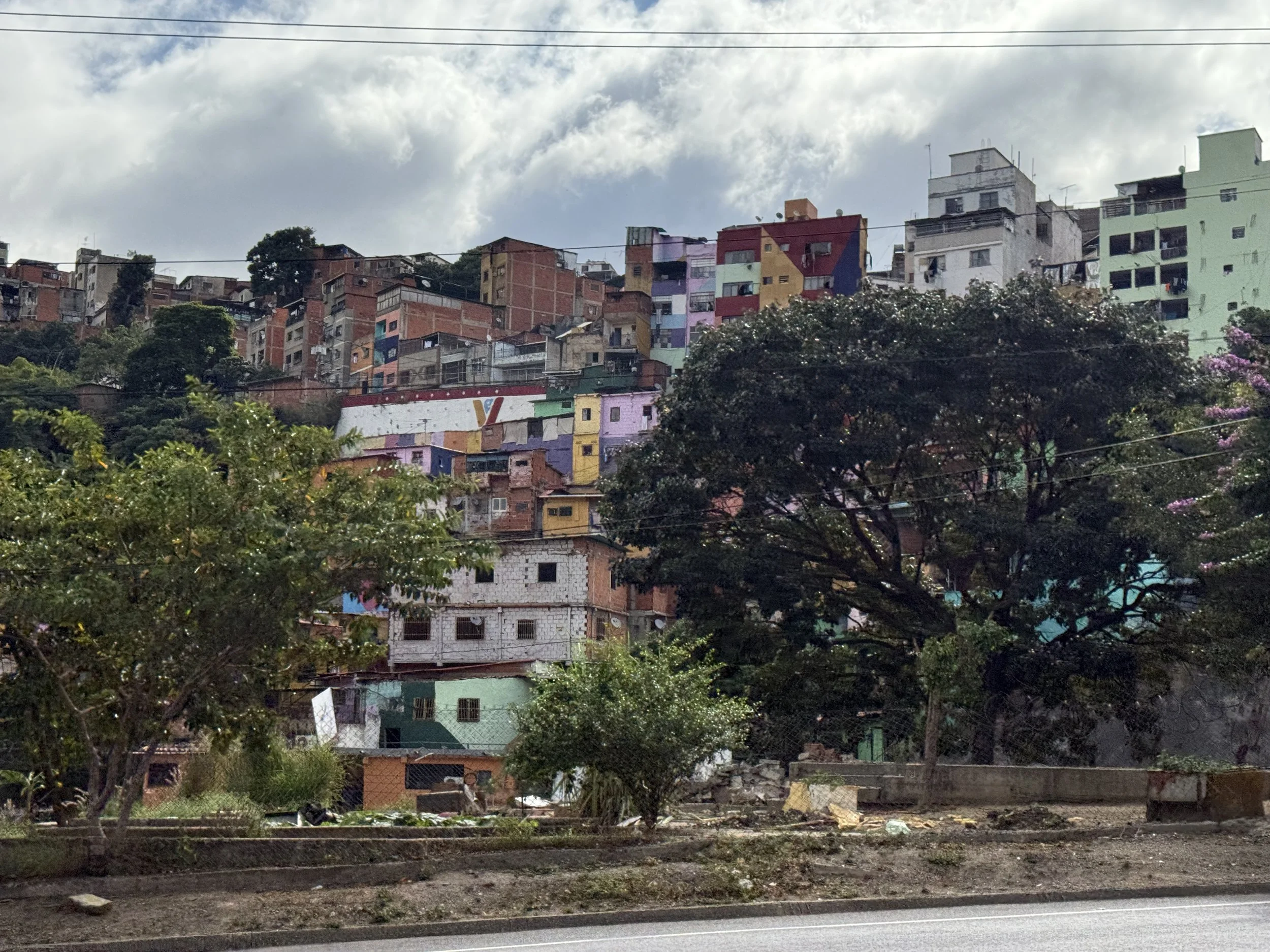

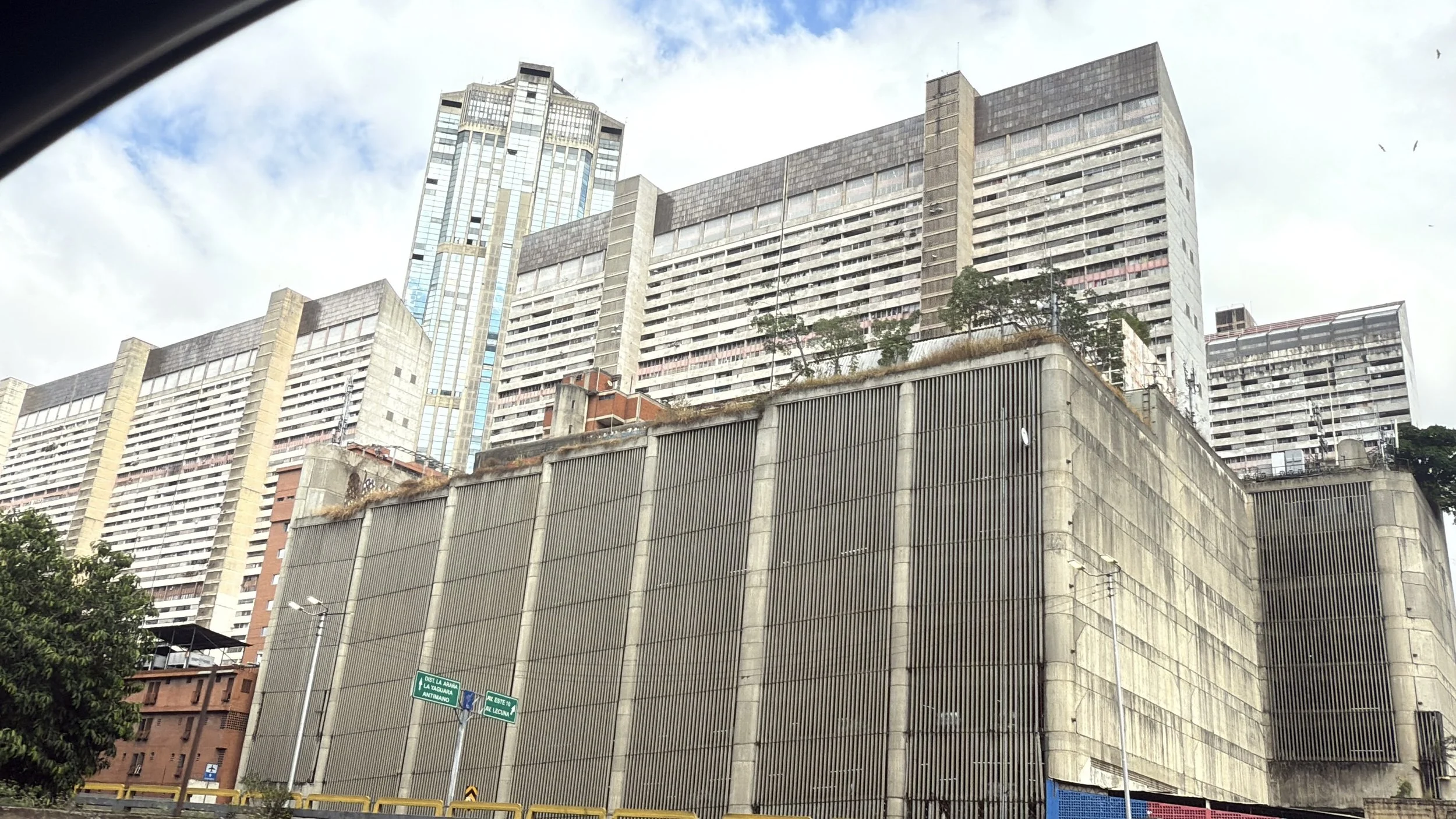
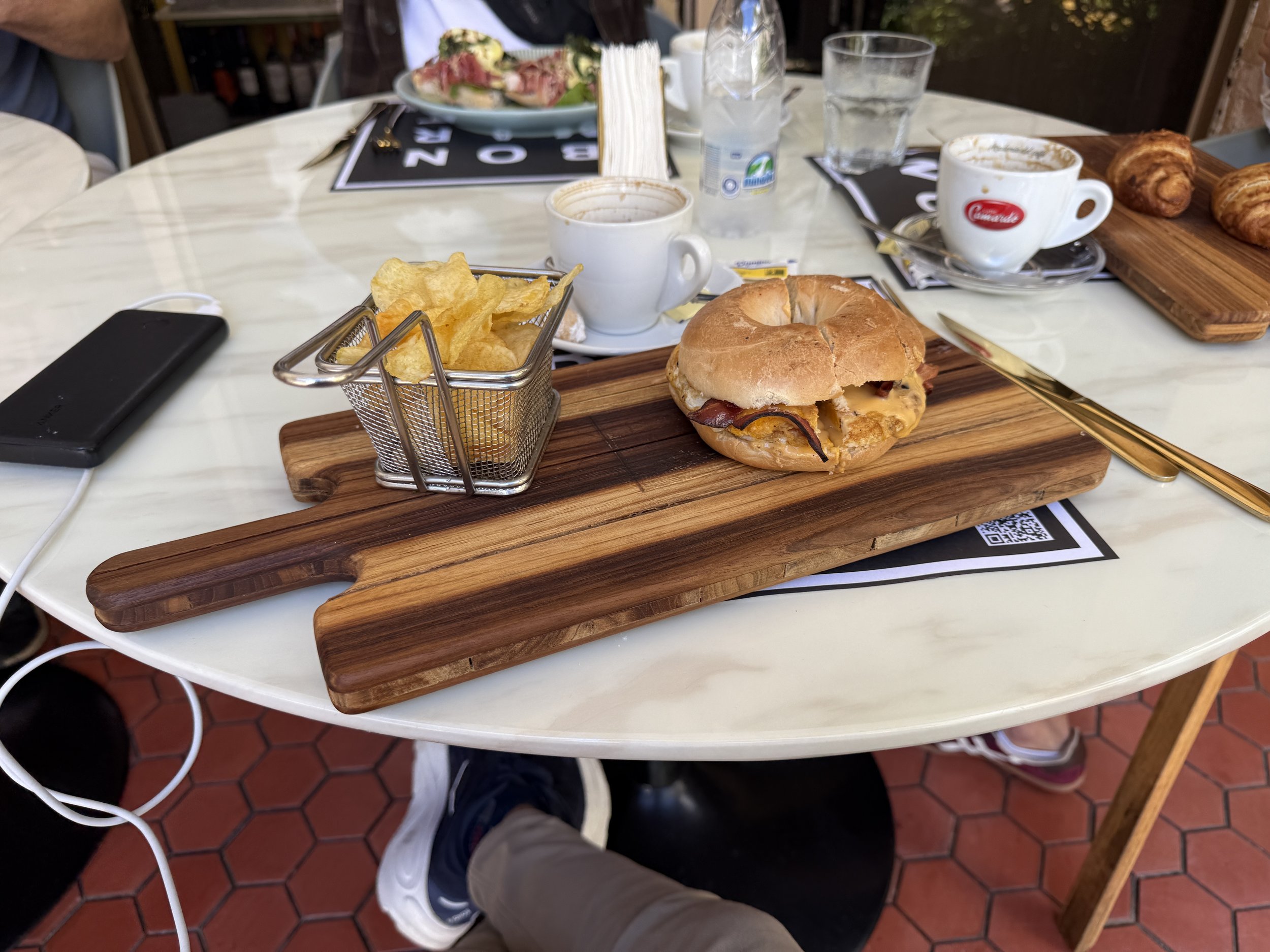
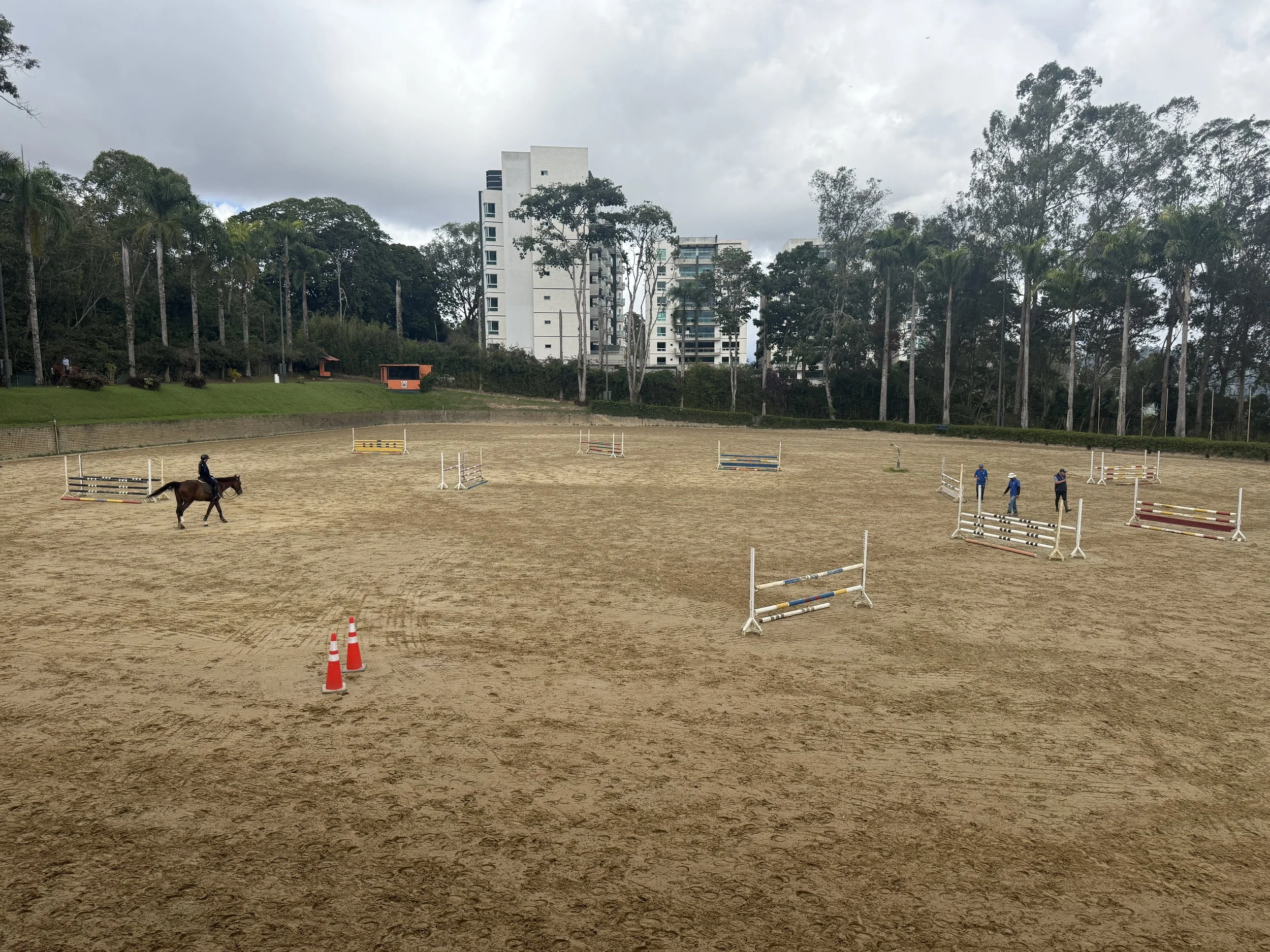
We met in a very nice but expensive cafe and then got to visit an equestrian center. To me there is always some slightly uneasy feeling about such places. Many workers make a bit over $100 in the month in Caracas, and here sandwiches are a bit over $20. Of course, by not going I in no way change the scenario in front of me, but I make a point of not only visiting such parts of town when traveling.
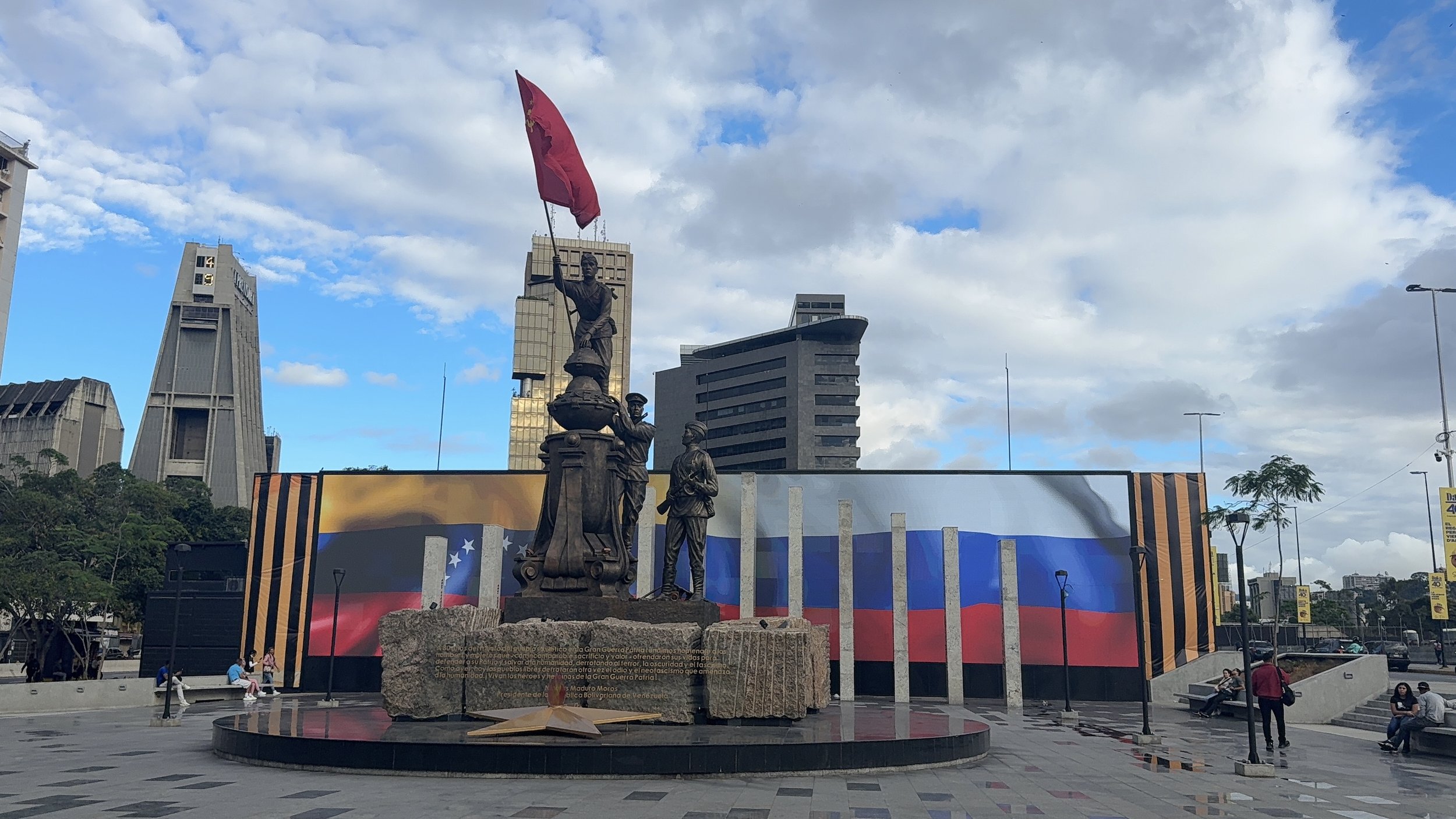
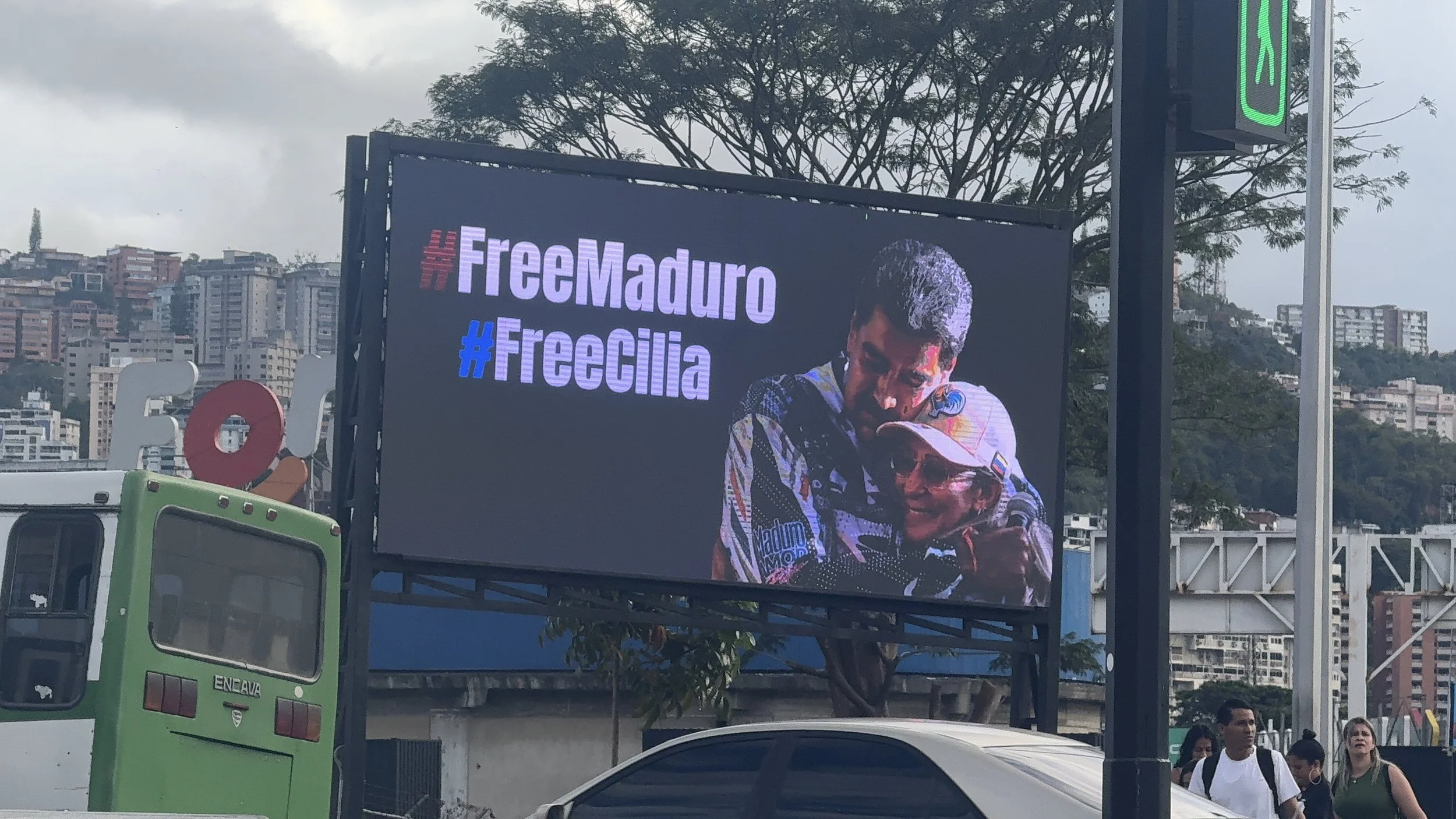
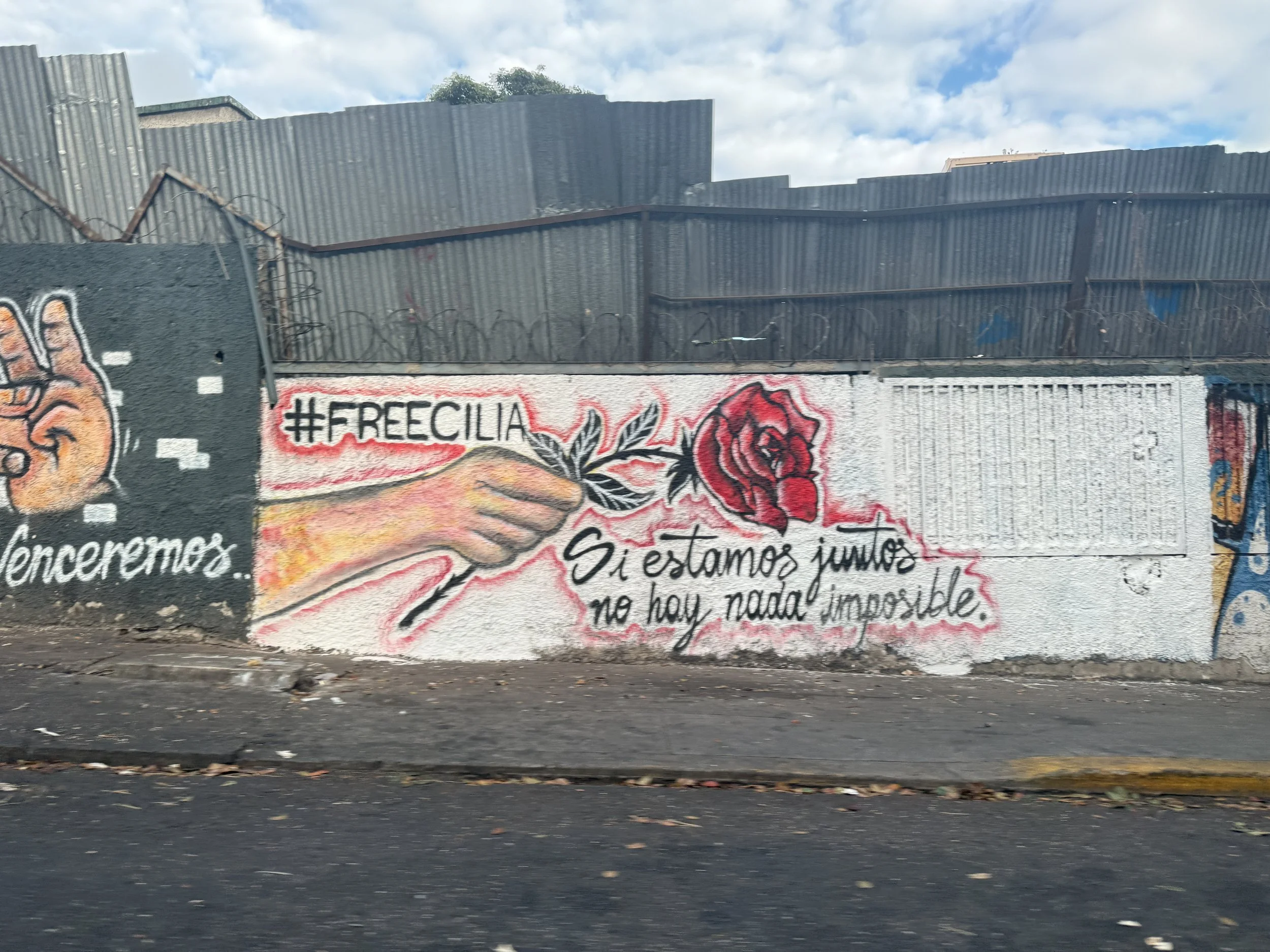
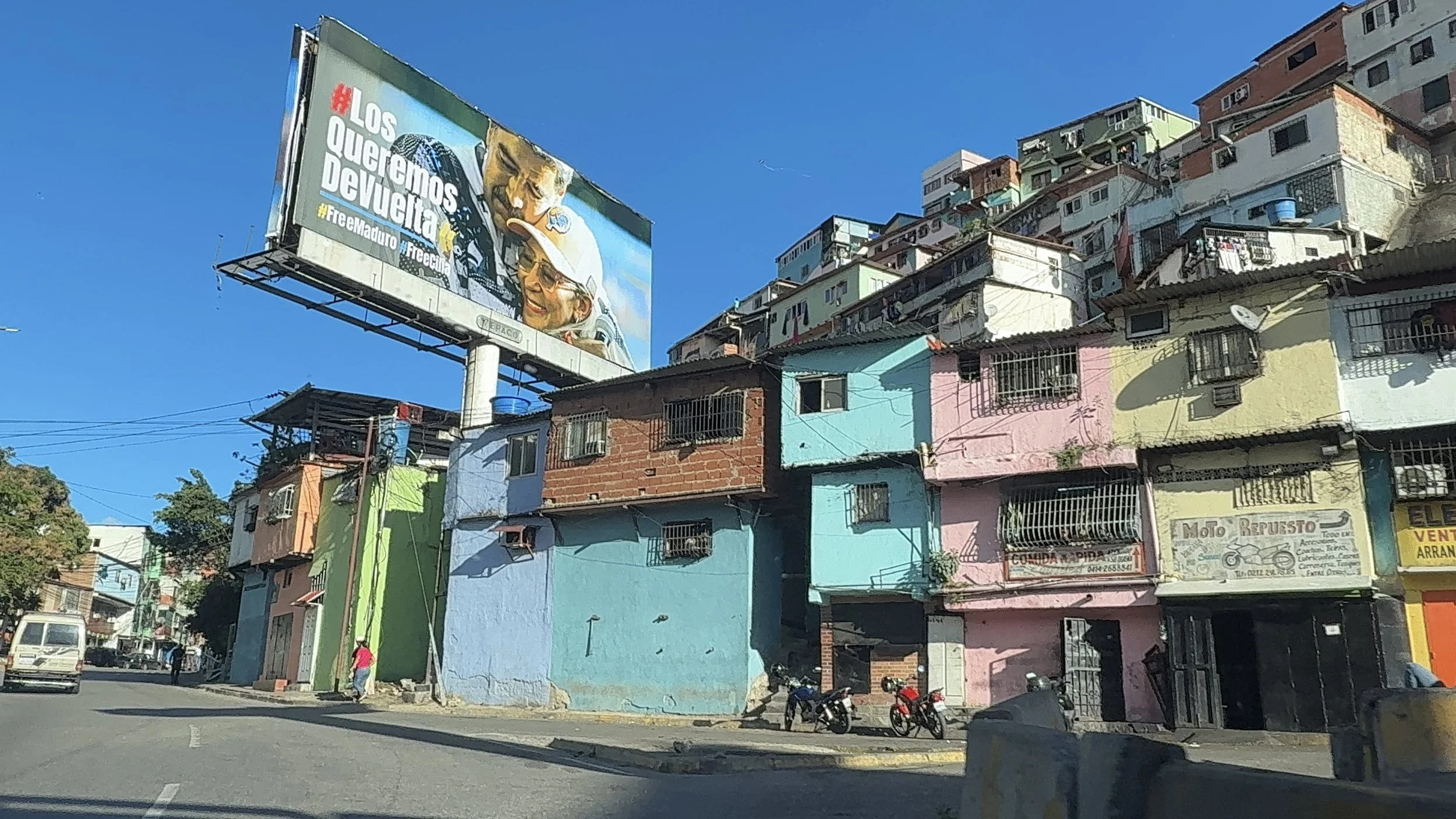
We then went to our hotel to check in and settle in for a bit. Caracas is known for its interesting monuments and murals, so many of those went on the list of places I wanted to see while in the city. That afternoon we stopped at the monument for the Great Patriotic War, the name used for World War II in the former Soviet Union. Here the Russian and Venezuelan flags are shown side by side with a Soviet flag and the orange and black stripes commonly used to honor this. Around there we also saw a sign saying “#FreeMaduro,” our first inclination of what had just recently happened in this city.
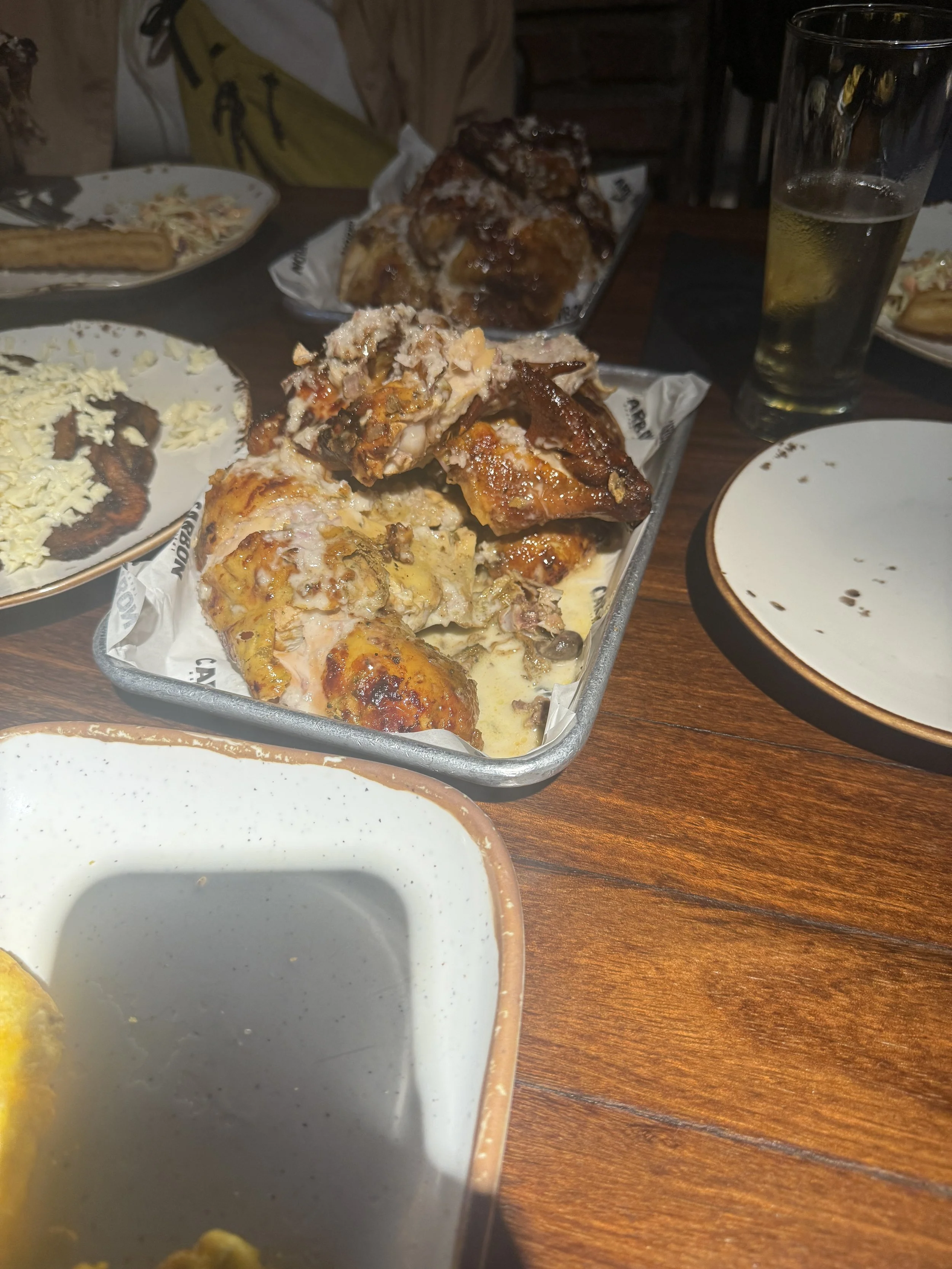
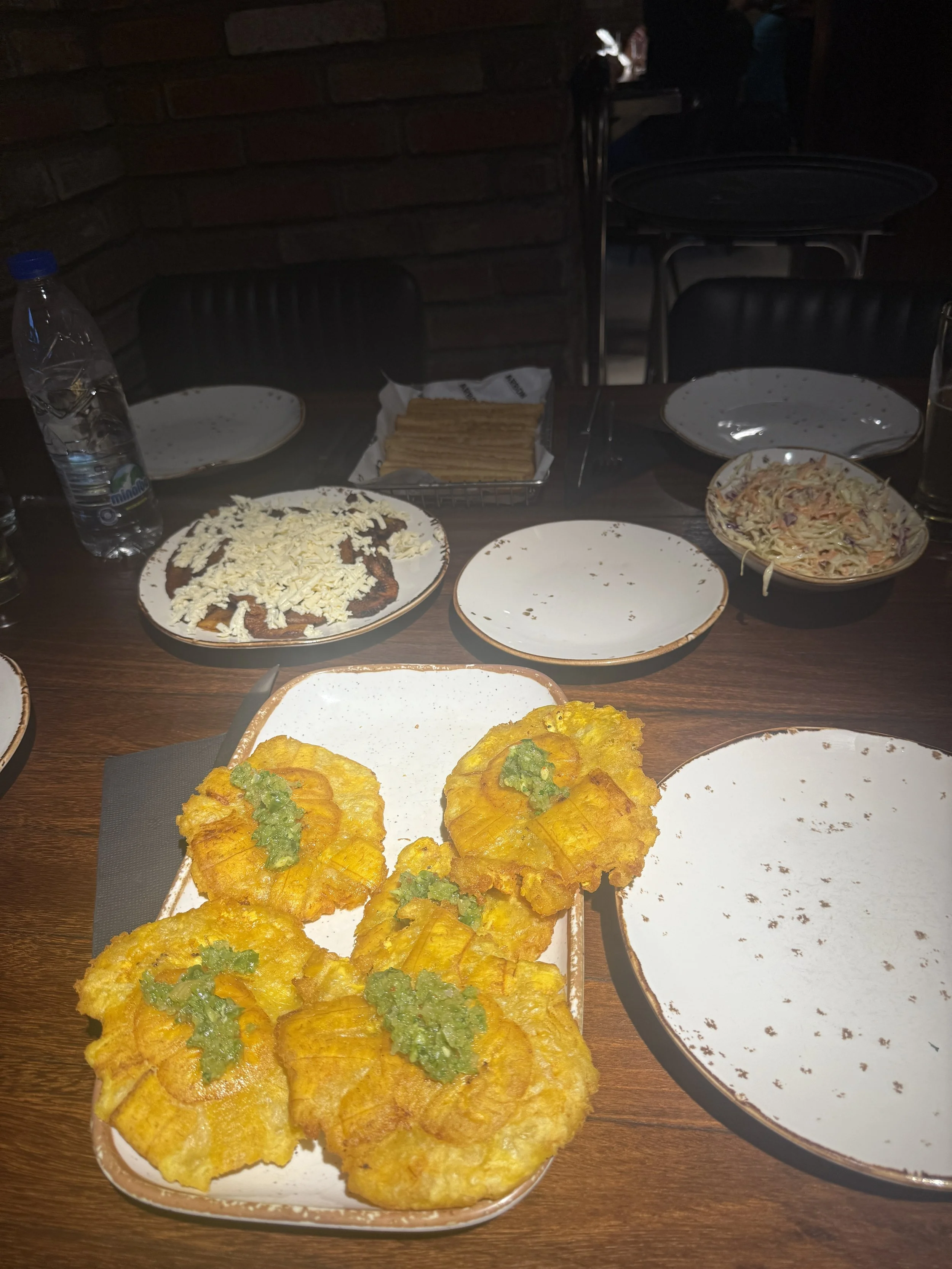
For dinner we headed to Carbon Restaurant in Chacao neighborhood. The food of tostones (fried plantains), sweetened plantains, salad, and roast chicken was absolutely incredible.
Day 2:
Irene was kind enough to connect us with a walking tour guide who would take us around some of the sites of the city. These are places one could explore alone, but it was nice to have a local with us for safety tips, history, and for directions making the day very efficient.
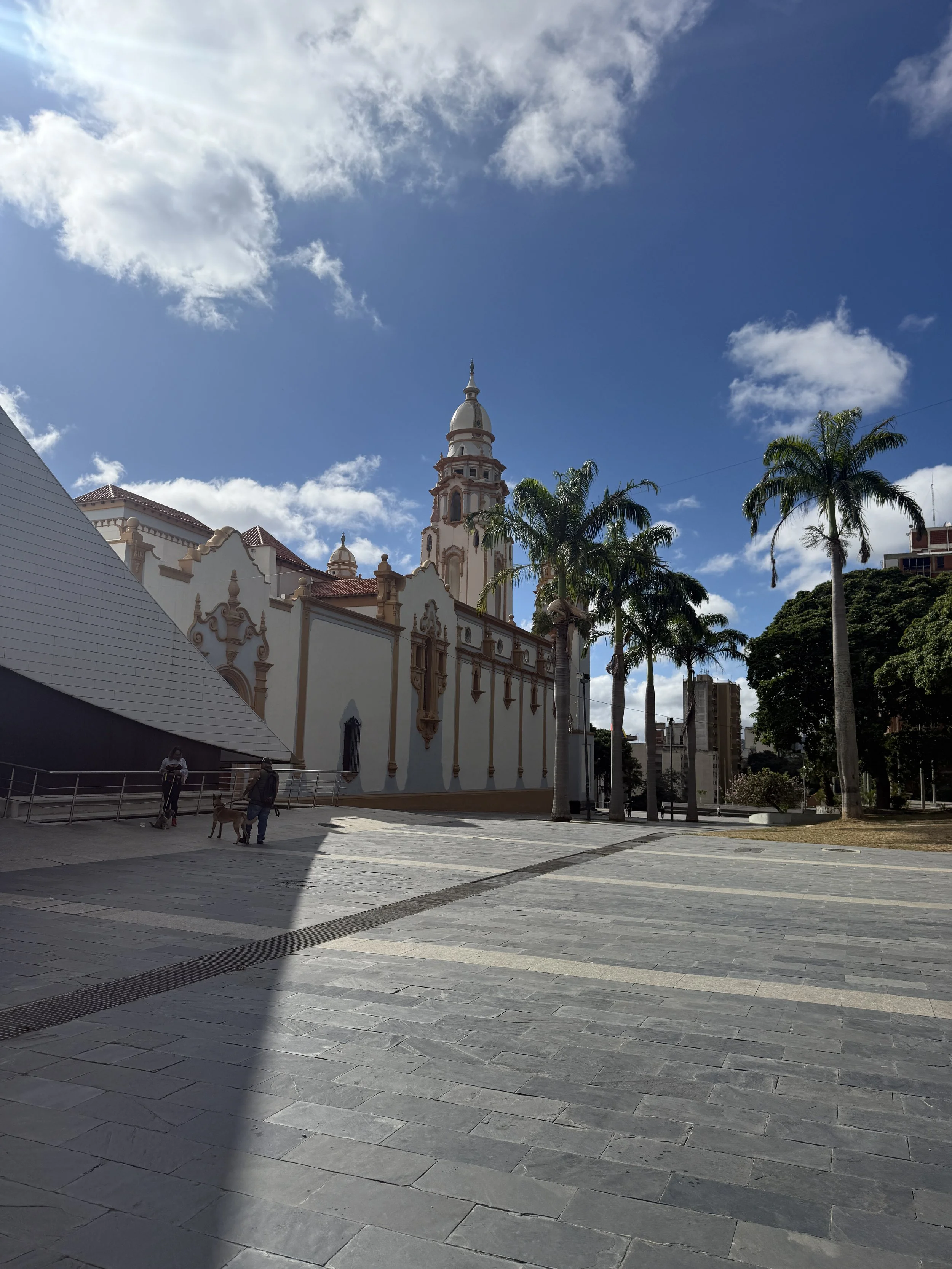
We began at the National Pantheon of Venezuela where influential players in the country’s history are honored. Then, in 2013 a new section was opened as the Mausoleum of Simon Bolivar. Simon Bolivar is the revolutionary who helped Venezuela (and other countries in Latin America) get their independence from Spain. Both parts are very impressive structures. The historical buildings has large marble statues and ceilings with murals and the new part is in the shape of a wave with incredibly tall ceilings.
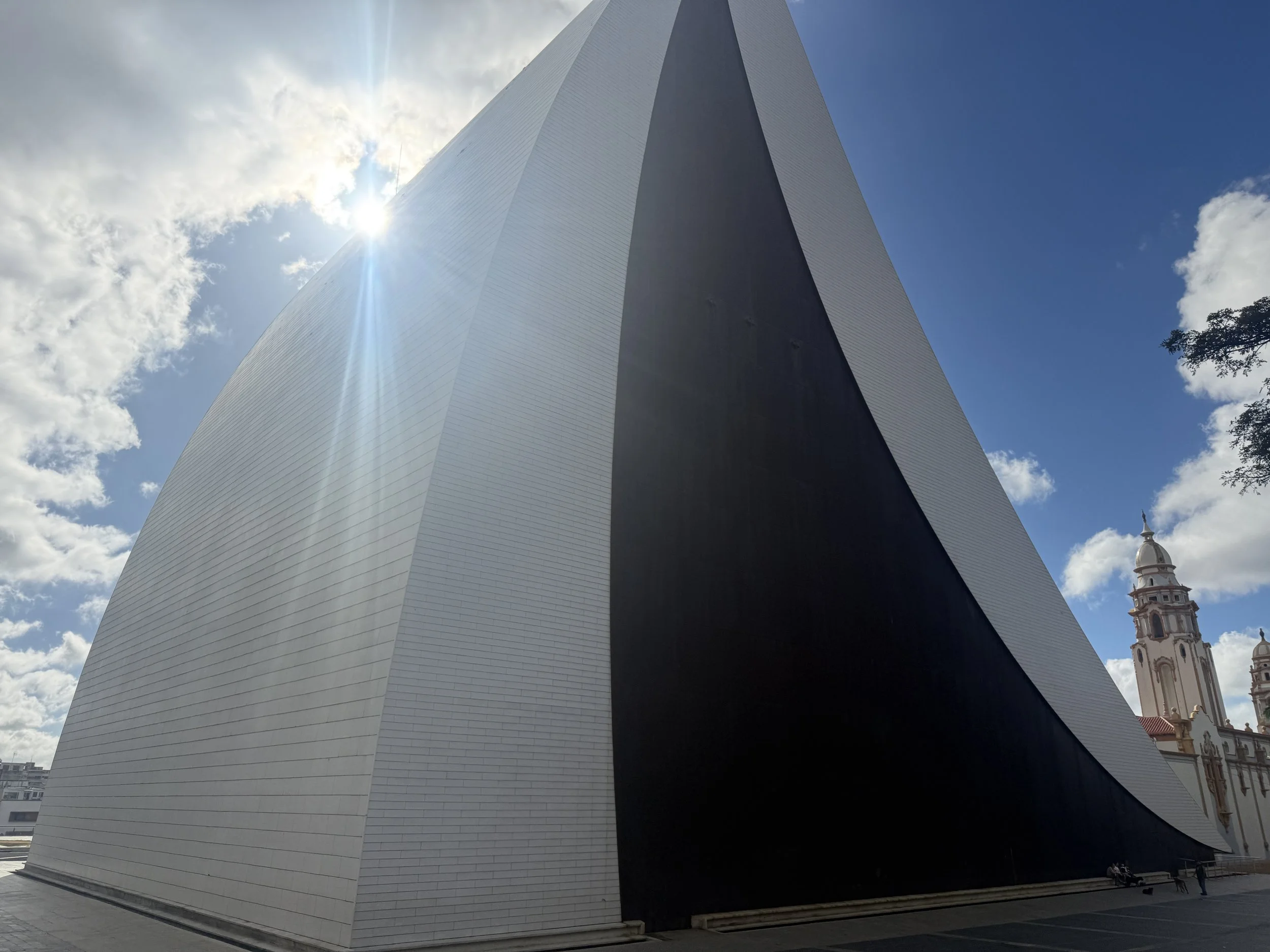
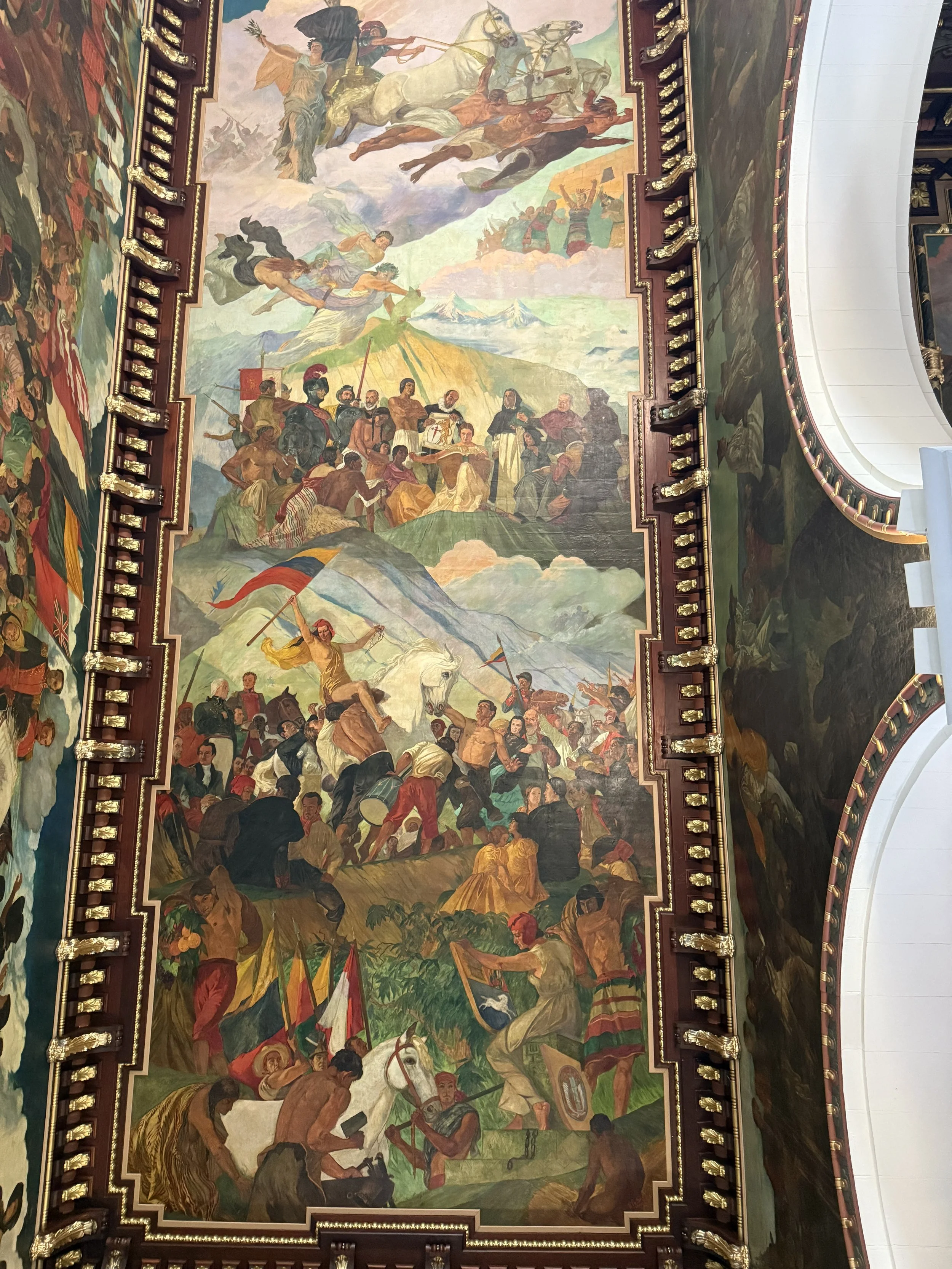
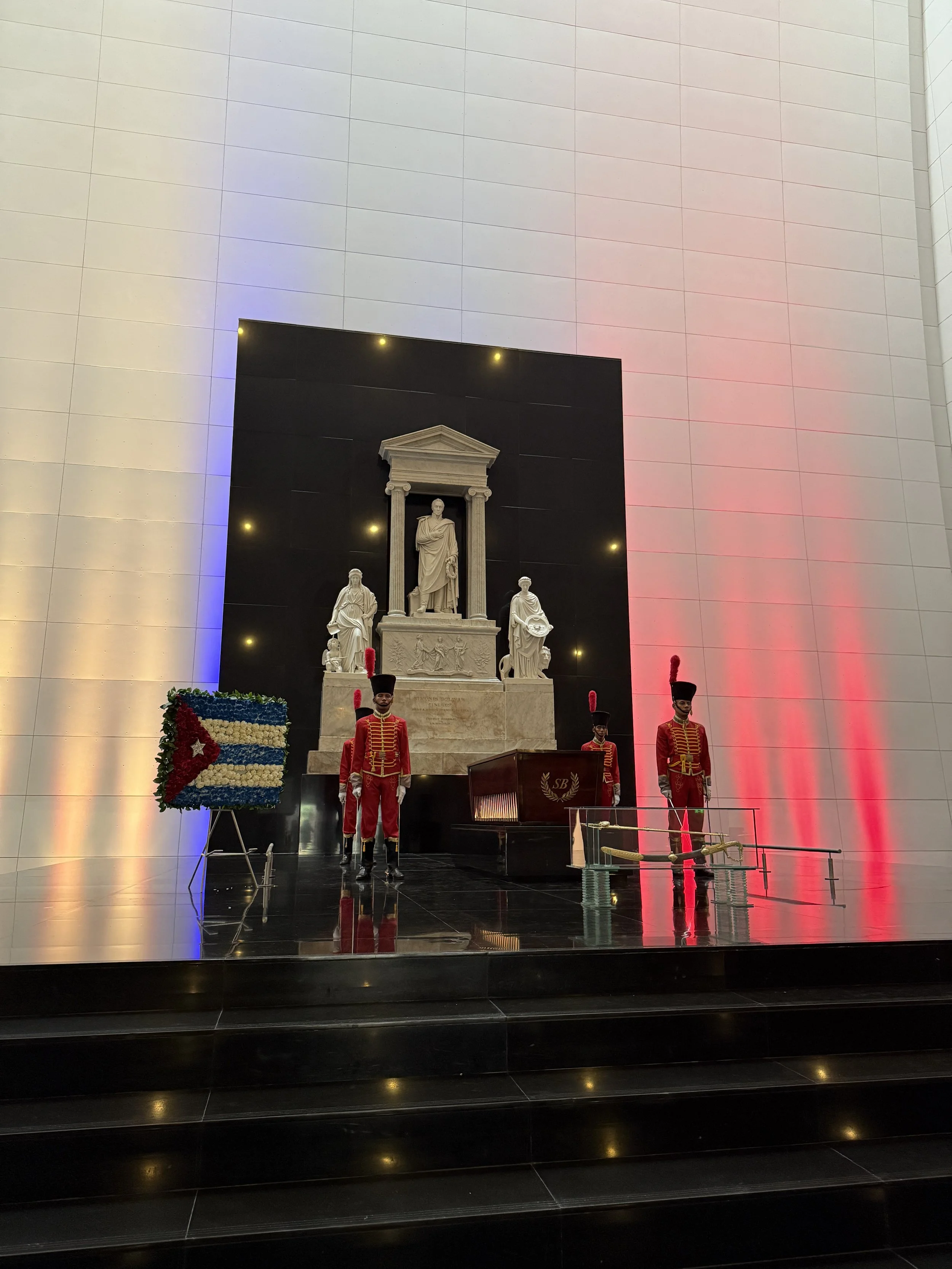
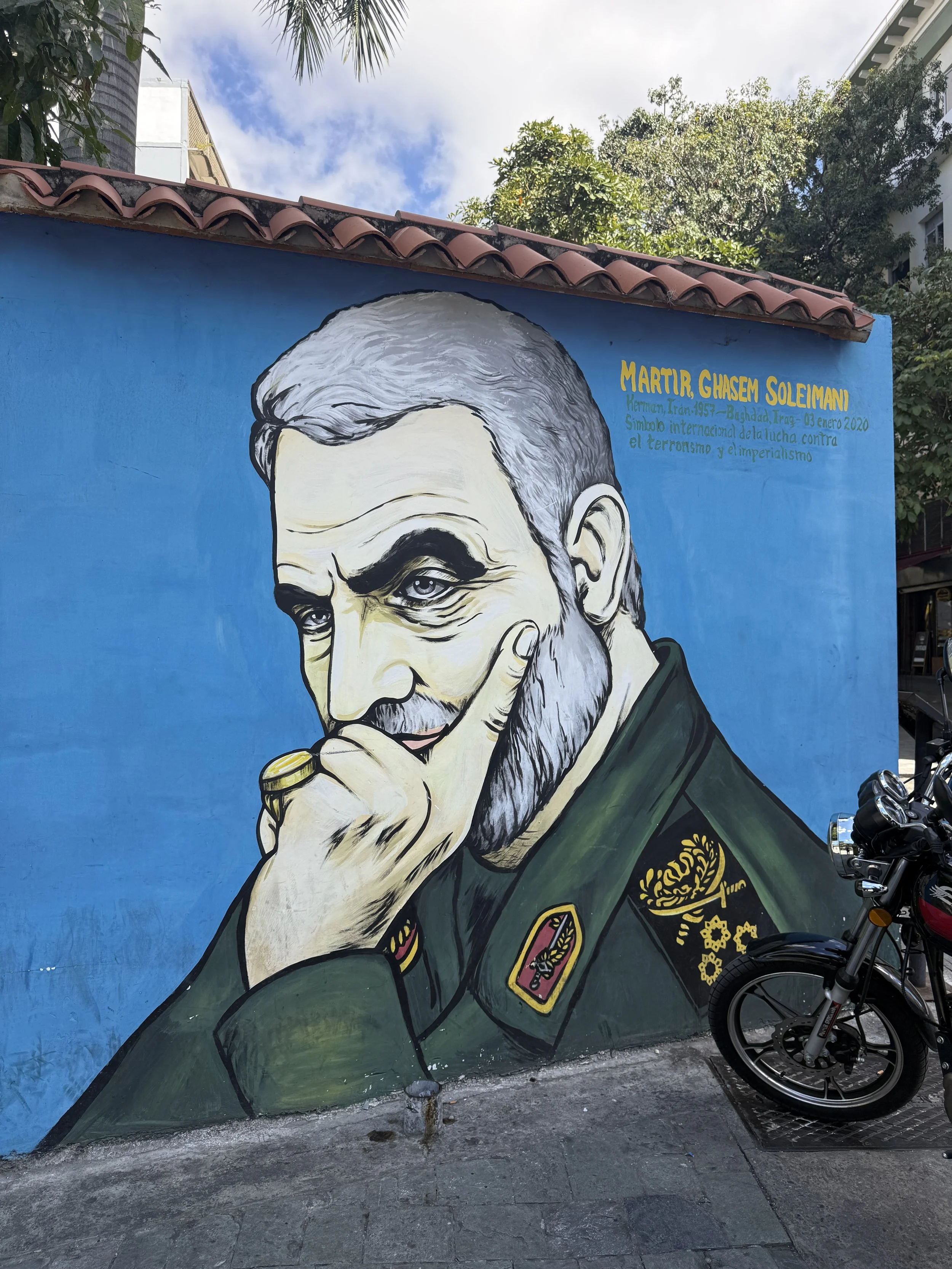
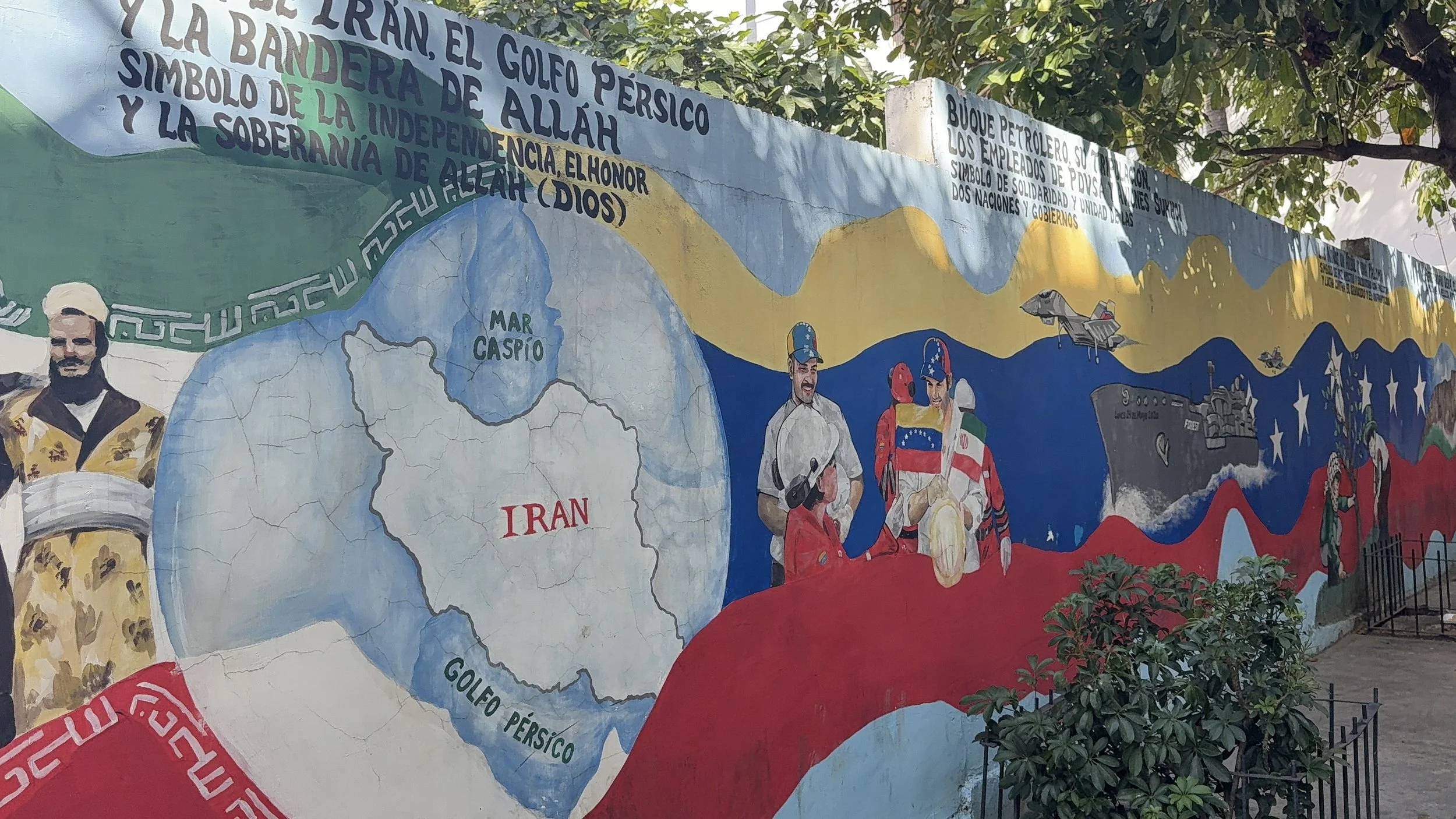
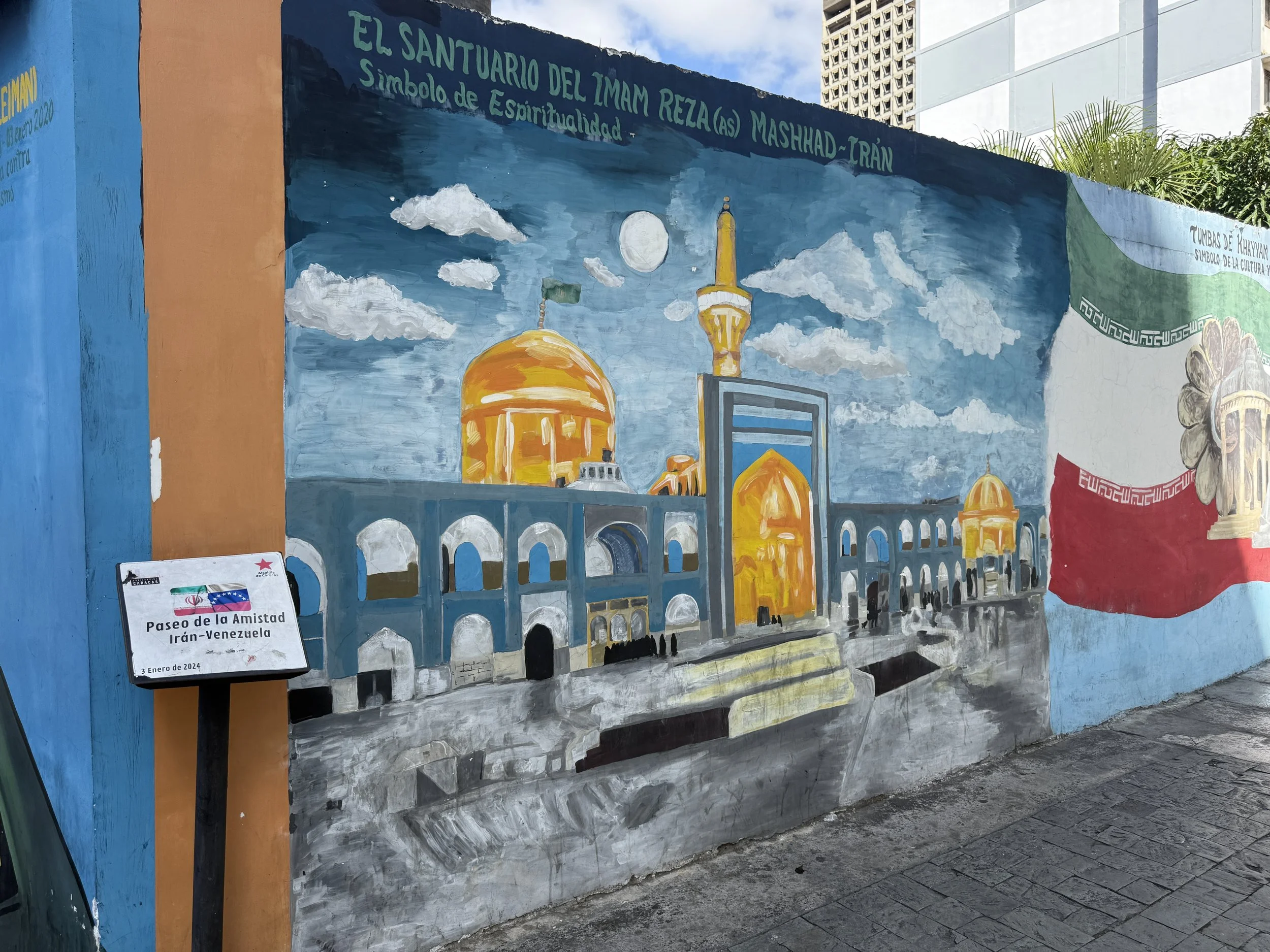
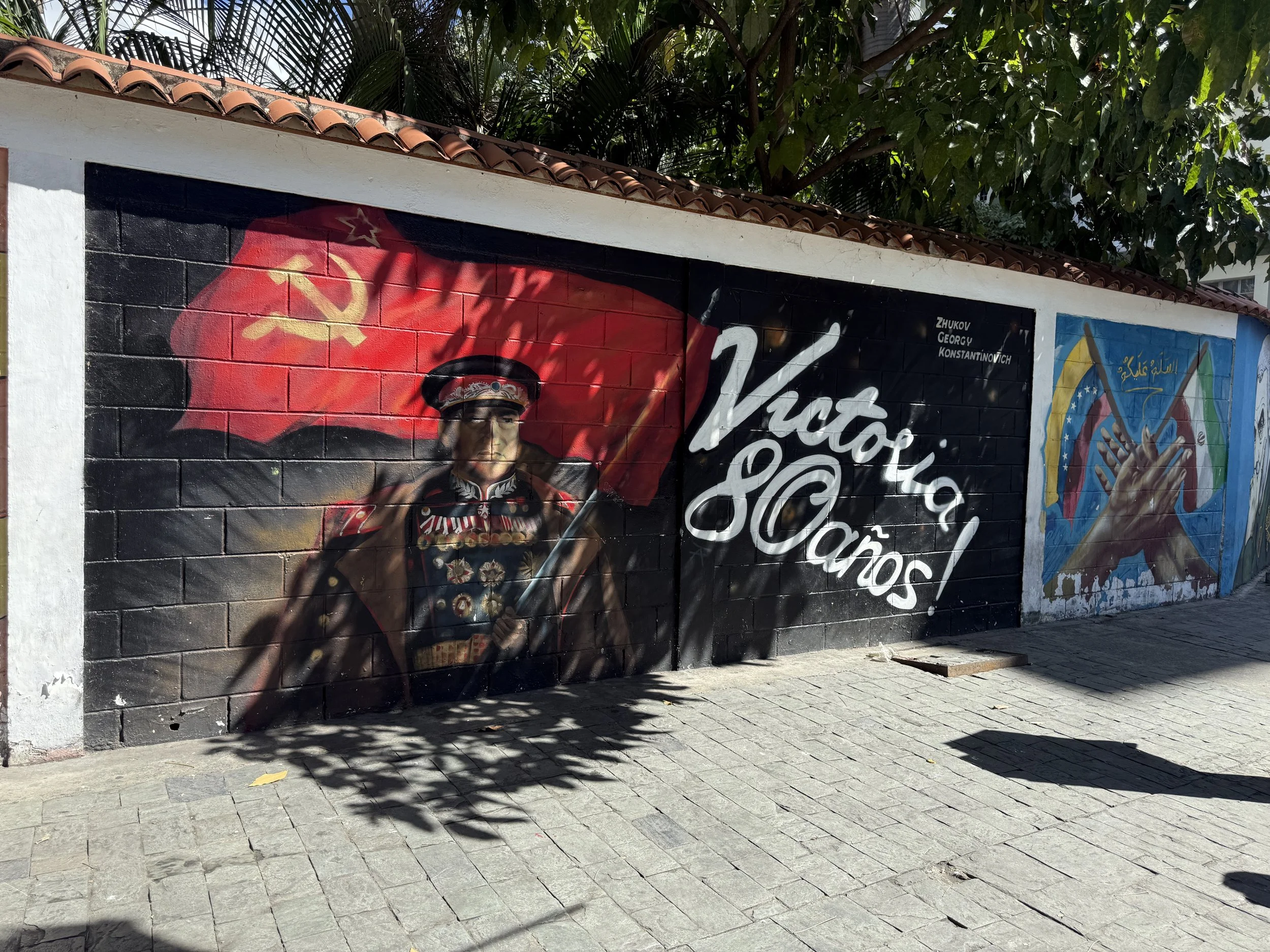
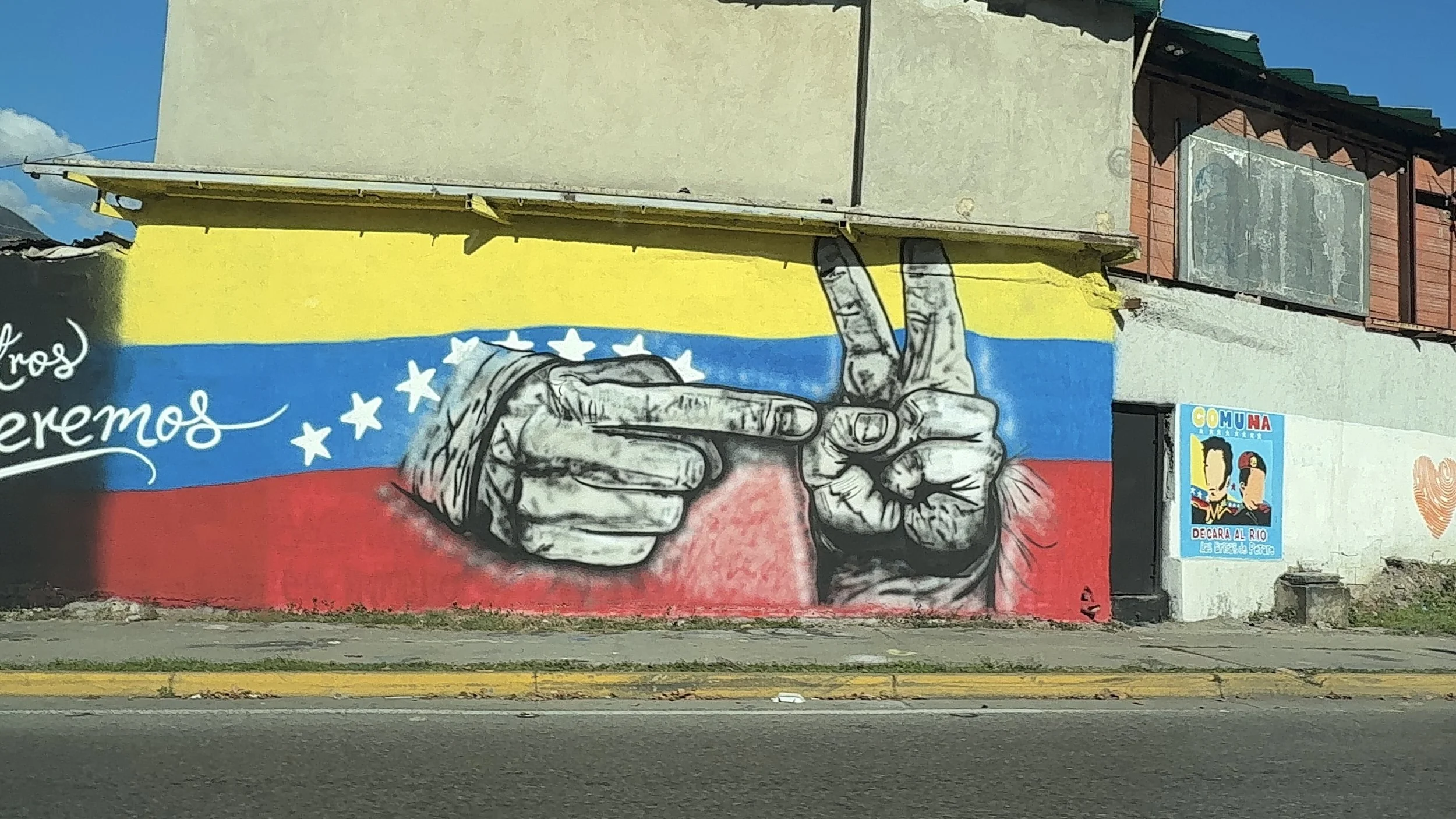
Next, we walked to Simon Bolivar Square. Here is the Friendship Walk of Venezuela and Iran covered in murals honoring Iranian martyrs, military technology, and history. There are also murals dedicated to Russia, communism, and the Great Patriotic War. In the square there is a counter that shows how much time has passed since the capture of Nicolas Maduro and his wife. We stopped for a small coffee break and to try a golfeado which is a sweet bread covered in syrup.
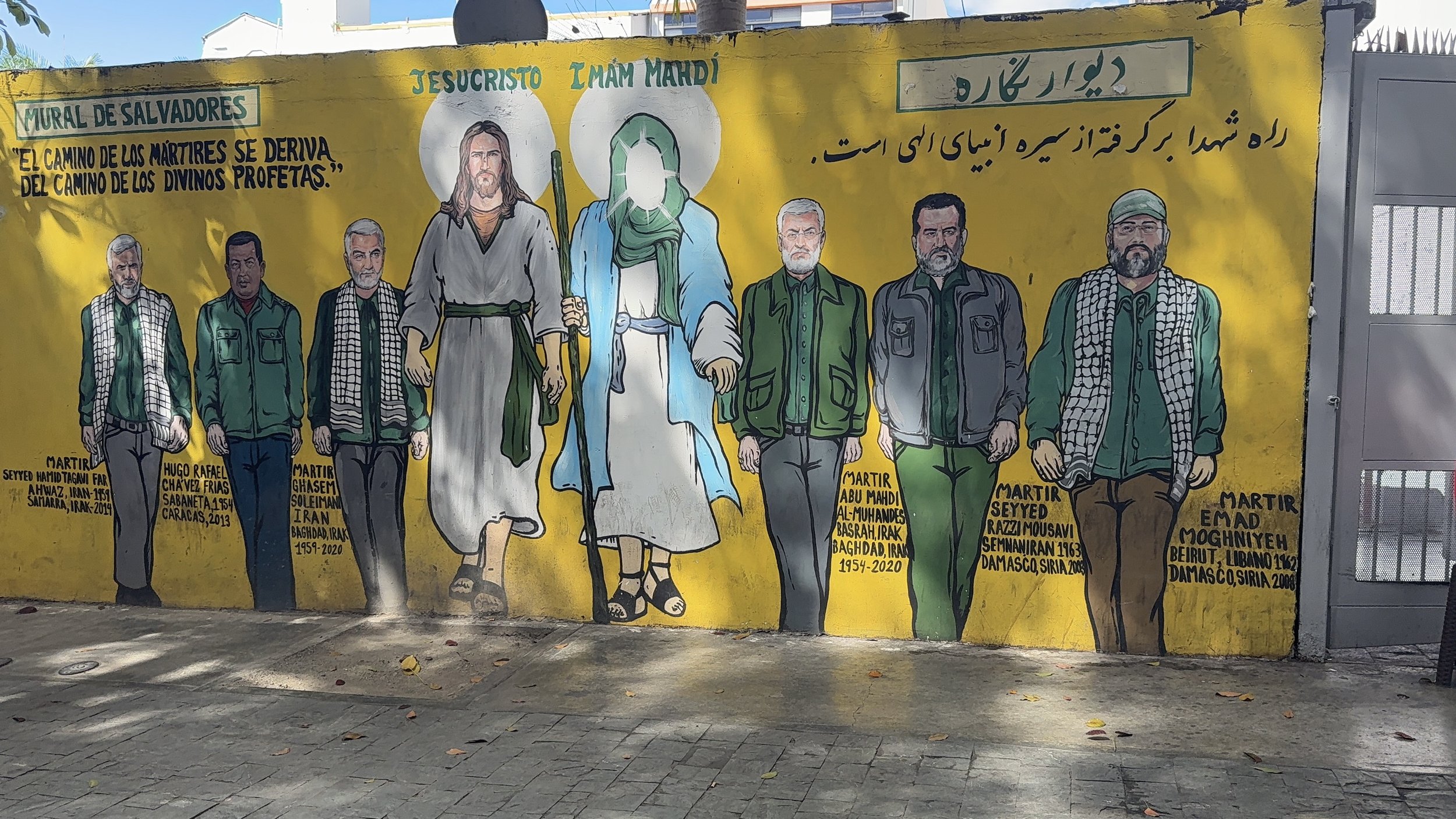
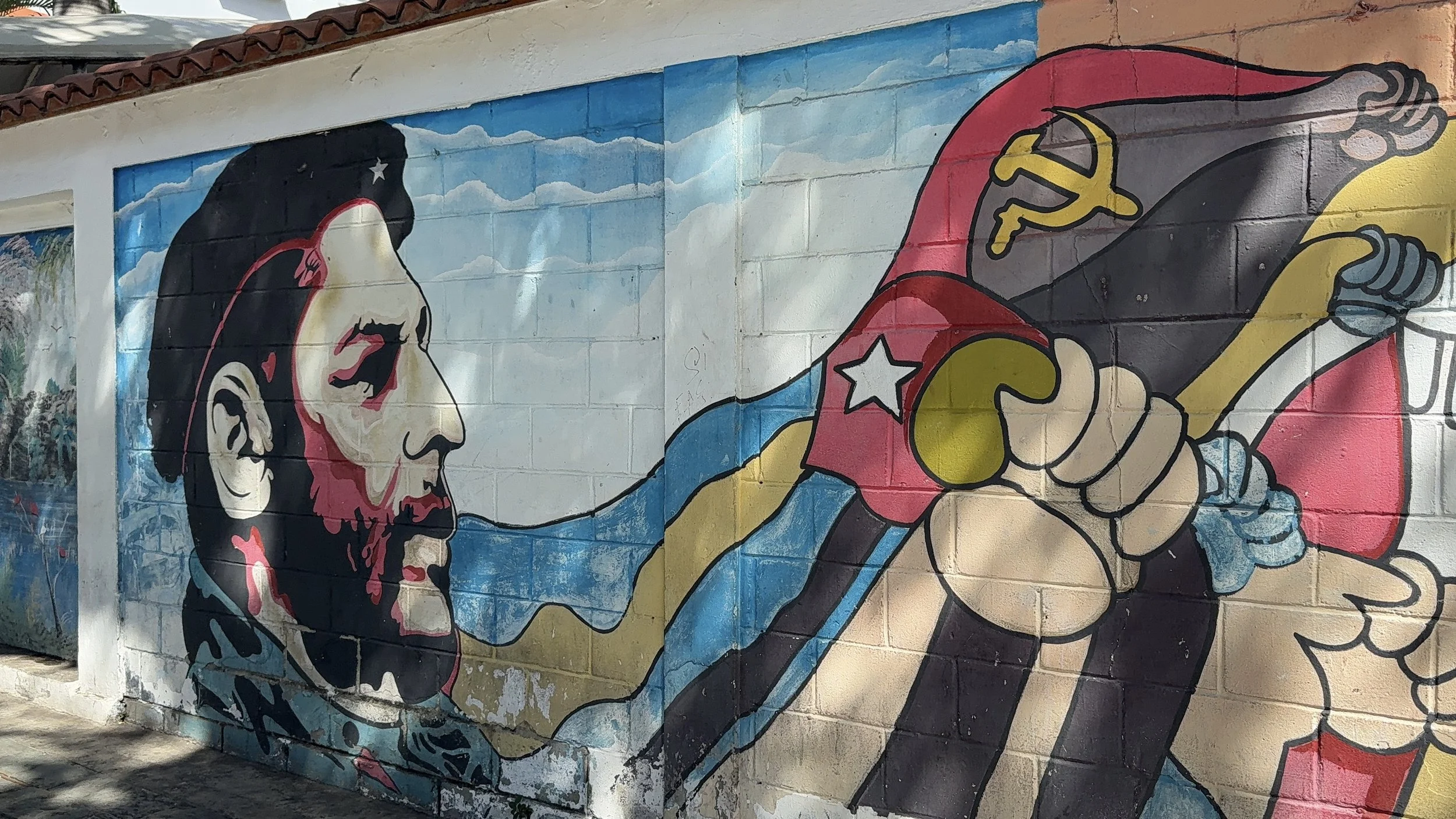
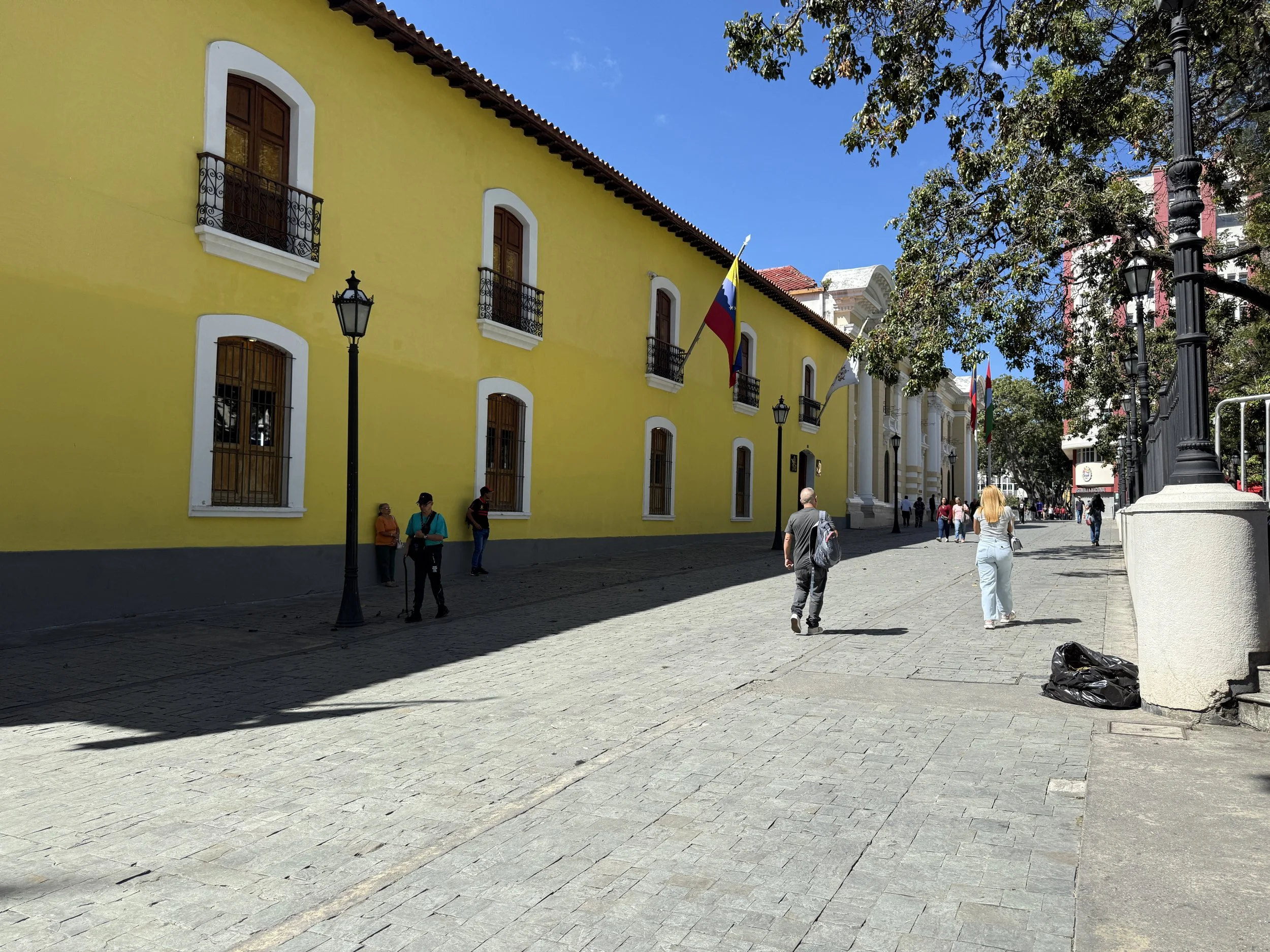
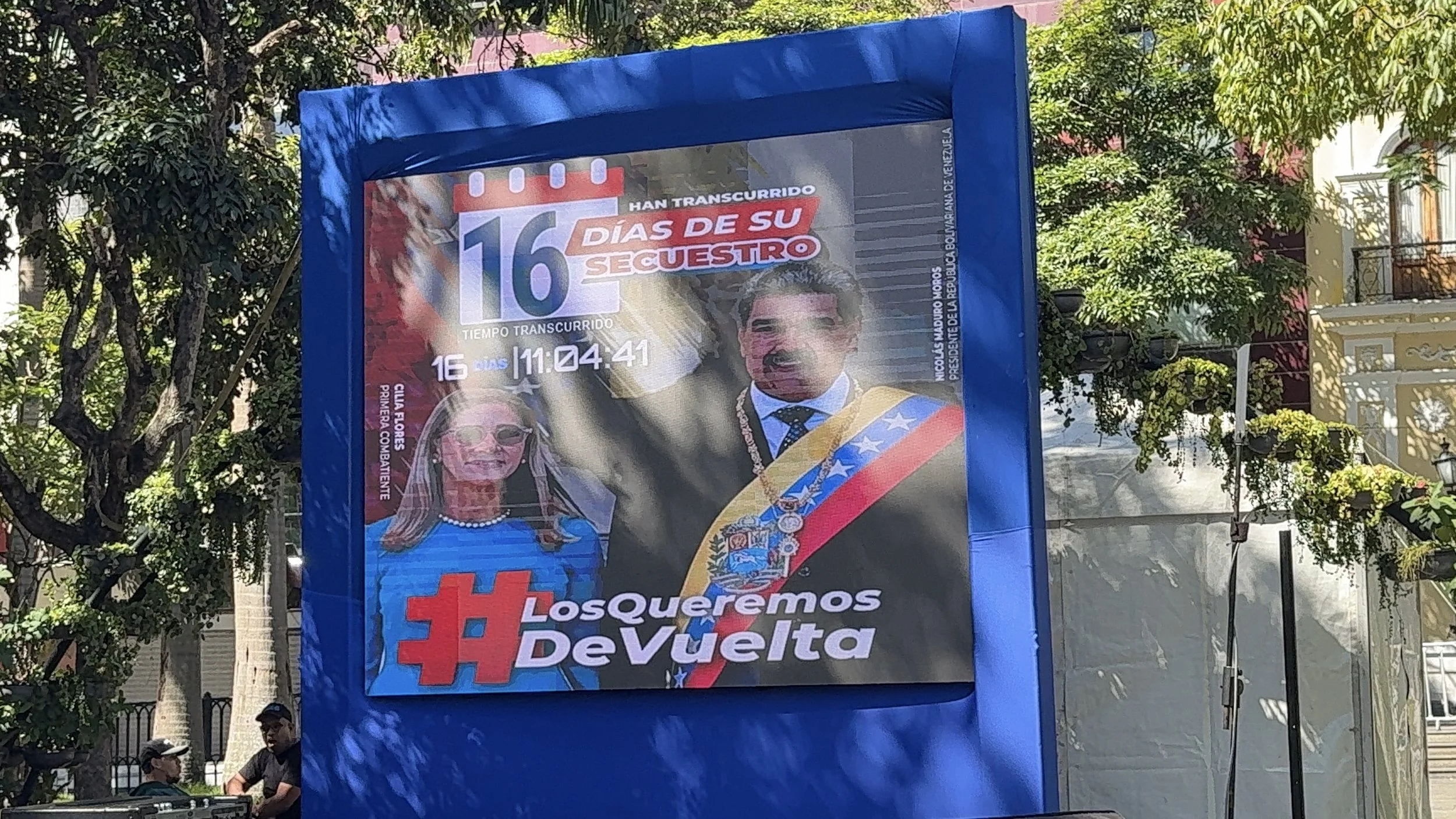
From there, we walked through the very heart of the government complex in Caracas, past the central bank, vice president’s office, and building where the ministers gather. Here we were advised not to take any photos to avoid “misunderstanding,” specifically after the events of just 2 weeks before.
As we went through this area we were on our way towards the neighborhood 23 de Enero (23 of January). This neighborhood is known for being one of the most pro-government in the city. We were not sure what to expect given how dangerous some people told us it was, but when we went in, it was quite different. We saw kids playing baseball, friendly people open to telling us about their lives in the neighborhood, and very well-kept streets. On the sides of buildings we saw many gas lines, and one resident told us each apartment has their own gas line. Water can be a trickier subject, however. Here we tried to visit the mausoleum of Hugo Chavez, but unfortunately it was closed for the next 2 days.
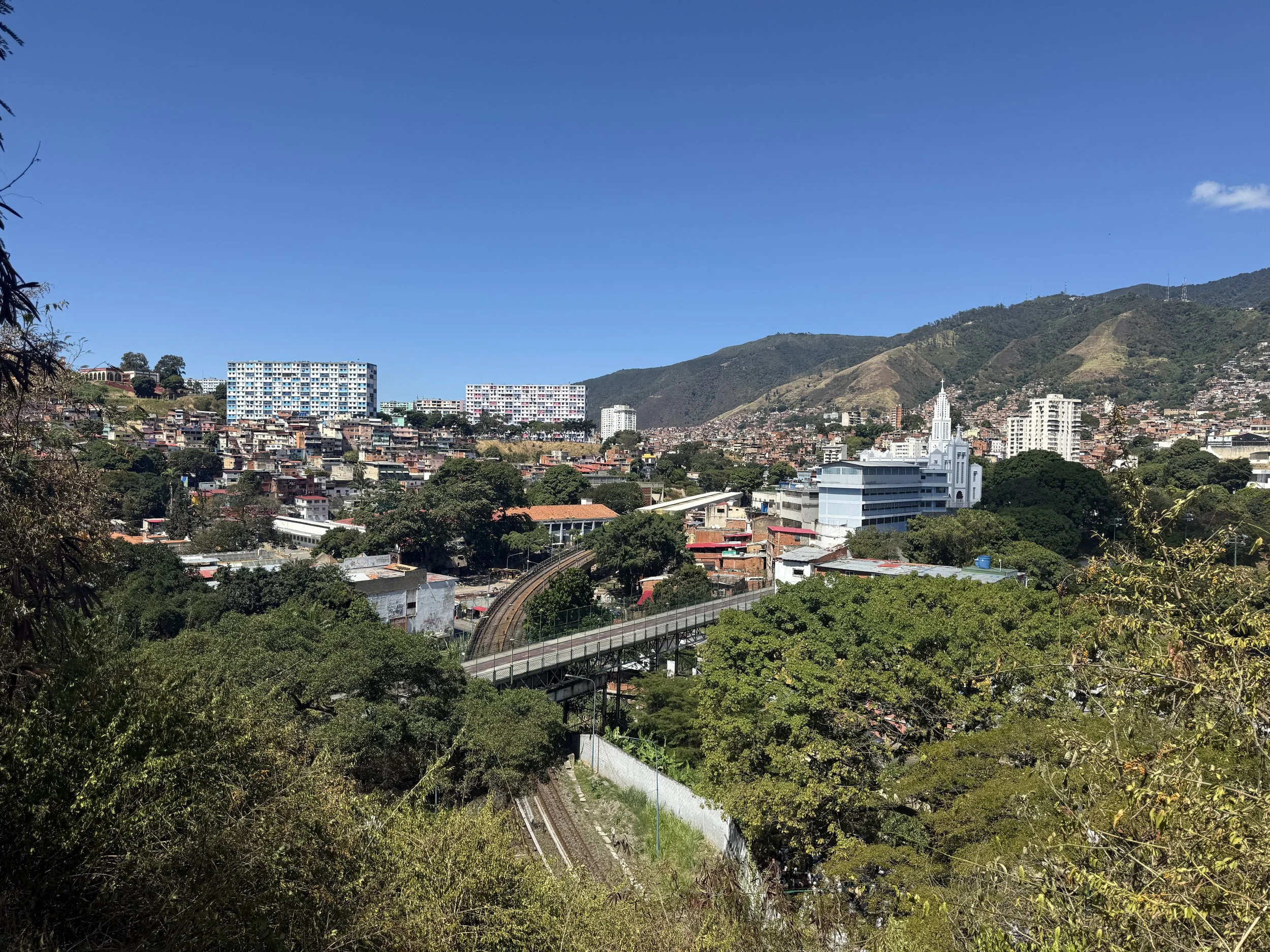
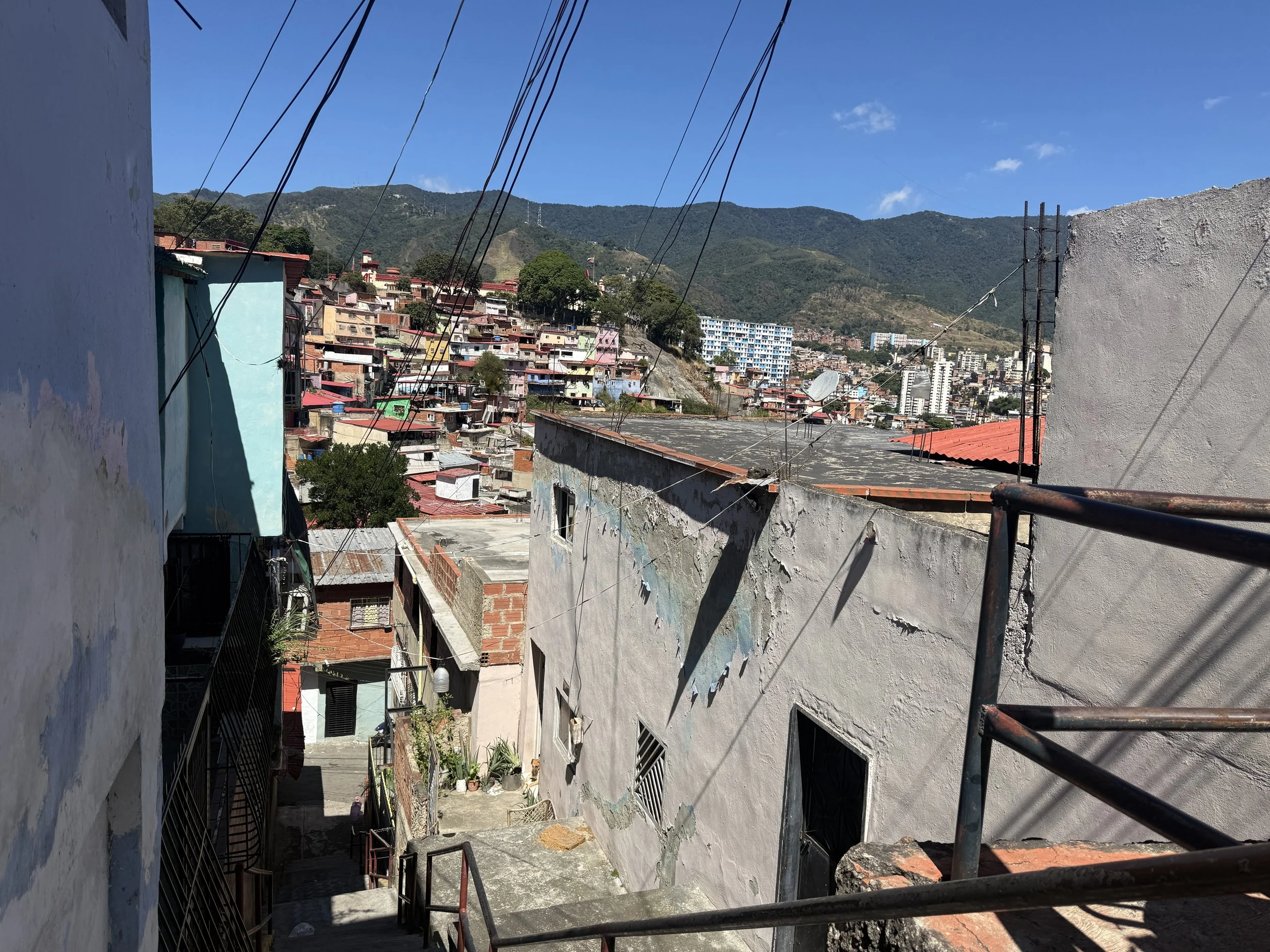
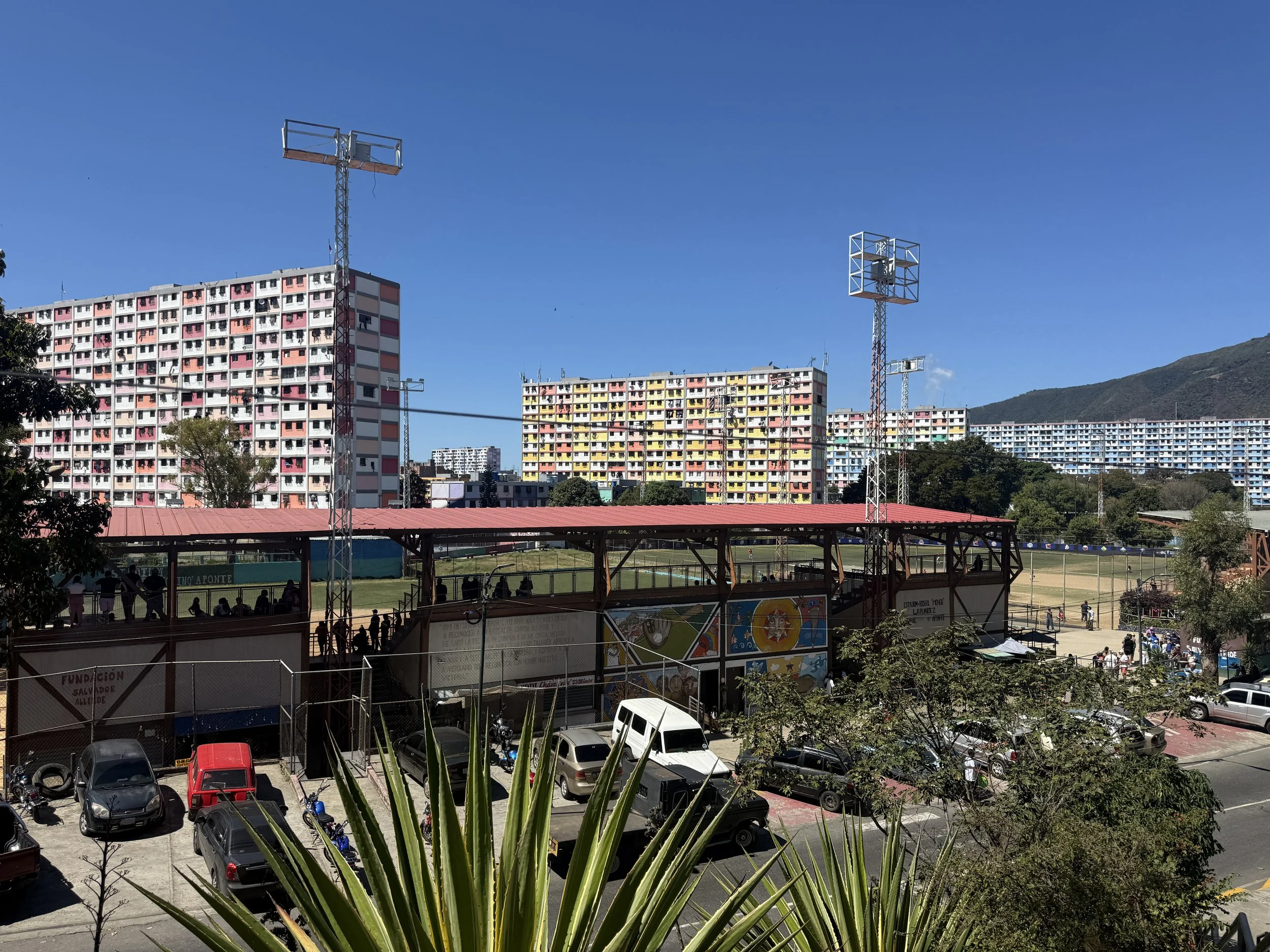
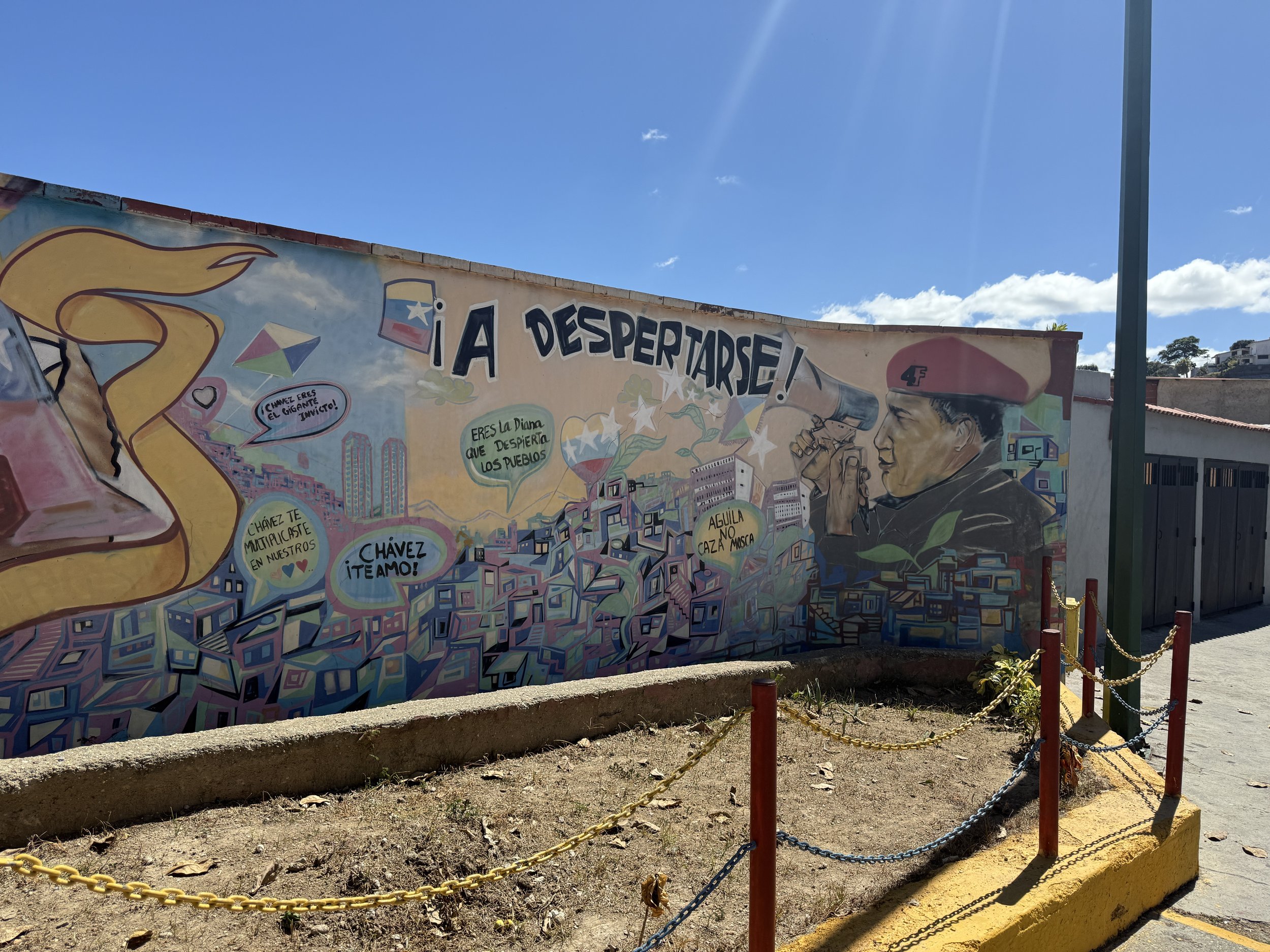
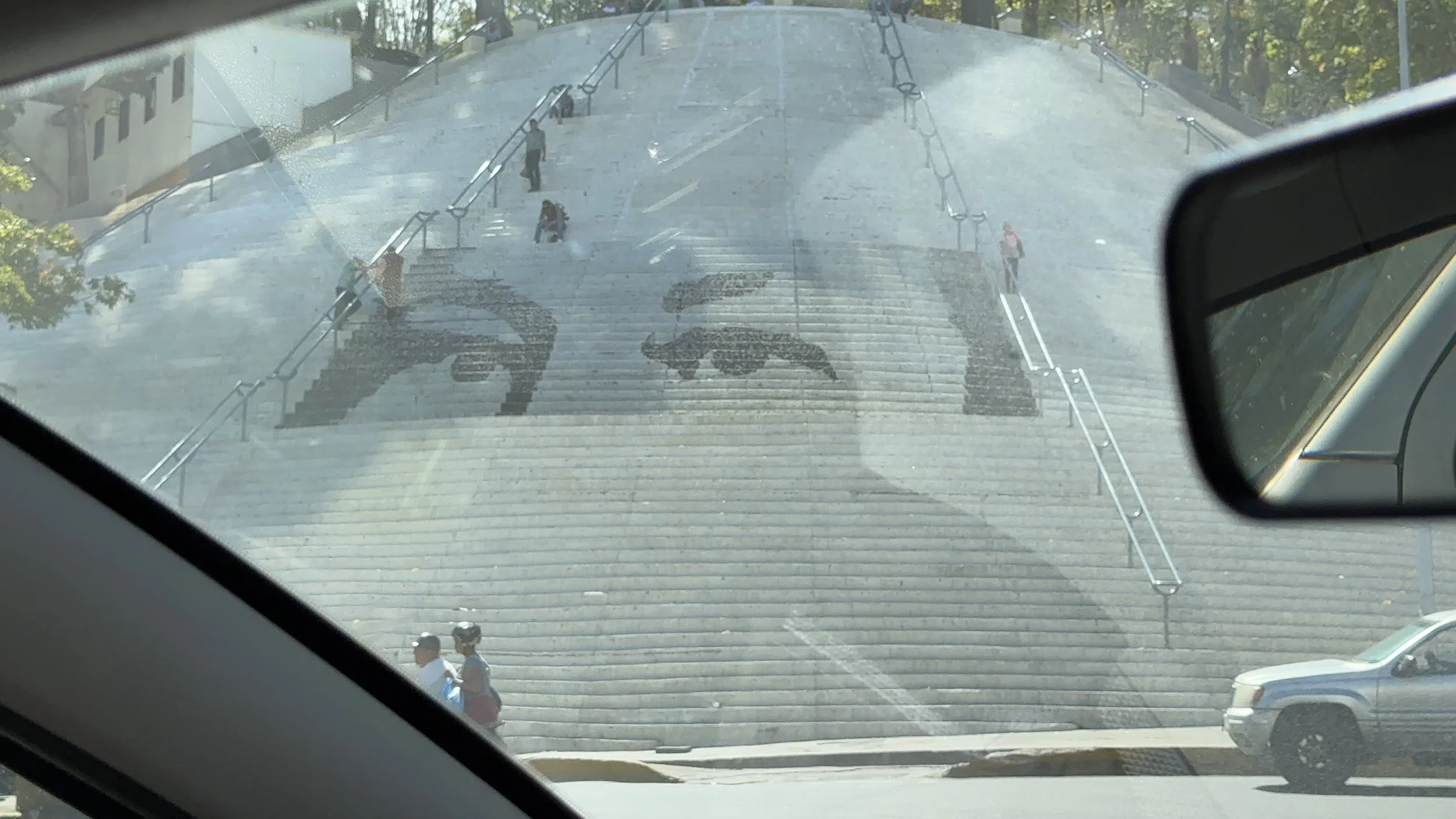
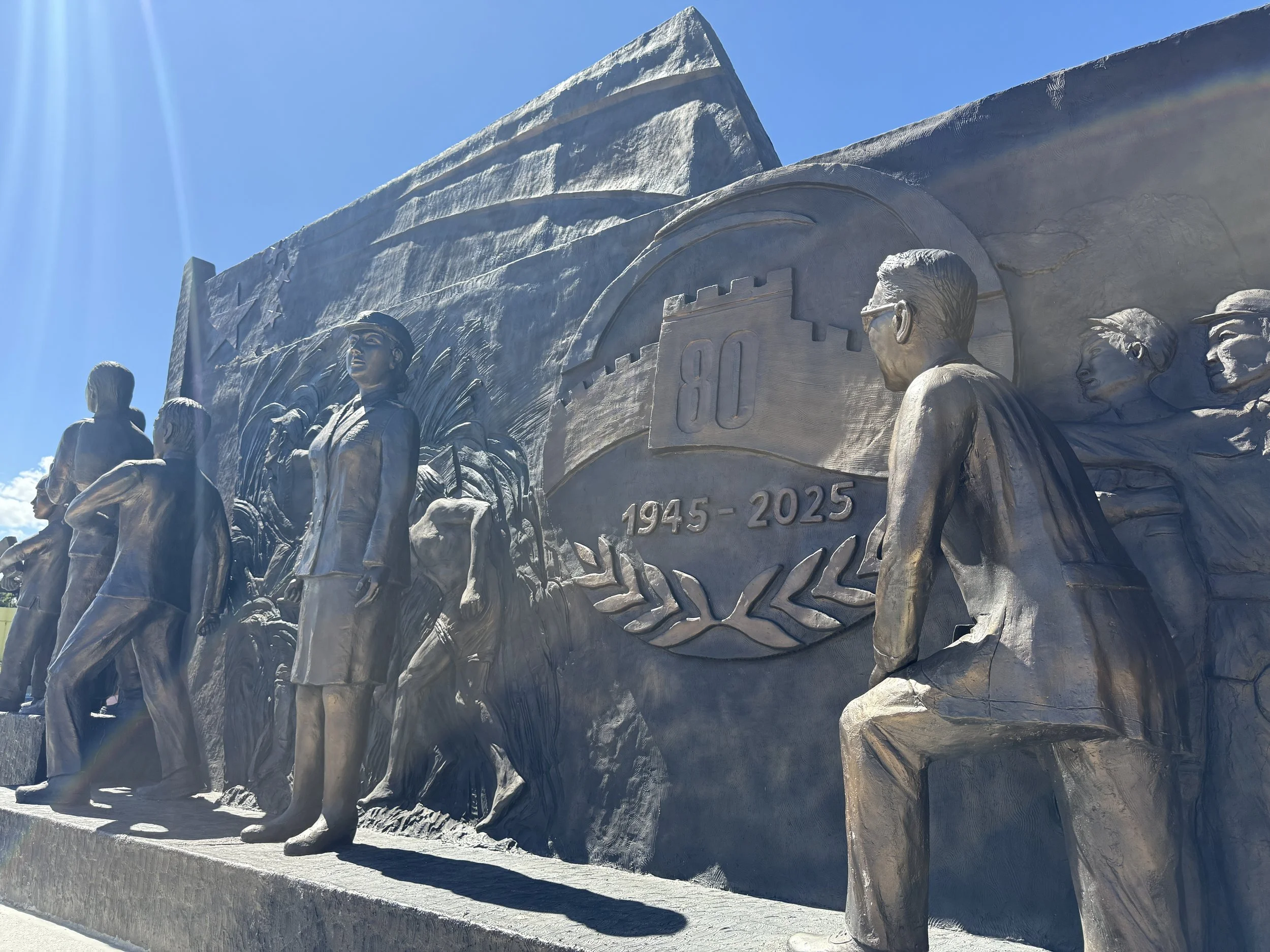
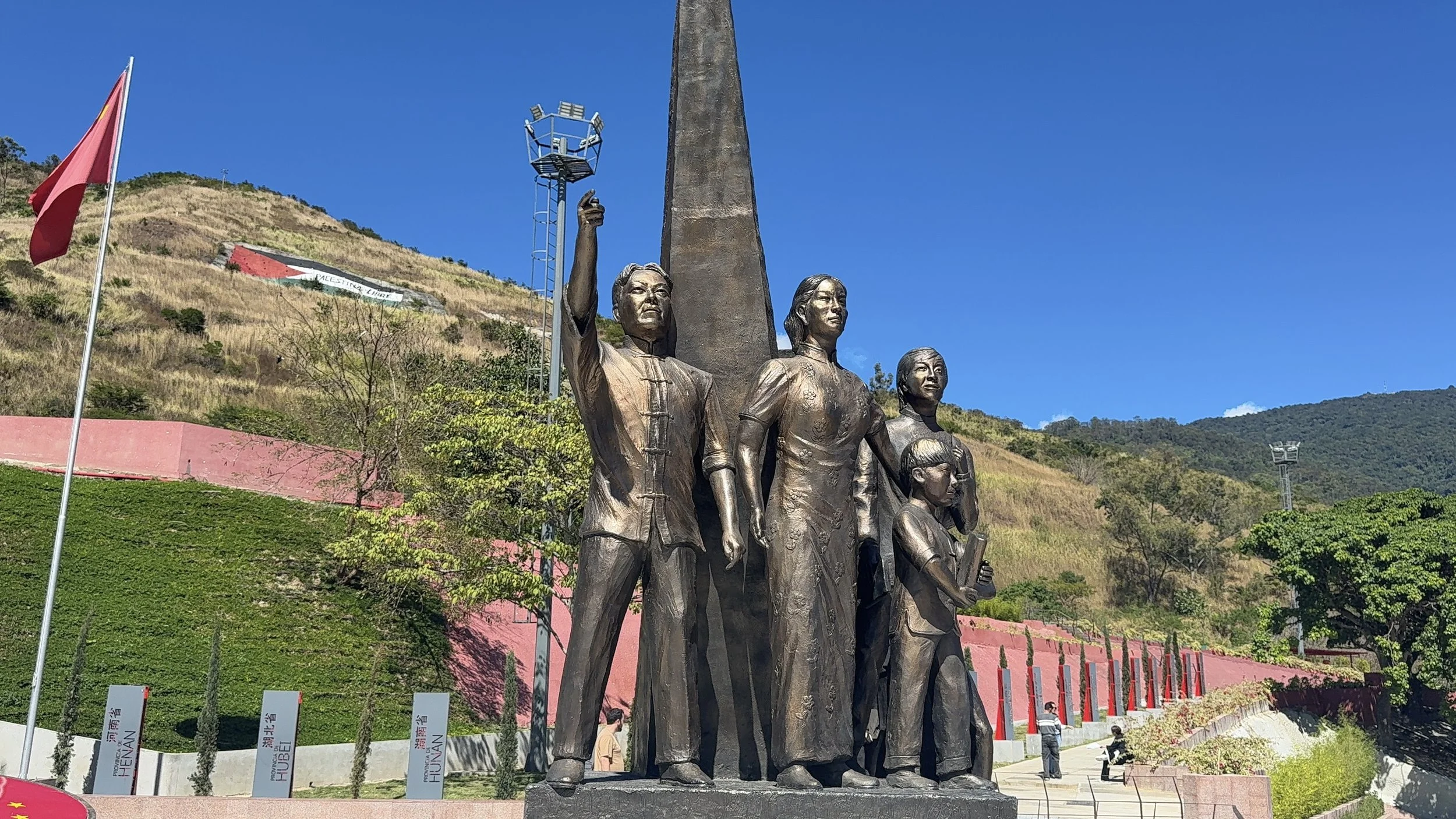
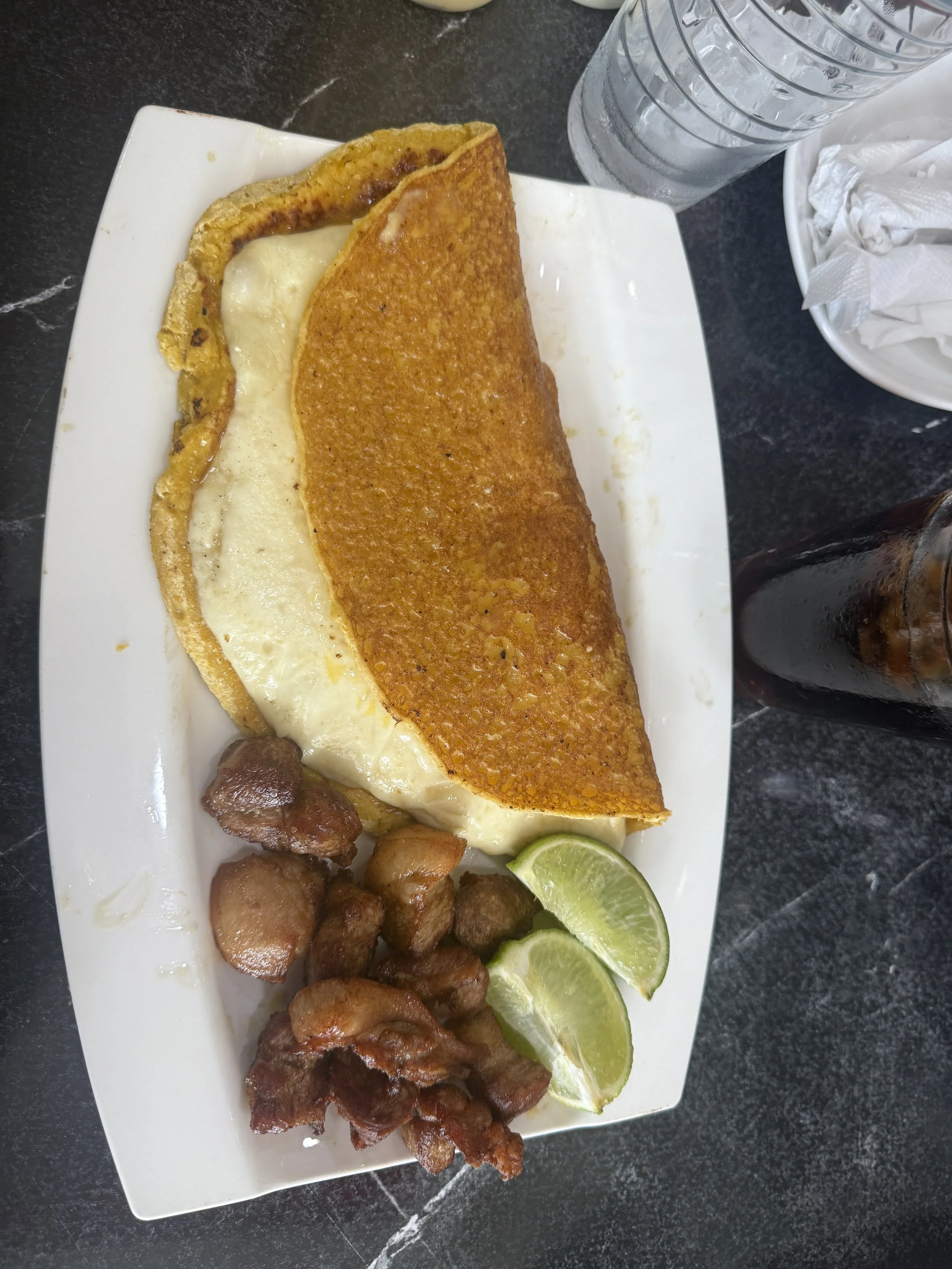
For our time in Caracas we contracted directly with a taxi driver who took us from place to place. It was very convenient since we did not have to worry about getting a ride. He picked us up in 23 de Enero after our tour, and then took us to a monument honoring 80 years of China post-1945. Then, we went to a restaurant for cachapas which are a Venezuelan corn pancake stuffed with soft cheese and served with meat. Absolutely excellent, but so filling!
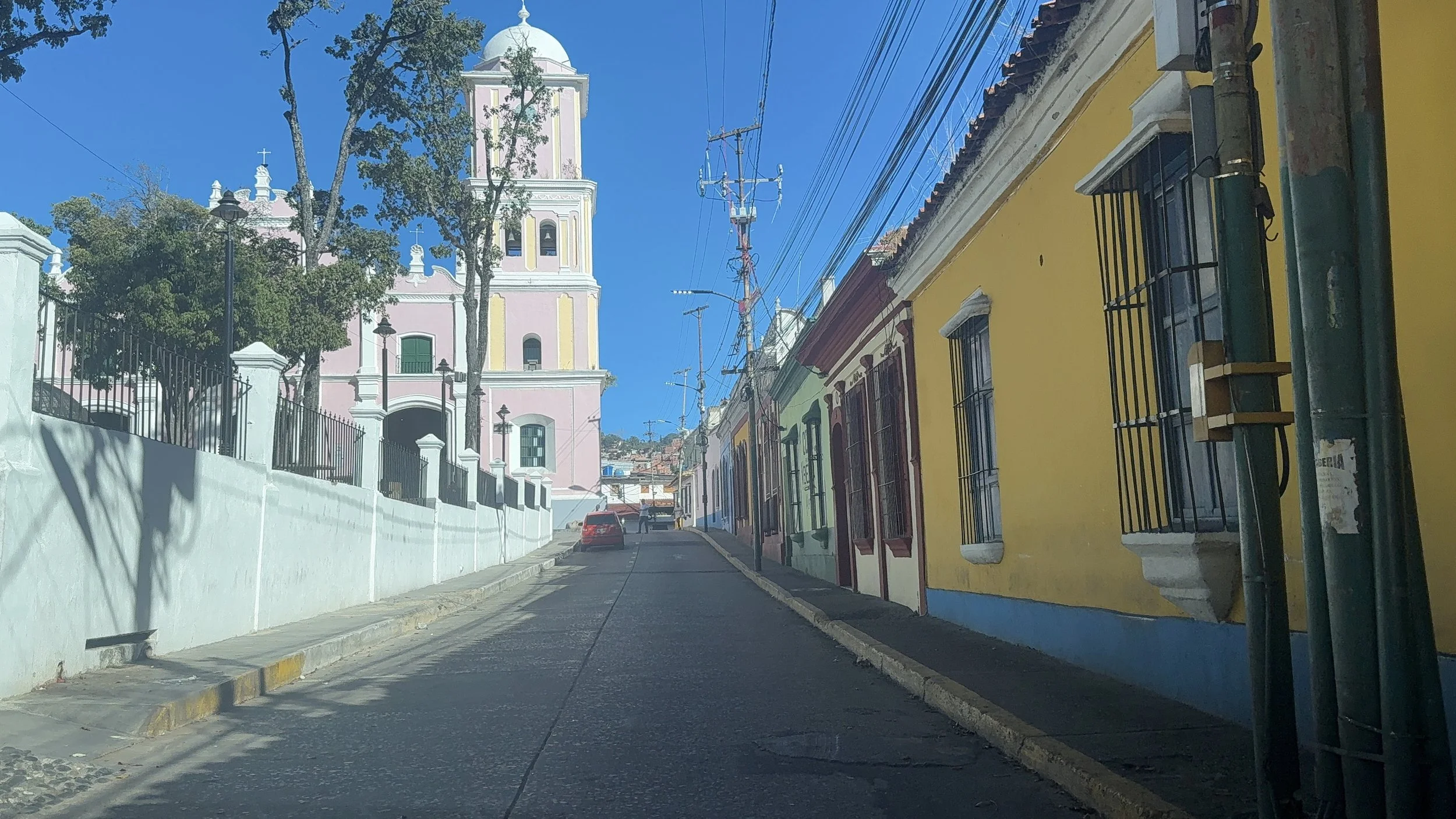
We then headed off in the direction of Petare, a neighborhood on the far east of the city (the opposite side from 23 de Enero). This is known for being one of the most dangerous of the city, but again there is nuance to that statement. The driver explained to us that the older historic area at the bottom of the hill is completely fine, but a bit higher up it could get complicated. The historic square was very pleasant and calm, so we walked around for quite a while.
We did end up heading up the hill (not to the very top, however) to get a sense of what life is like in this area. To me it was quite impressive how they build such tall supports to build houses over the cliffs. And other homes have seemingly carved into the rocky hill in order to build lower floors.
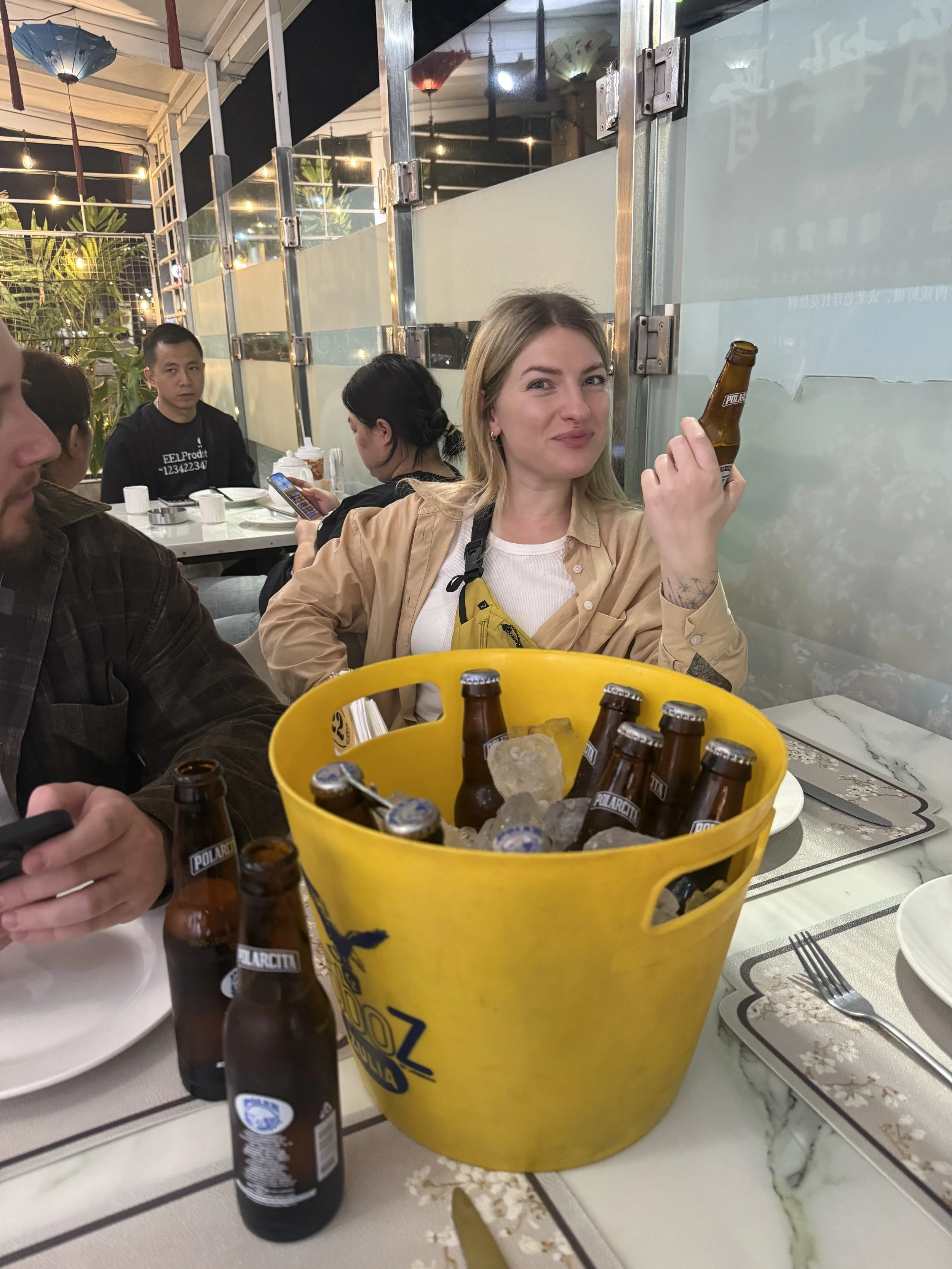
To close off the evening we headed to a Chinese restaurant which presented a combo meal for four people which included 12 beers in a bucket. Quite an eventful way to tie off the trip! I might have even joined for one beer.
Flying Out:
Out of Caracas Airport it is required to show up 4 hours before takeoff. The check in counter closes 3 hours before, and the lines can be long, so it’s likely not worth risking it. Thankfully when I came the line was not too bad, but as I walked to security the check in line had grown significantly. There are many document checks here including before check in by the anti-drug unit and by the airline, at the check in counter, before security, and at immigration. However, it all went quite smoothly. At immigration I was worried there could be some additional questions. However, there were none. I did not change my itinerary from what I presented on arrival, so perhaps that’s why there were no issues.
My route back to Paraguay was very comfortable via Panama. The only thing that was different was that on arrival in Panama we had to go through a security check. Normally transiting in Panama is excellent because you don’t have to do transit security if just flying inside Latin America.