Filadelfia, Paraguay
The southern cone in South America is known for having a strong and vibrant German descended and speaking community. Many falsely believe that all of this immigration happened in the wake of the Second World War. In reality, German immigration to the region has been varied and continuous for well over a century.
In the heart of Paraguay’s arid Northwestern region— known as the Chaco— lie colonies of German-speaking Mennonites. This religious group was living in Russia, Ukraine, and Poland during the time the USSR. They had originally been invited to move to the Russian Empire during the time of Katherine the Great. As was common with most religious groups the Mennonites were subject to many restrictions on their way of life, deportations to Siberia, and mass killings + imprisonments.
In the late 1920s, there was a push for Mennonites to get the permission to leave the Soviet Union as stateless peoples (losing any claim to Soviet citizenship). In 1929, their dream came to fruition, but only for 6000 of the 18000 Mennonites waiting near Moscow for the permission. The rest was sent on harrowing journeys back to their villages or in exile in Siberia and the Russian Far East.
The Mennonites who were allowed to leave crossed out of Russia and into Latvia through the Red Gate: to them, a symbol of freedom. After going to Germany, Mennonites ended up in many parts of the world, and one group arrived in Paraguay in 1930. They headed straight into the barren Chaco to create a life where there was very little settlement and natural bounty. Mennonites had to build wells (with many dying in the process), survive poor crop yields due to swarms of locusts, and manage with the Chaco War happening around them just 2 years after arriving.
Nowadays, you see Mennonites in many parts of Paraguay. Many of them speak 4 languages or more (Spanish, Plattdeutsch, German, and English) and are involved in a variety of industries. I had long wanted to visit their cities of Filadelfia and Loma Plata, and decided to do so in October 2025. It was a last minute and quite quick trip, so I already know that I plan to return.
The Journey:
The trip began in Asuncion where I picked up a rental car and headed across the new Hereos of the Chaco Bridge which connects Asuncion with the Chaco over the Paraguay River. Then, one must drive towards the city of Villa Hayes (named after the American president) before making it onto the Trans Chaco Highway. The road is quite new and has one lane in each direction.
Once you leave Villa Hayes, the road goes completely dark and there is very little on the way until you reach Filadelfia 450 kilometers later.
In order to save time given my tight schedule, we drove at night. In retrospect, this was not such a smart idea due to the remoteness of the road and the fact that animals can cross at any point, so next time I will likely go during the day.
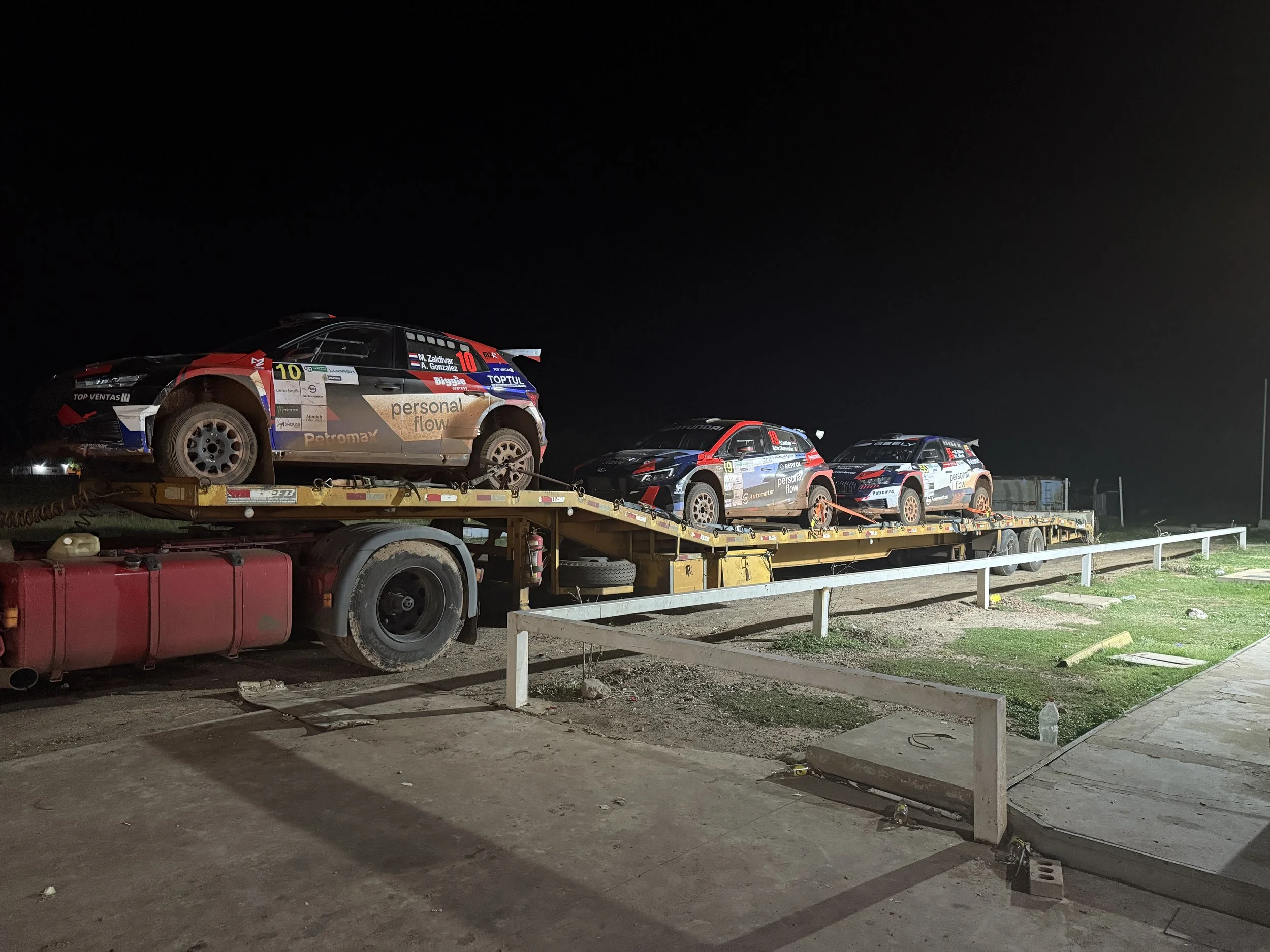
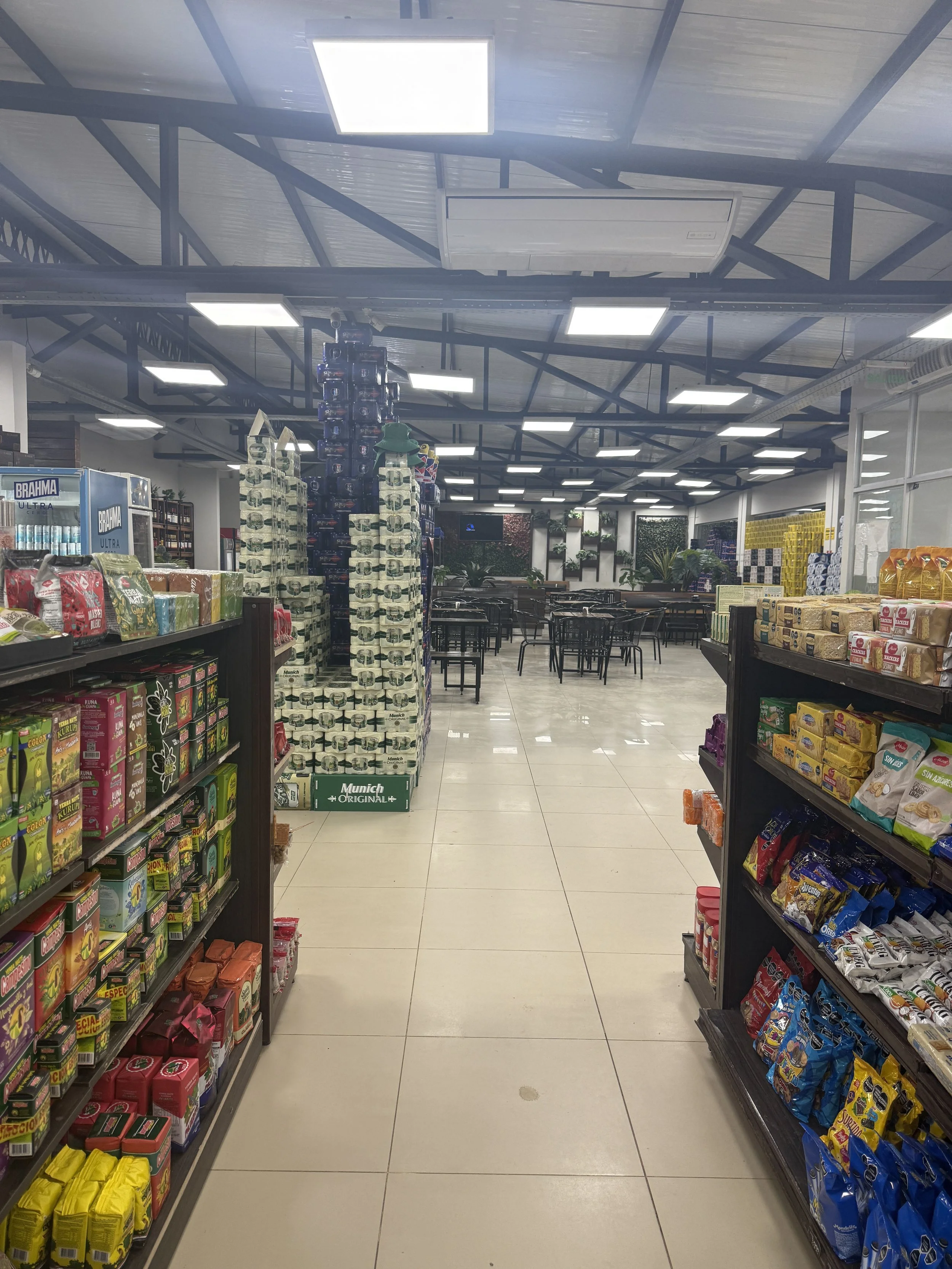
On the way we had 2 military checkpoints where our ID cards, car papers, and trunk were checked. They were very routine and efficient. We also made a stop at Pozo Colorado which has a large gas station. The Gran Chaco Rally was going on, and we had a chance to see a couple of the cars on a trailer at the gas station.
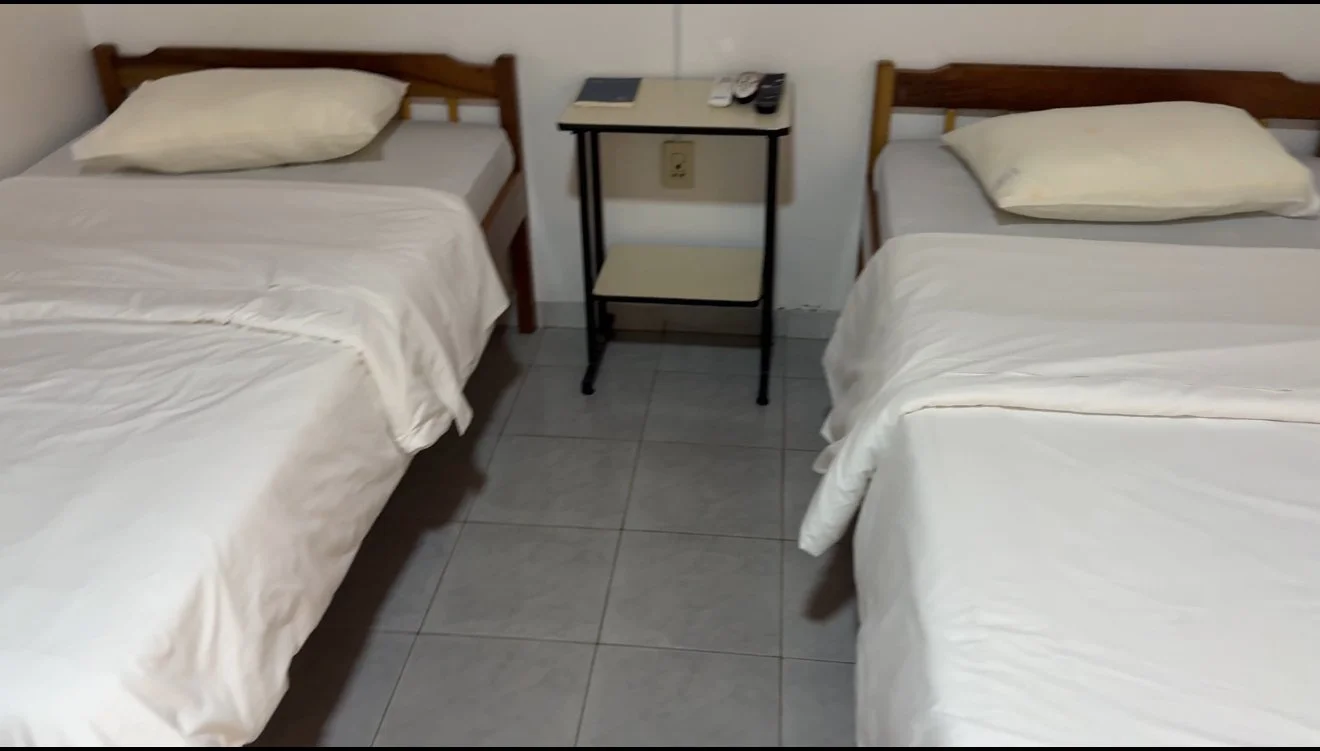
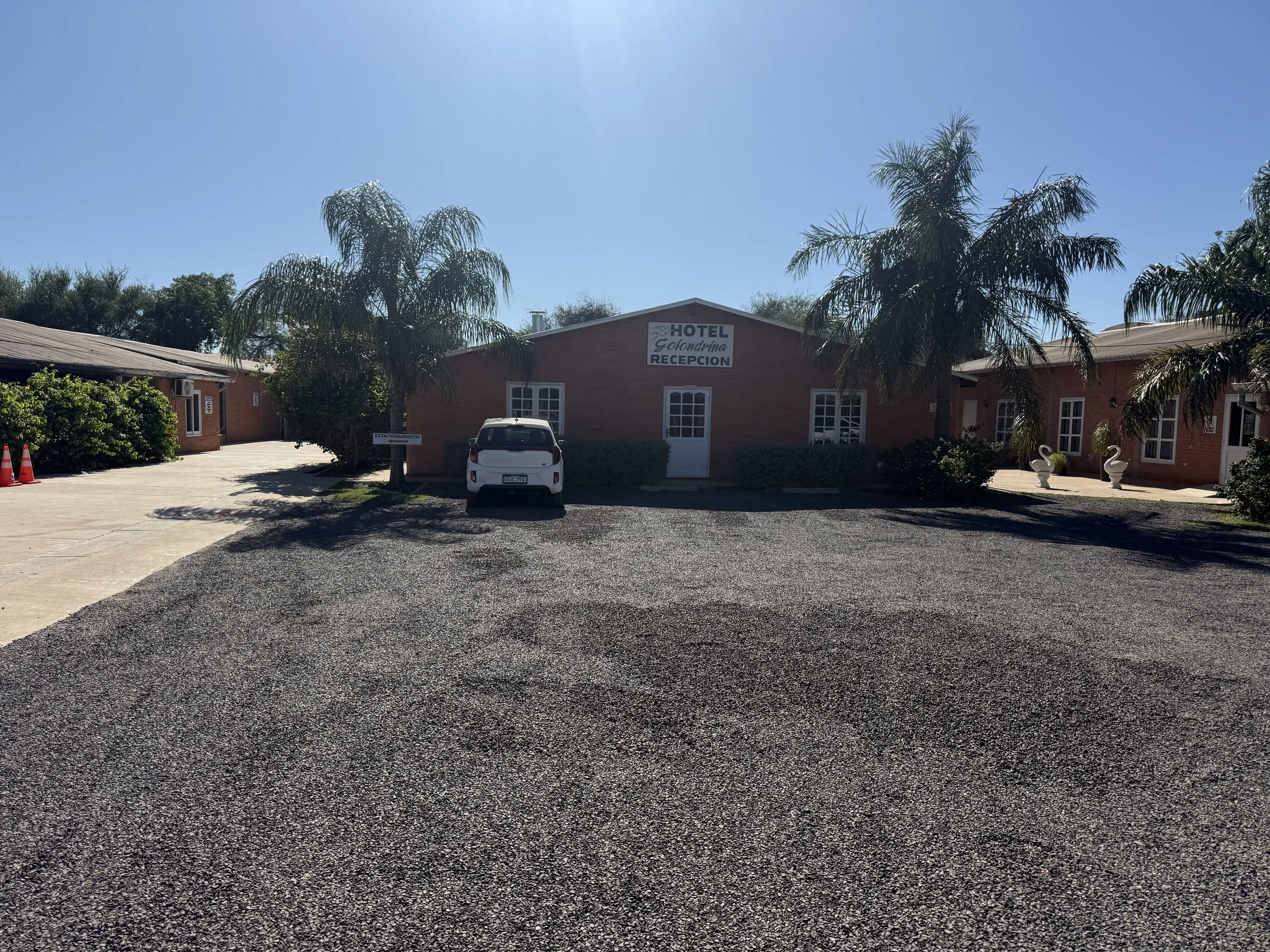
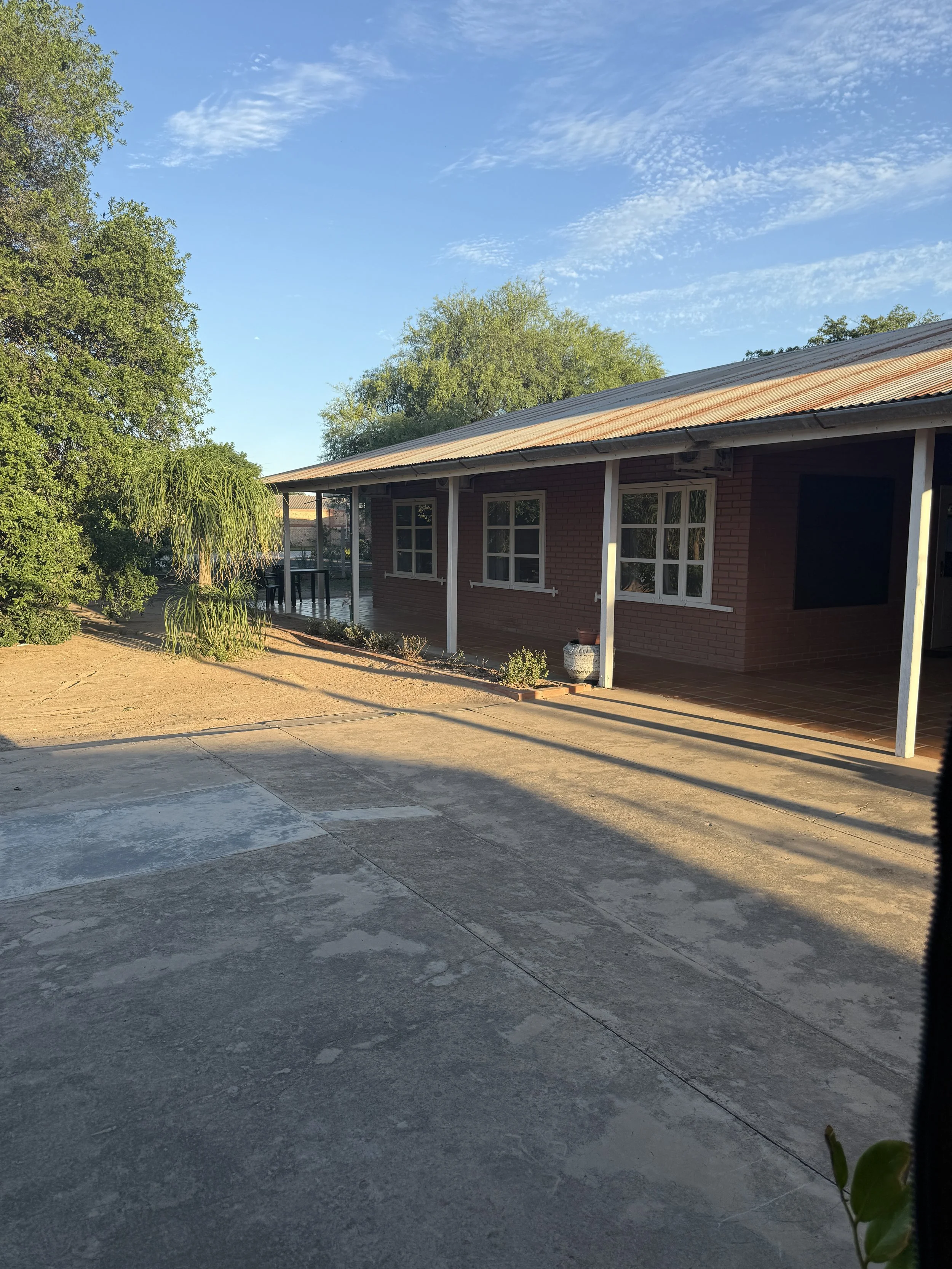
Soon enough, we made it to the Hotel Golondrina in Filadelfia. A standard room ran 198,000 Paraguayan guarani per night, which is just under $30. I had planned to stay at the Hotel Florida which is right in the center of town, but it was sold out so last minute.
Day 1:
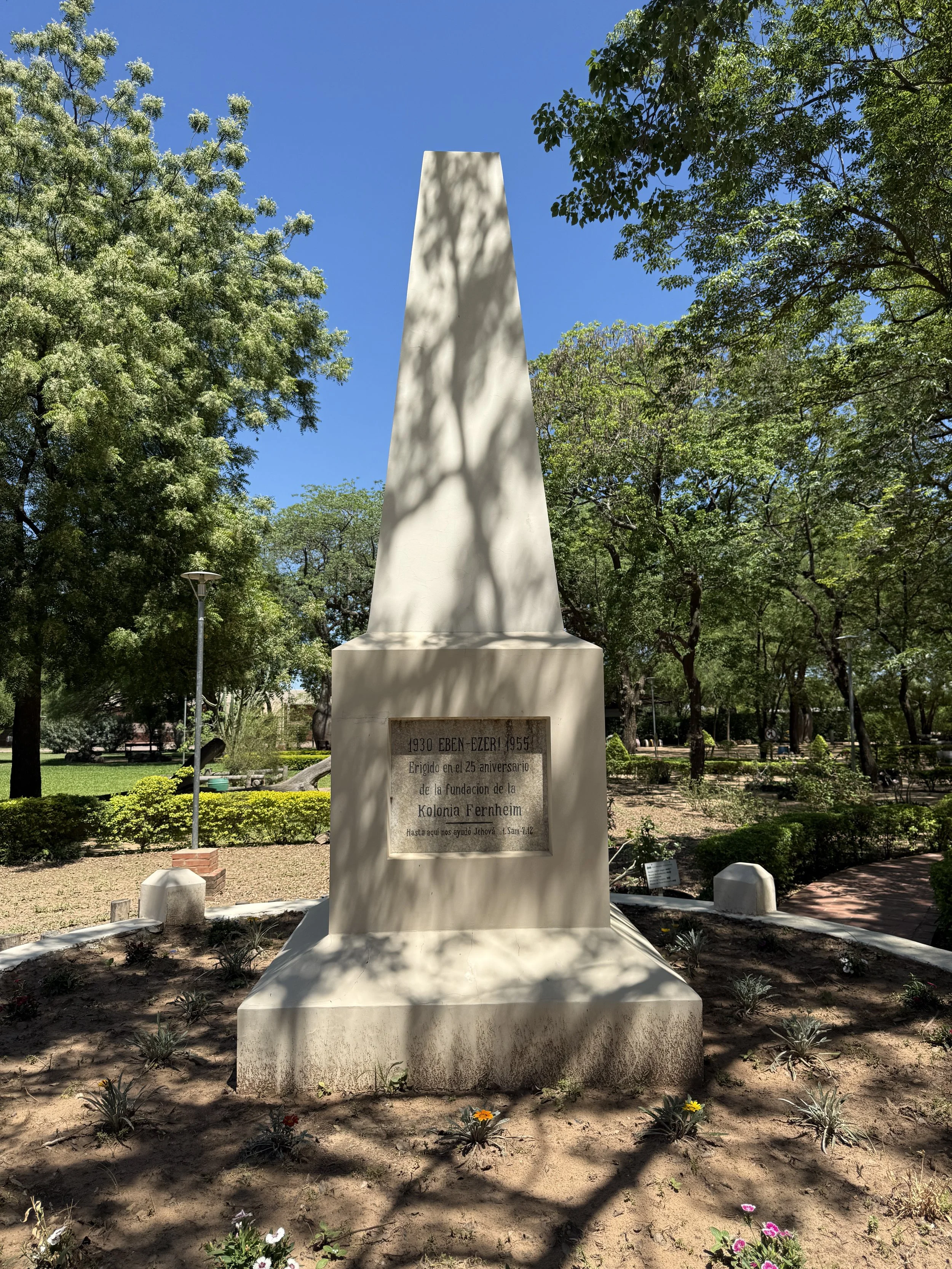
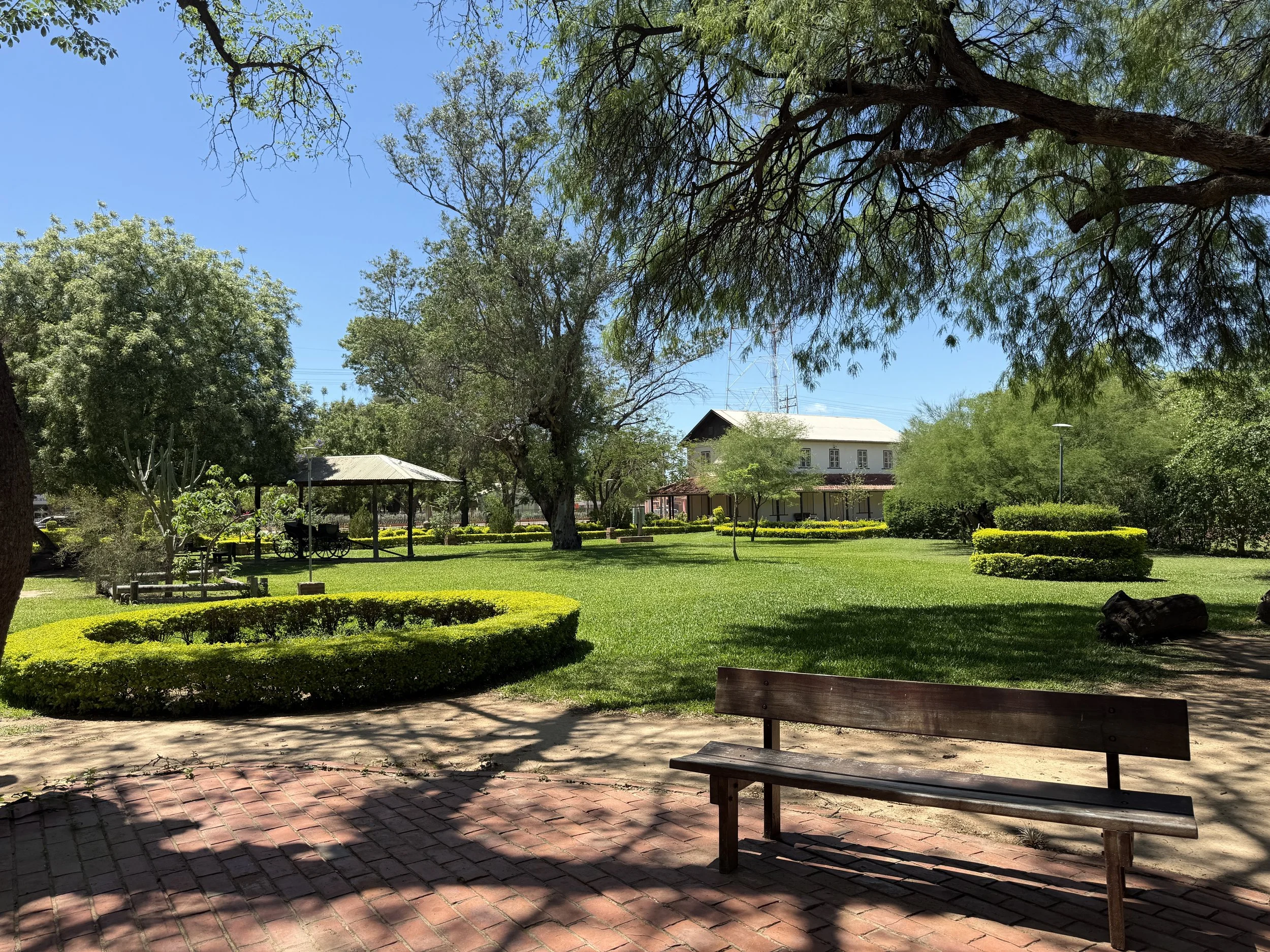
After a short sleep, we headed to the center of town where the Cooperativa Fernheim (the collective that founded Filadelfia) has an excellent museum.
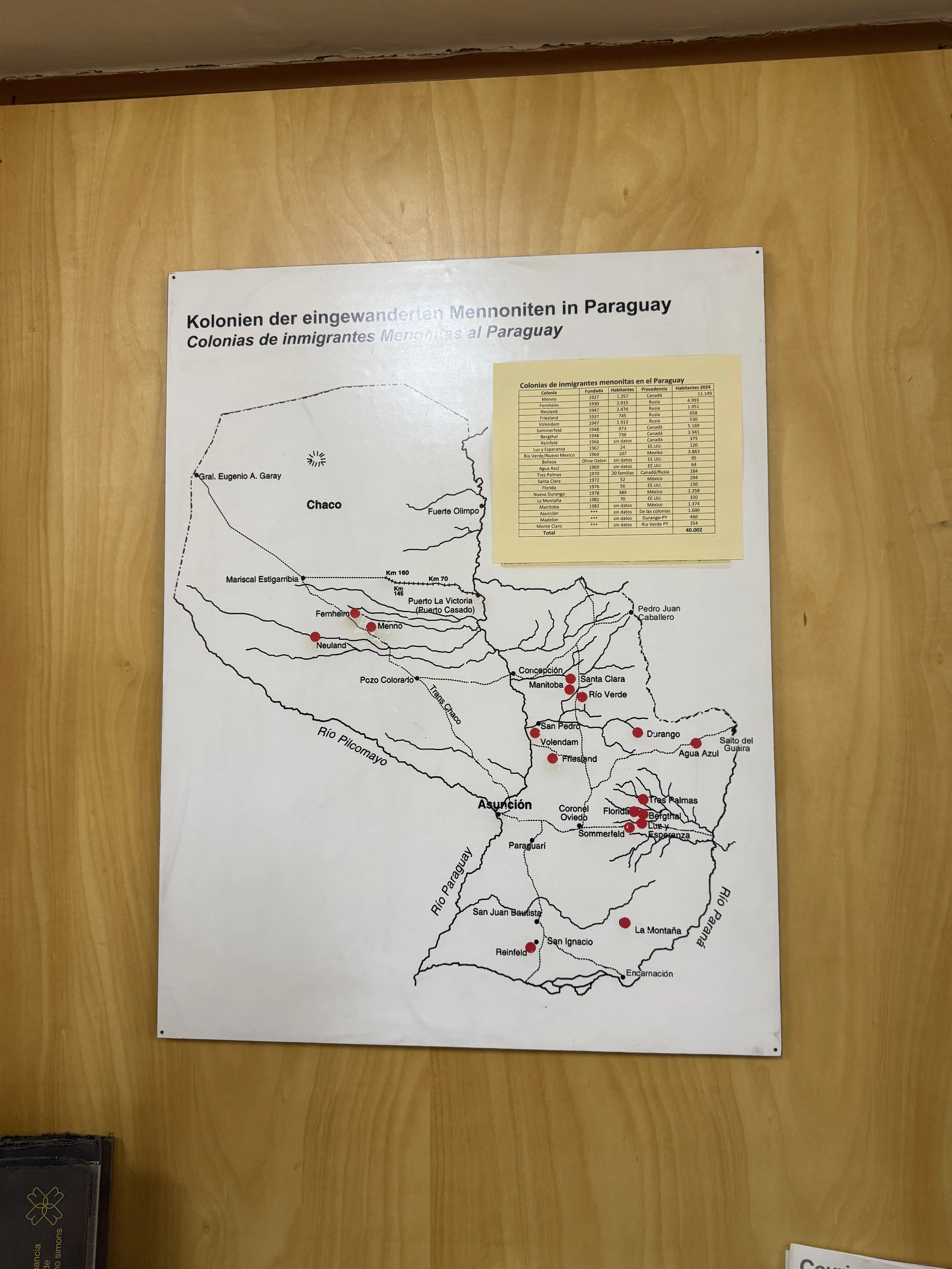
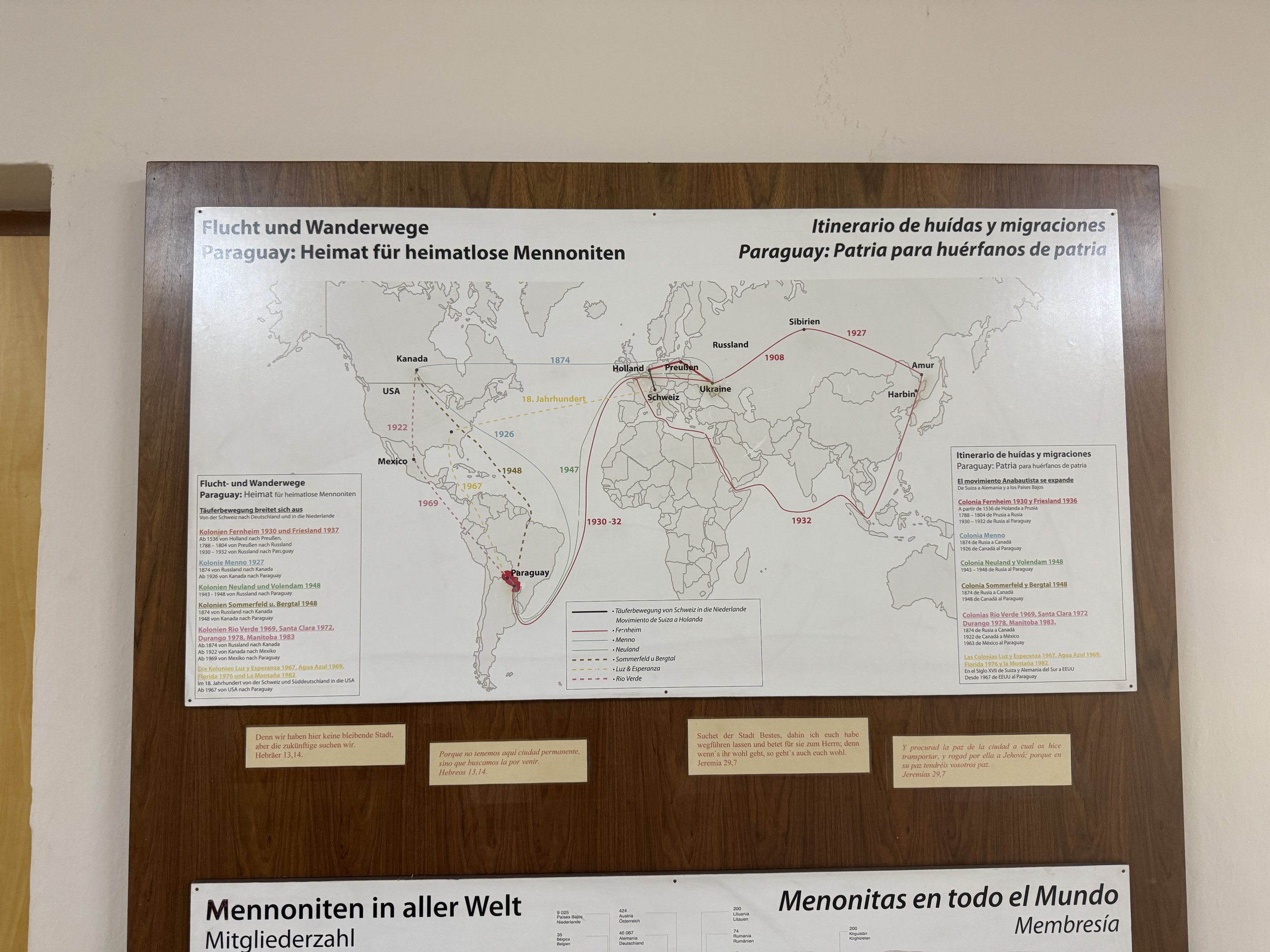
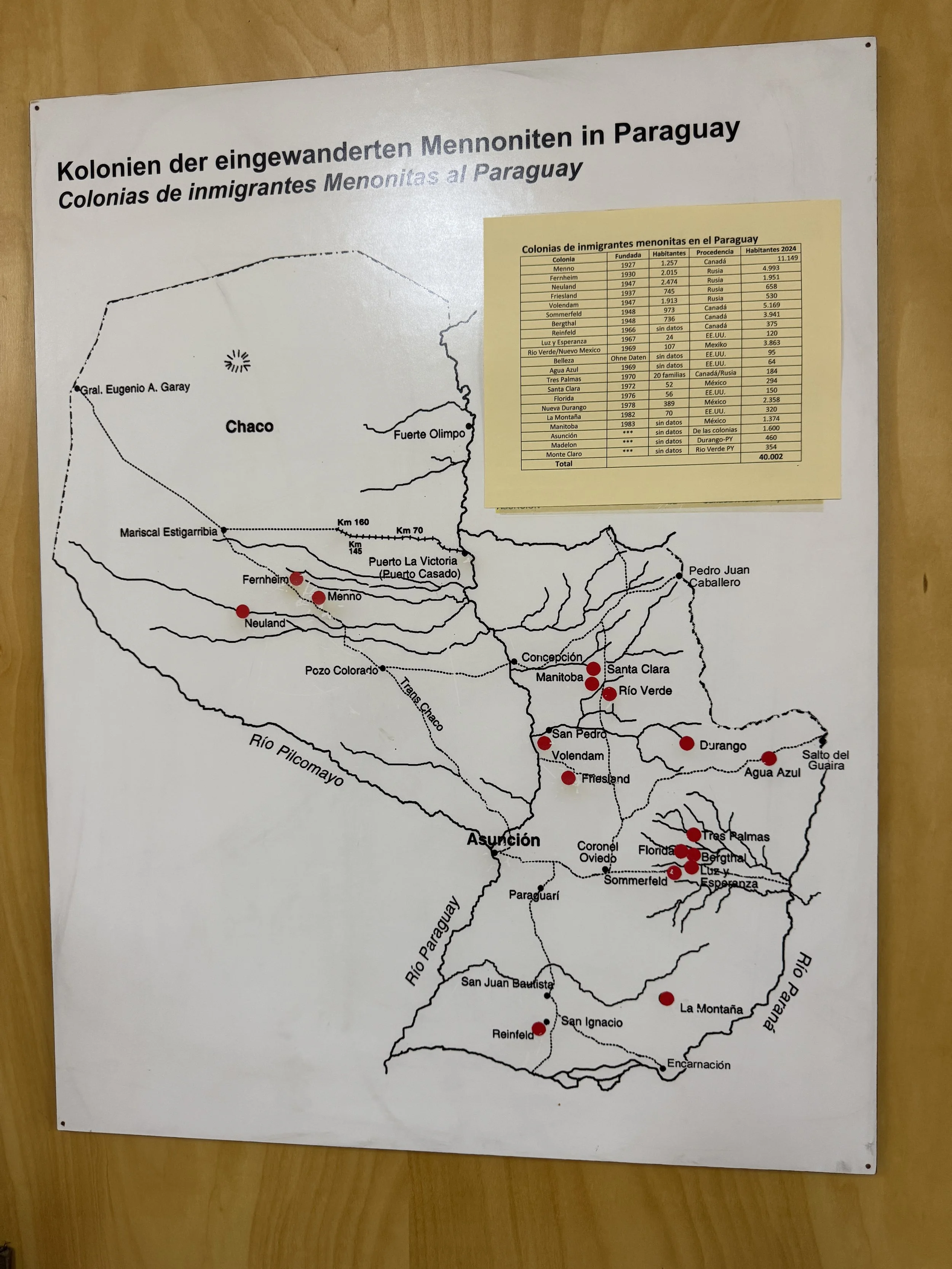
We began in the Colonie Haus which was the first administration building in the city. We saw the tools the Mennonites used in the early days, learned about the various Mennonite settlements in the area, and a bit about the life during the time of the Chaco War. I found the fruit juicer and meat hammer made of shell casings very impressive. We also got to hear the story about how some of the Mennonites who were sent to the Far East of Russia were able to escape to Harbin in northern China and then make their way to Russia. A harrowing journey to freedom I cannot even begin to imagine. We also saw the debt log that showed how much people owed for equipment and the journey from Germany to Paraguay. I could imagine many people trying to skip out on their debts on a new continent, but the Mennonites being people of principle paid it off in around 20 years. Finally, we saw a photo of American Mennonites who came to Paraguay to help build the Trans Chaco highway as conscientious objectors to the Vietnam war known as the “Pax Boys.”
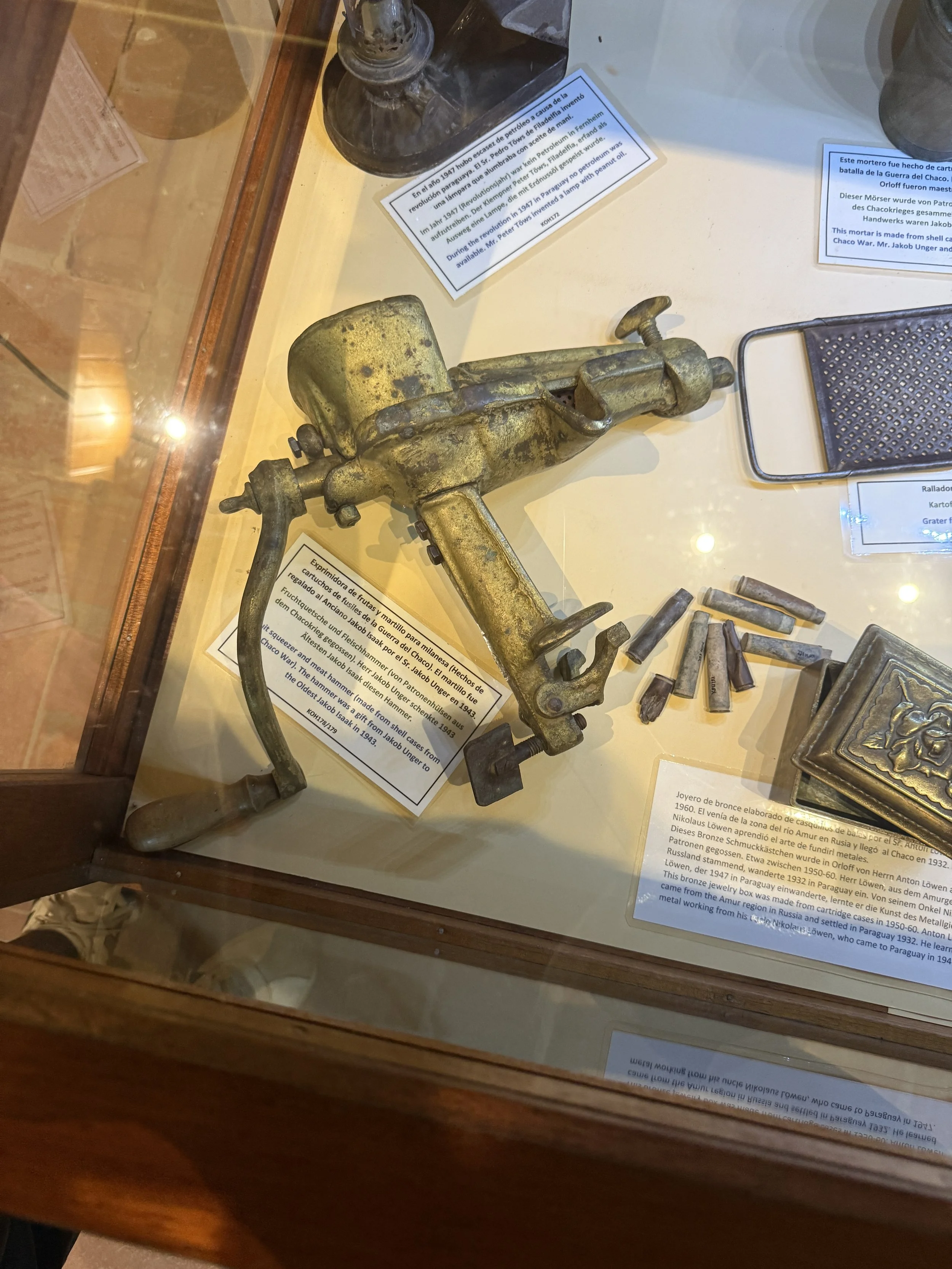
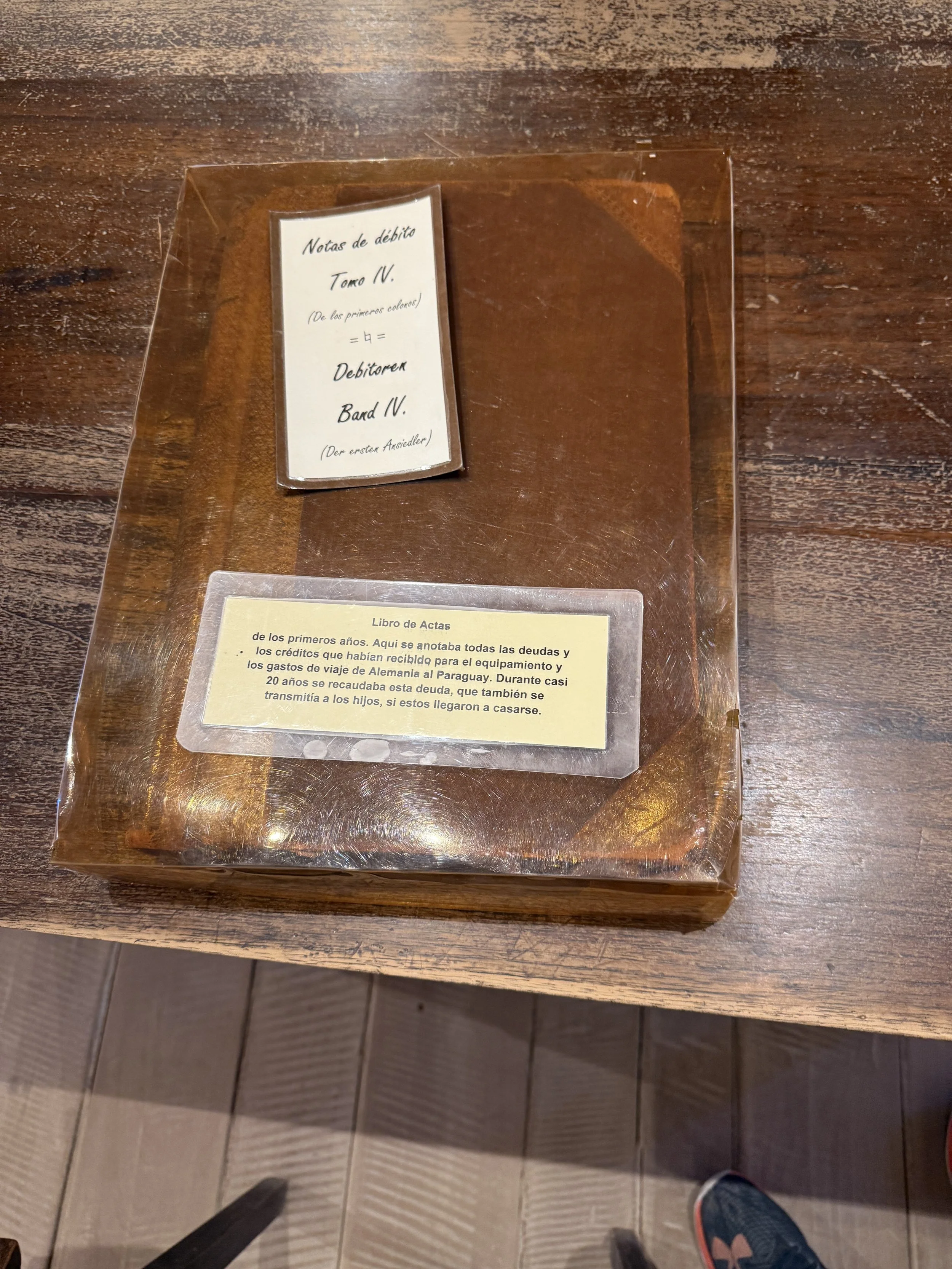
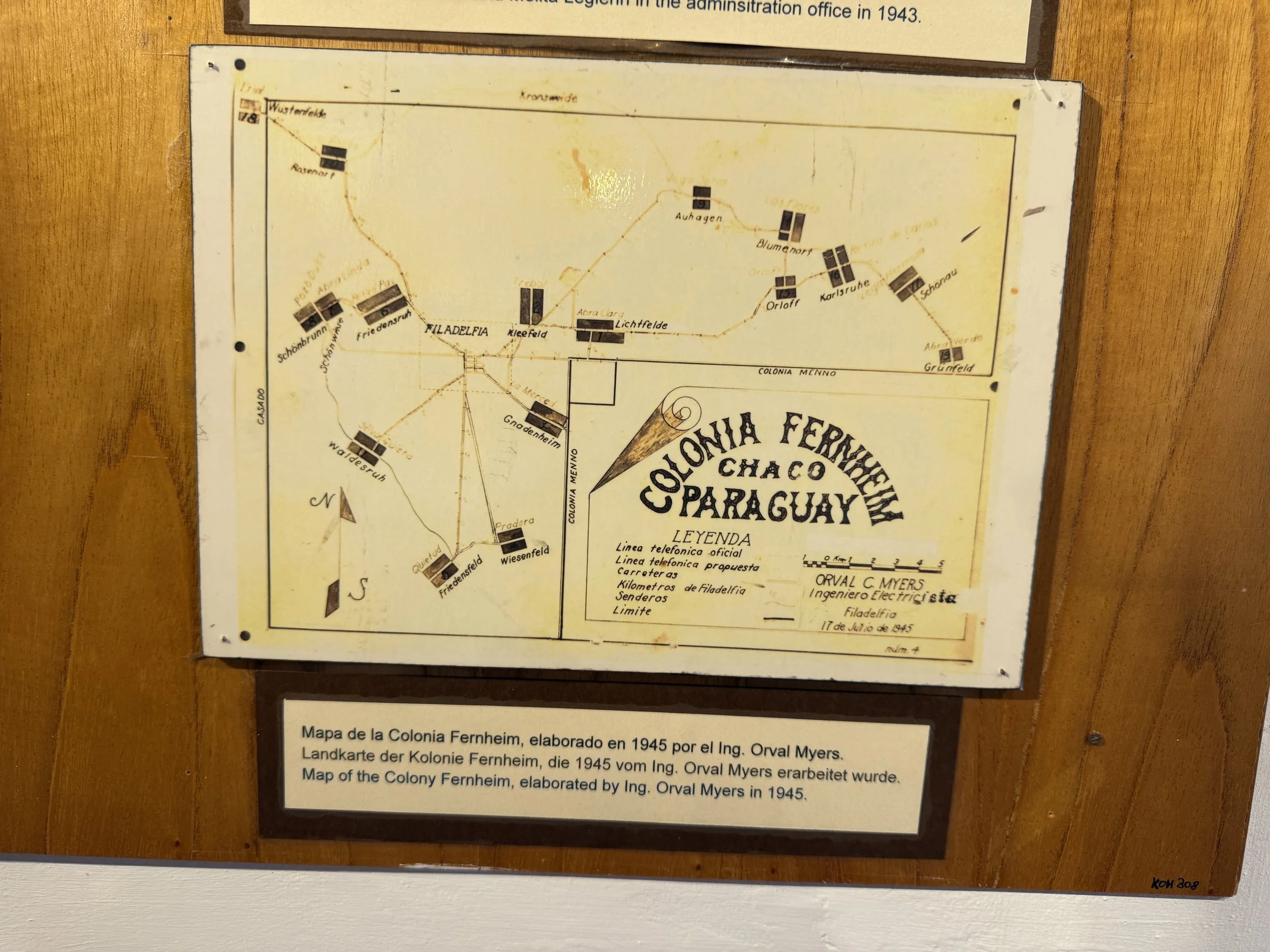
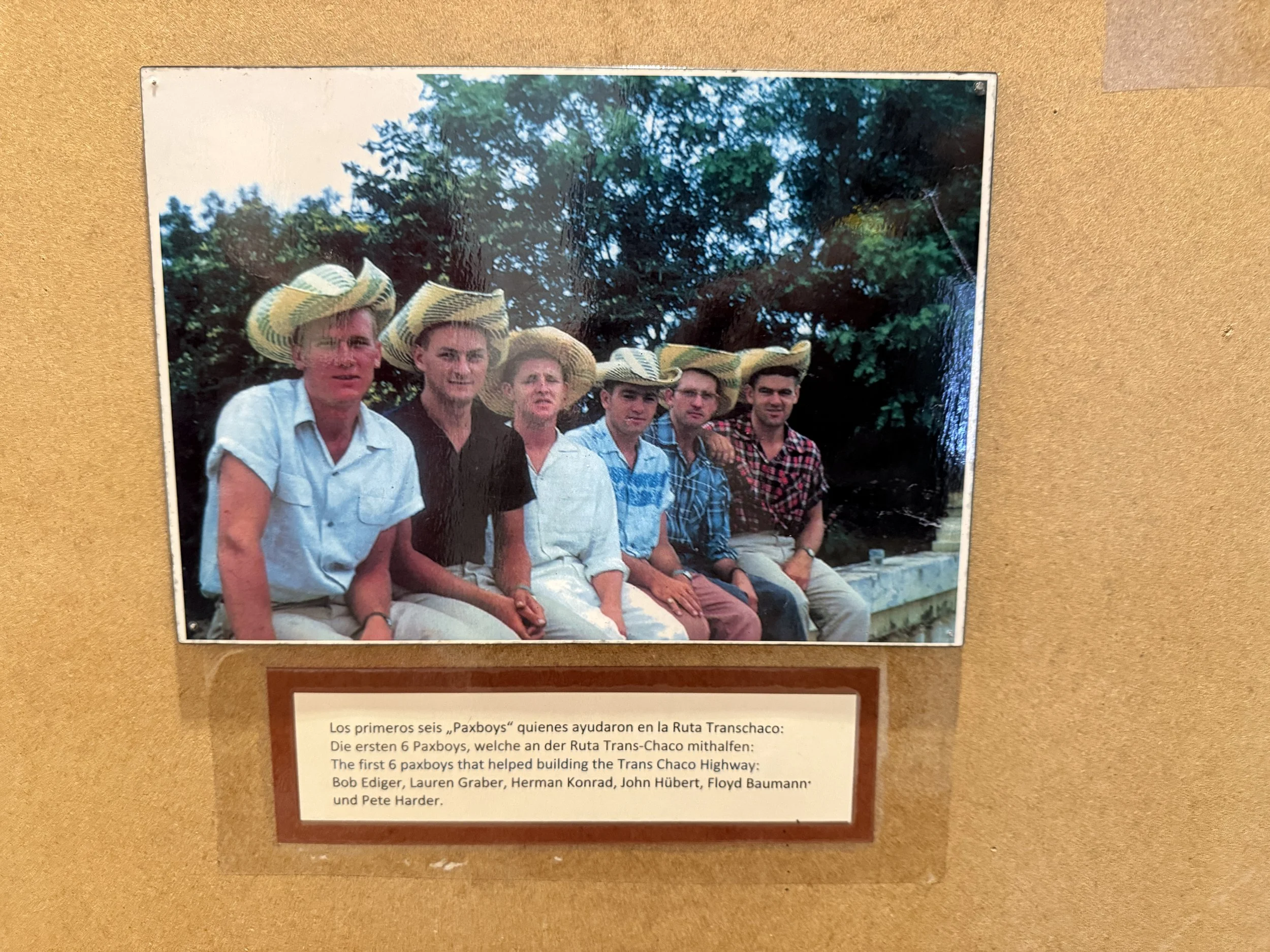
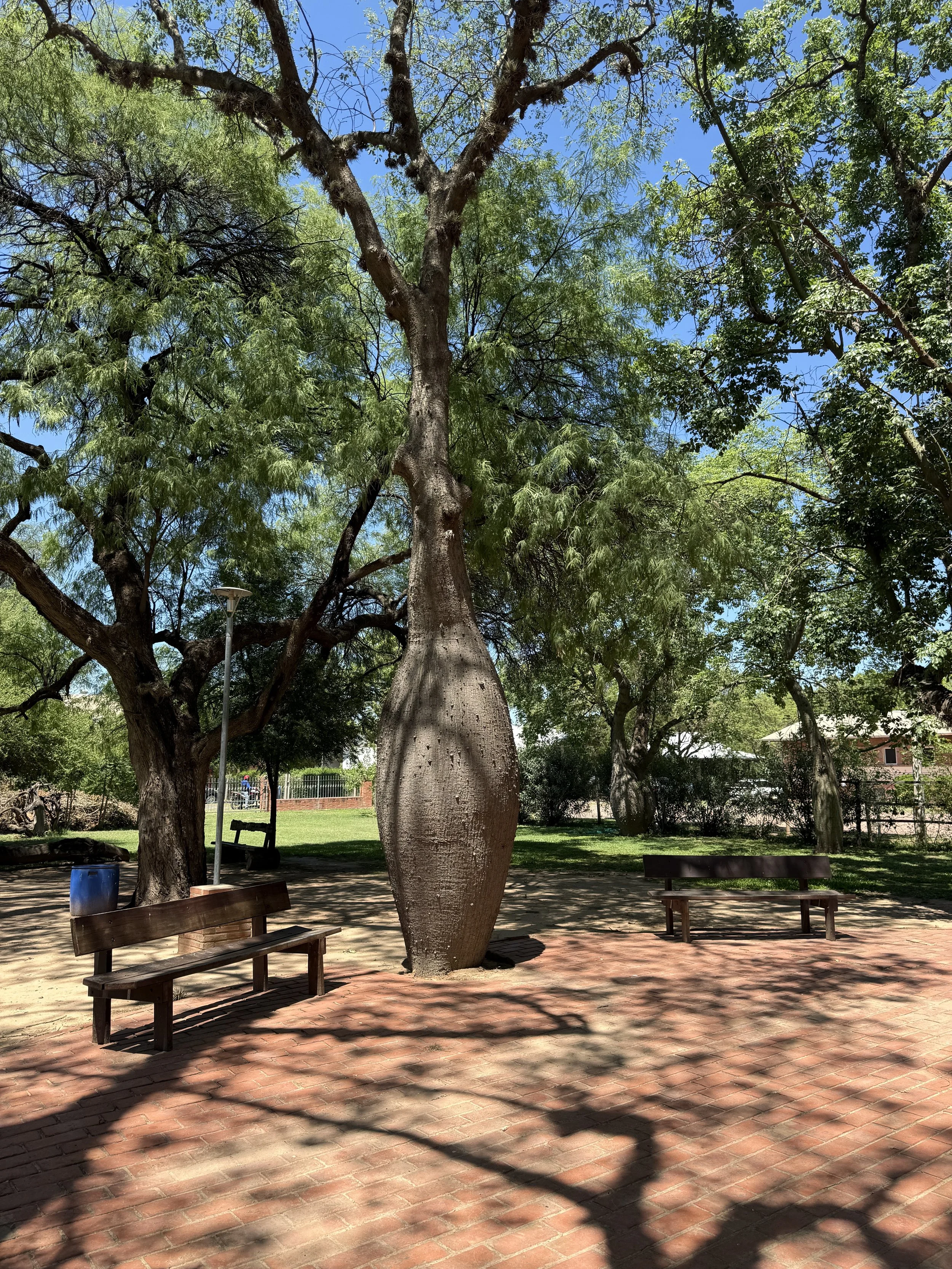
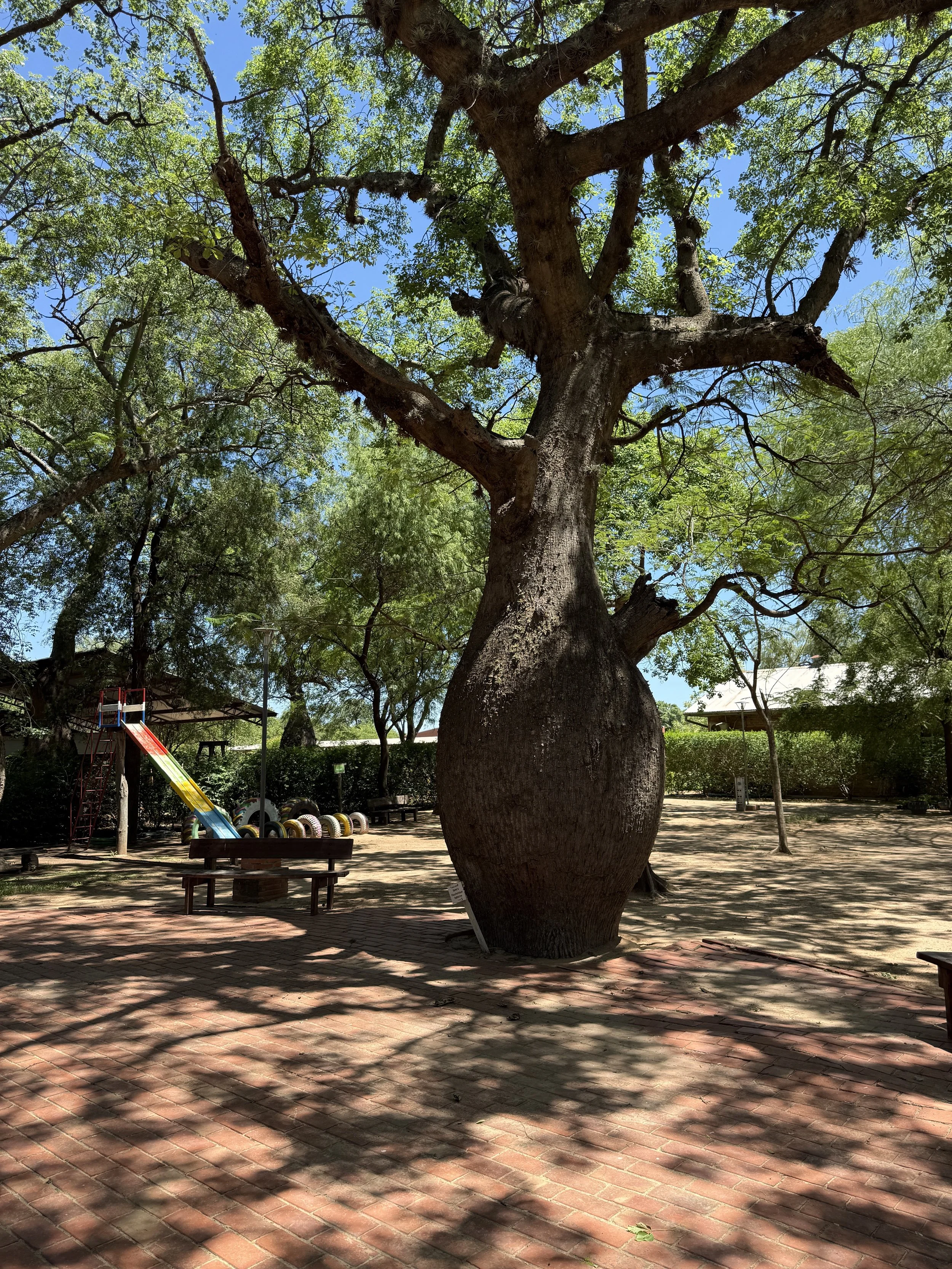
The museum and most businesses in town take a break from 11:30-2pm, so in this time we walked around the park around the museum and then headed north of the city for a bit of exploring.
North of Filadelfia is a new paved road. This road is known as the Bioceanic Corridor and is helping link Brazil with the Pacific Ocean. It should help with many shipments to Paraguay, which currently has to rely on barges via Argentina and Uruguay.
Our first stop was a small lookout point from the time of the Chaco War. Then we visited the former Fort Mina Cué and Fort Cesar Lopez DeFilipps. There isn’t much there to see (and we did not want to wander off too far in such a remote place), but one can feel the history and bloodshed that happened here. It was also a very nice opportunity to see the native flora of the area since most of the area is dedicated to agriculture.
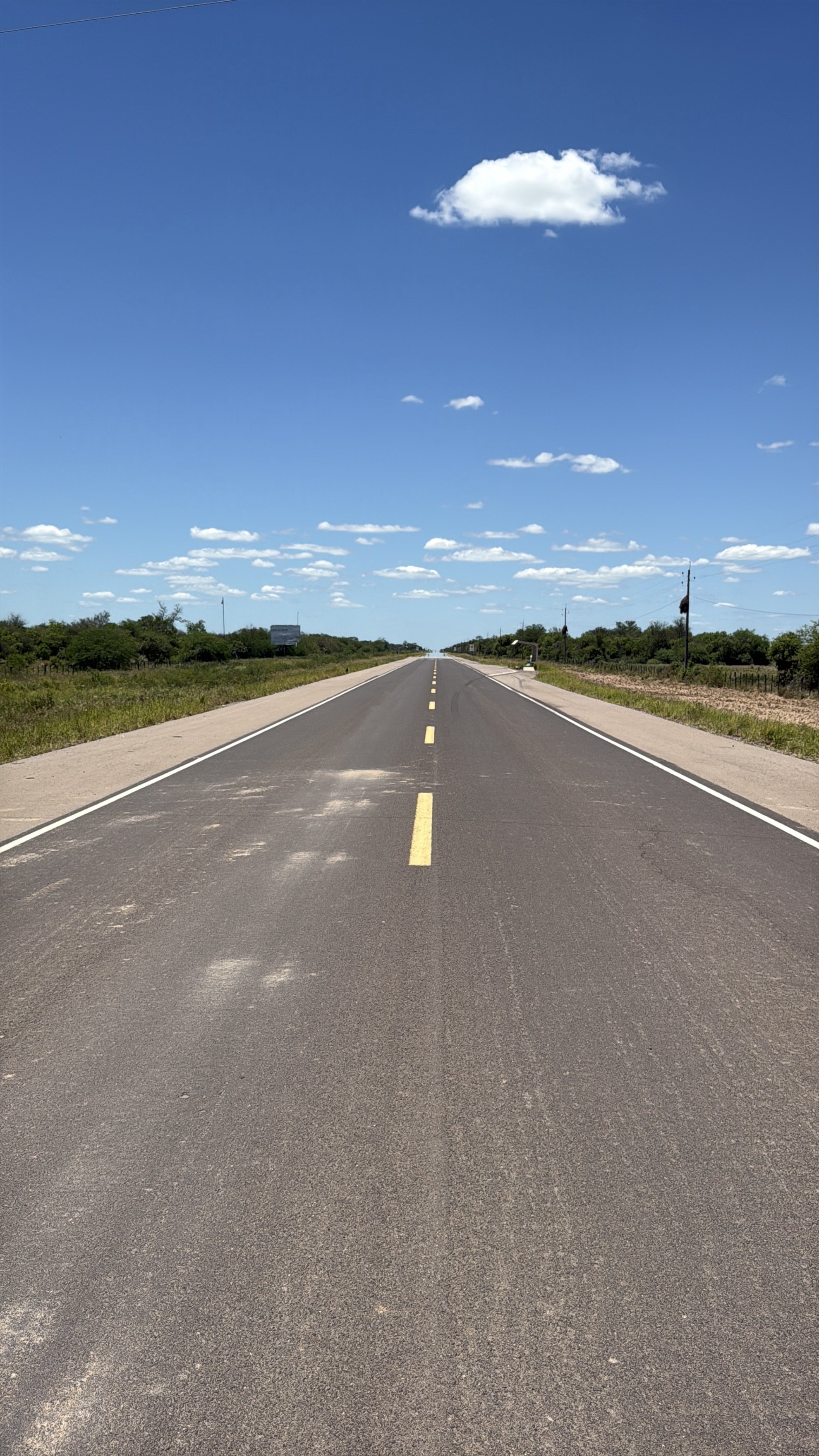
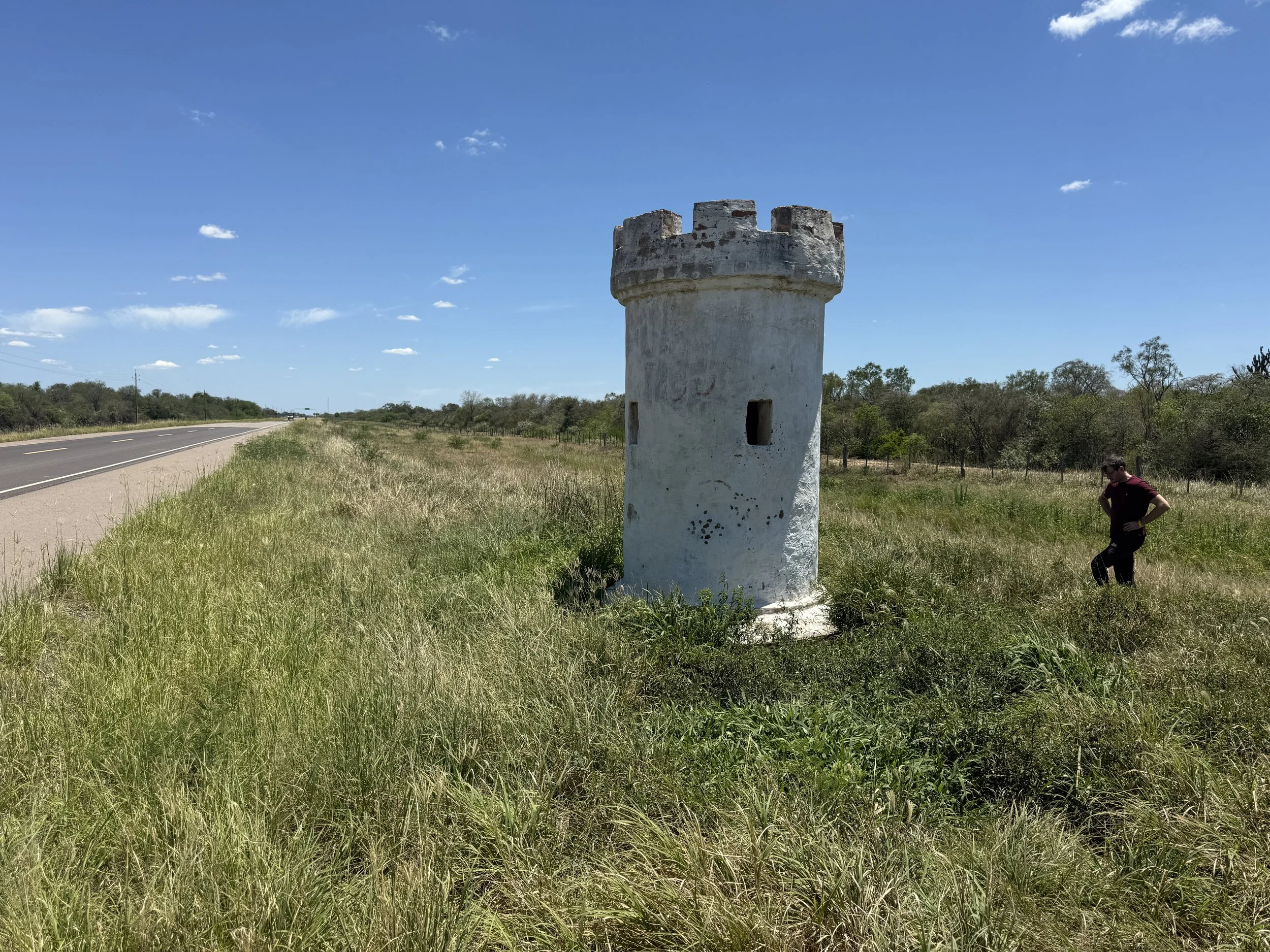
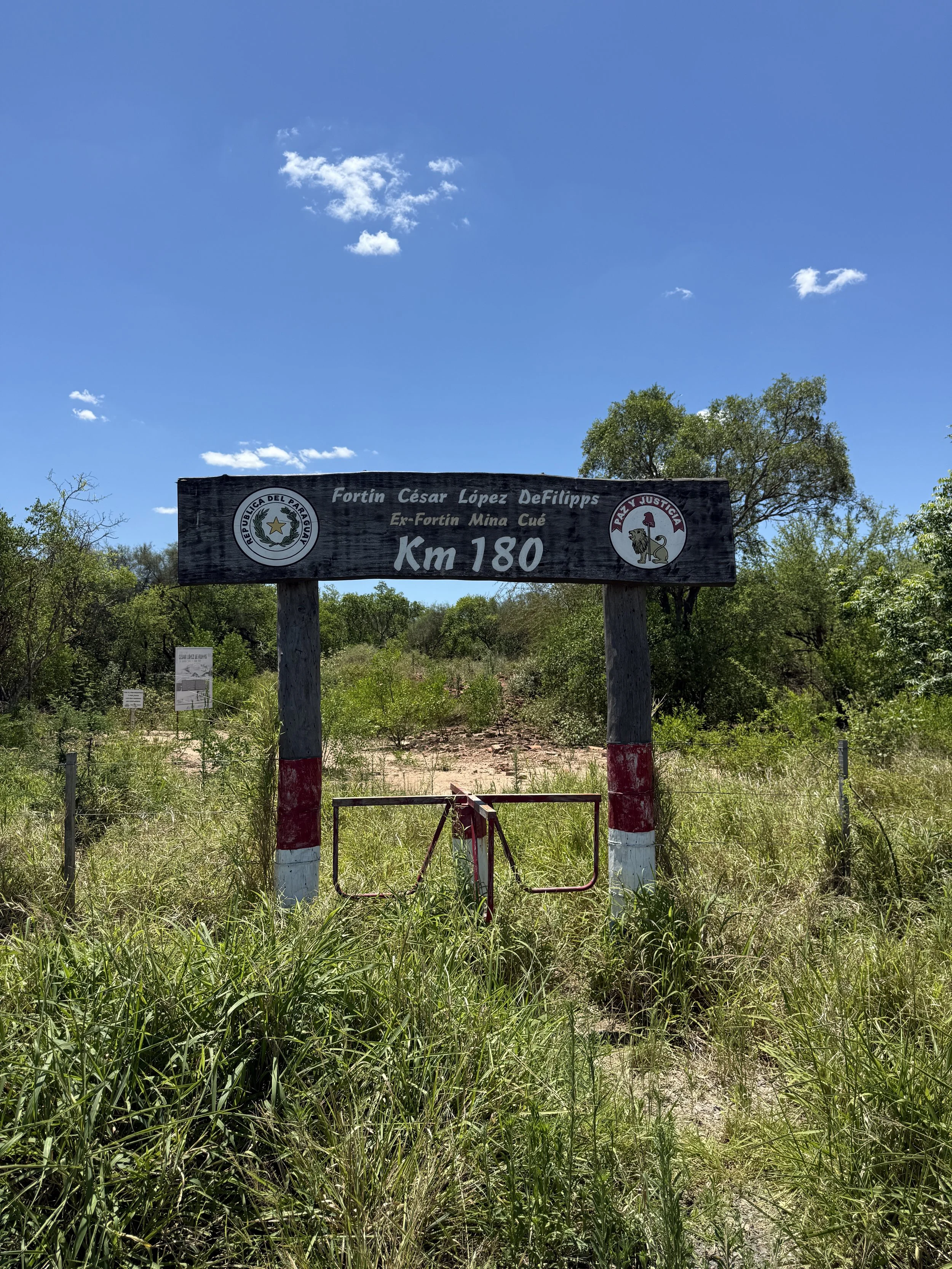
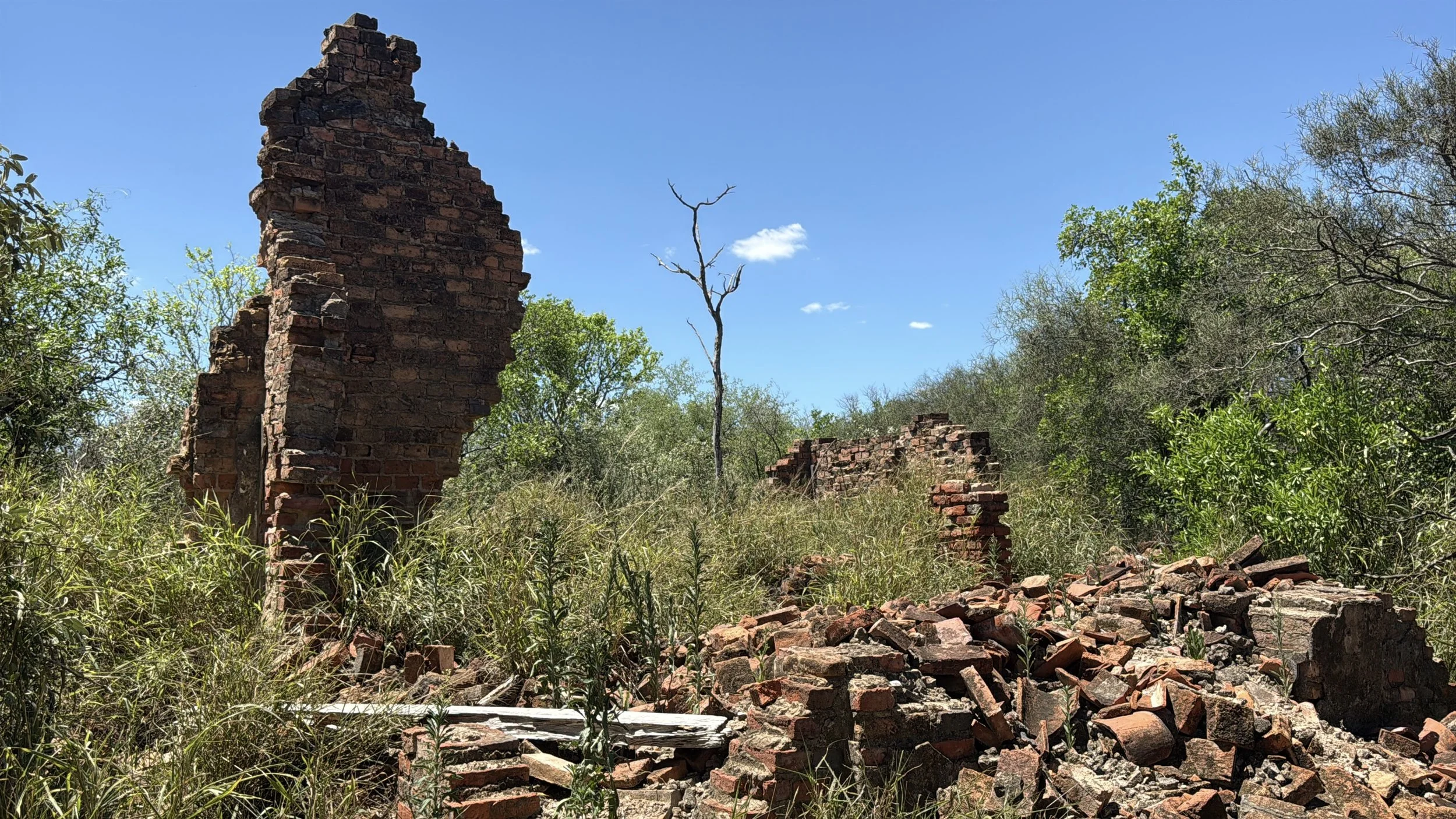
Being a geography buff I also wanted to reach the border of the Alto Paraguay (Upper Paraguay) Department, which is Paraguay’s most rural. There is also the point where the Departments of Villa Hayes, Boquerón, and Alto Paraguay meet.
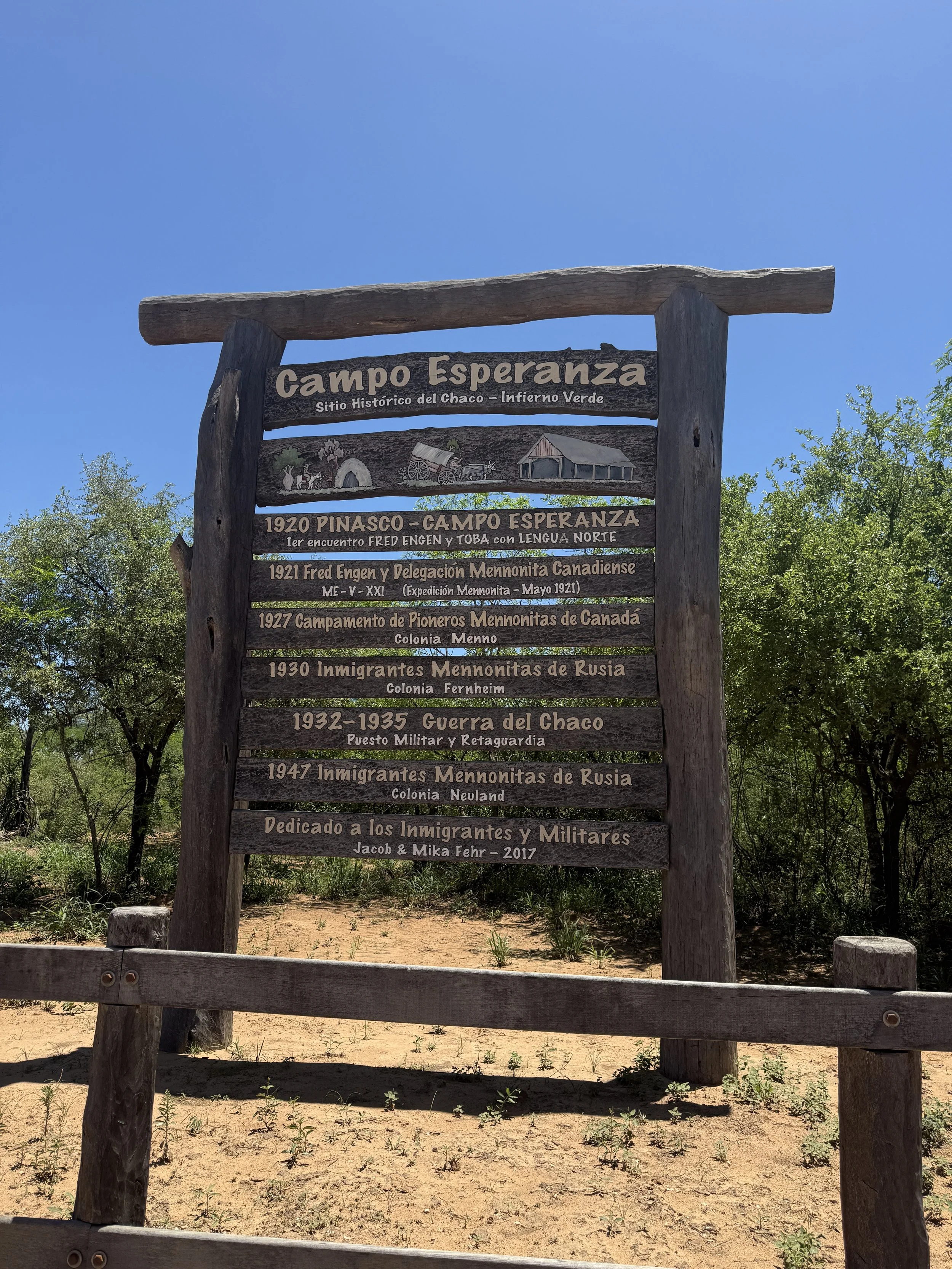
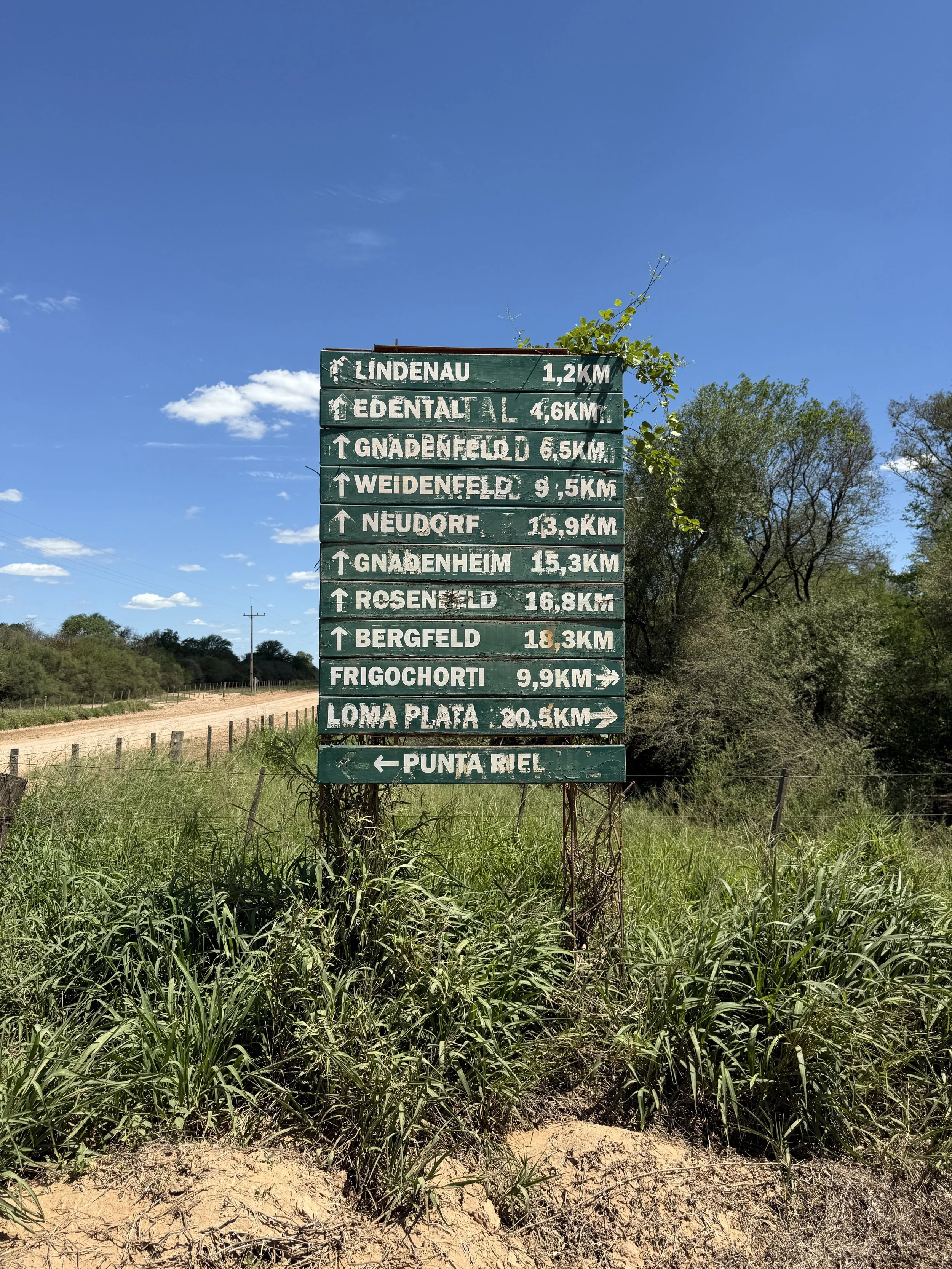
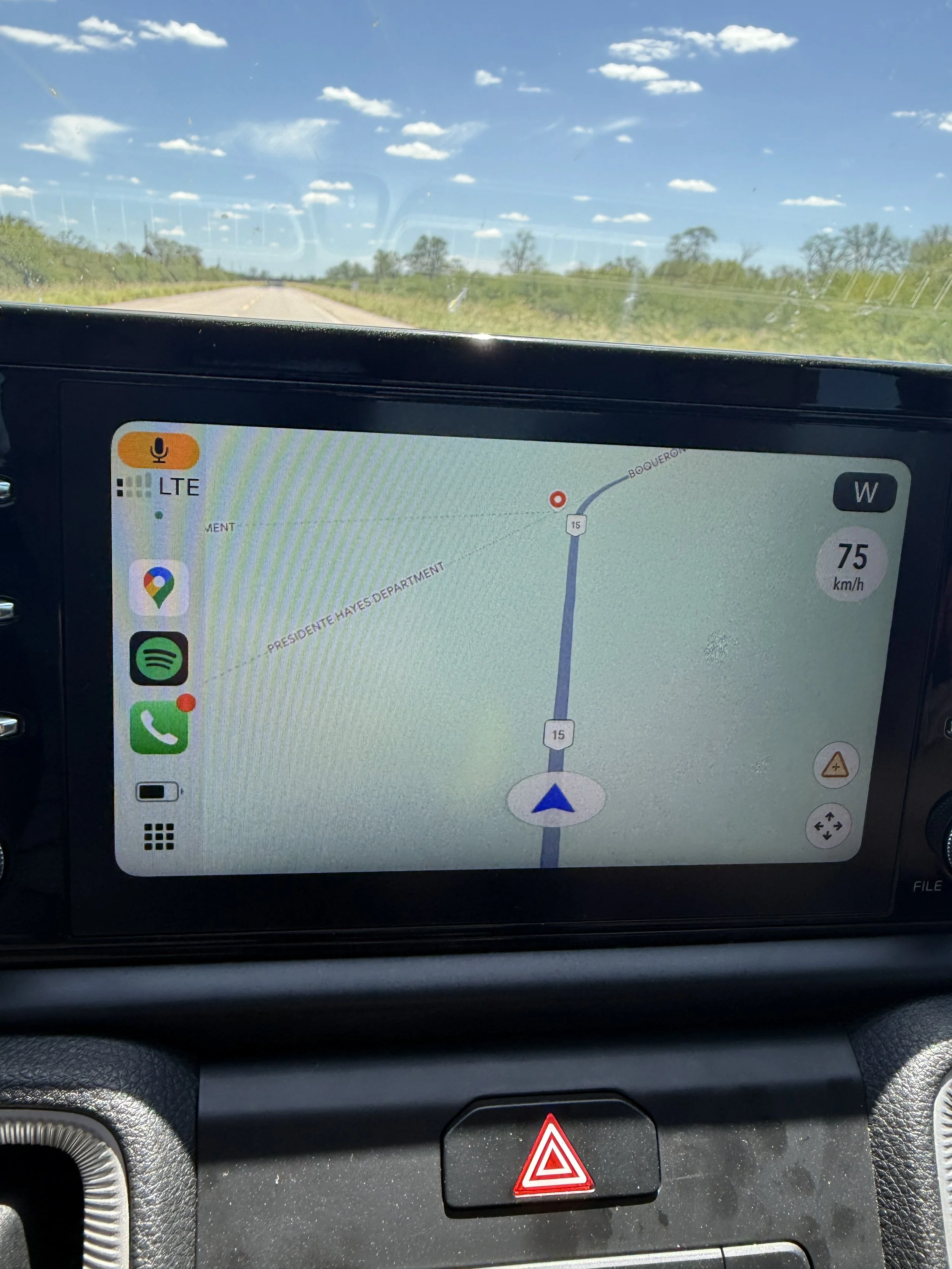
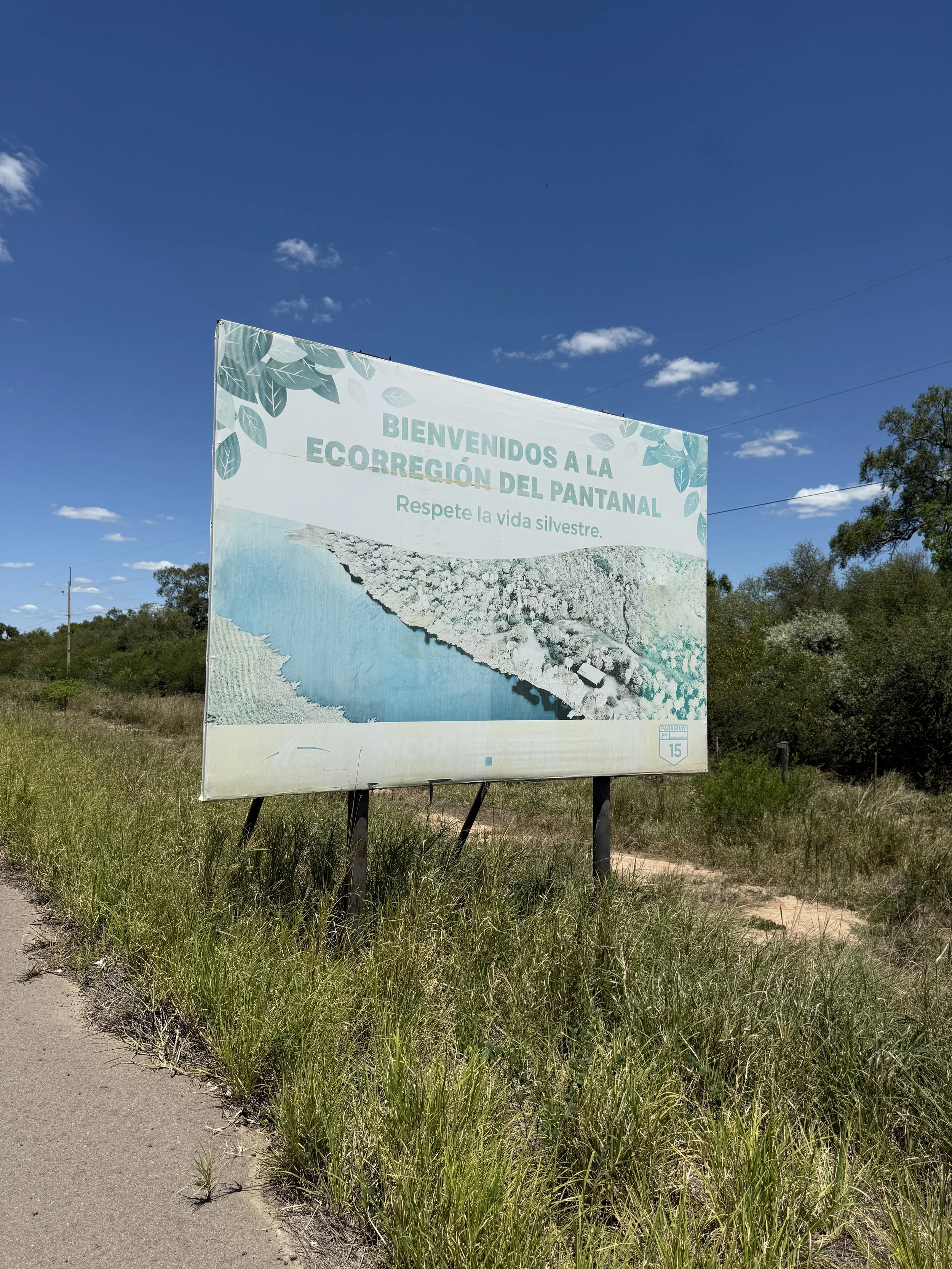
Back in town we went back to the museum (the ticket is good for the whole day). We started in the natural history section which has an impressive collection of taxidermy and the skull of a cow where the horn grew into the skull.
The museum had an excellent Mennonite guide who told us about his life and walked us through the exhibits. Talking with him and hearing about the historic and modern life of the Mennonites of the region was a true pleasure. He explained to us that there are people who have recently moved from Germany to Filadelfia, including one who works in his gym as a trainer. Frankly, he made the trip.
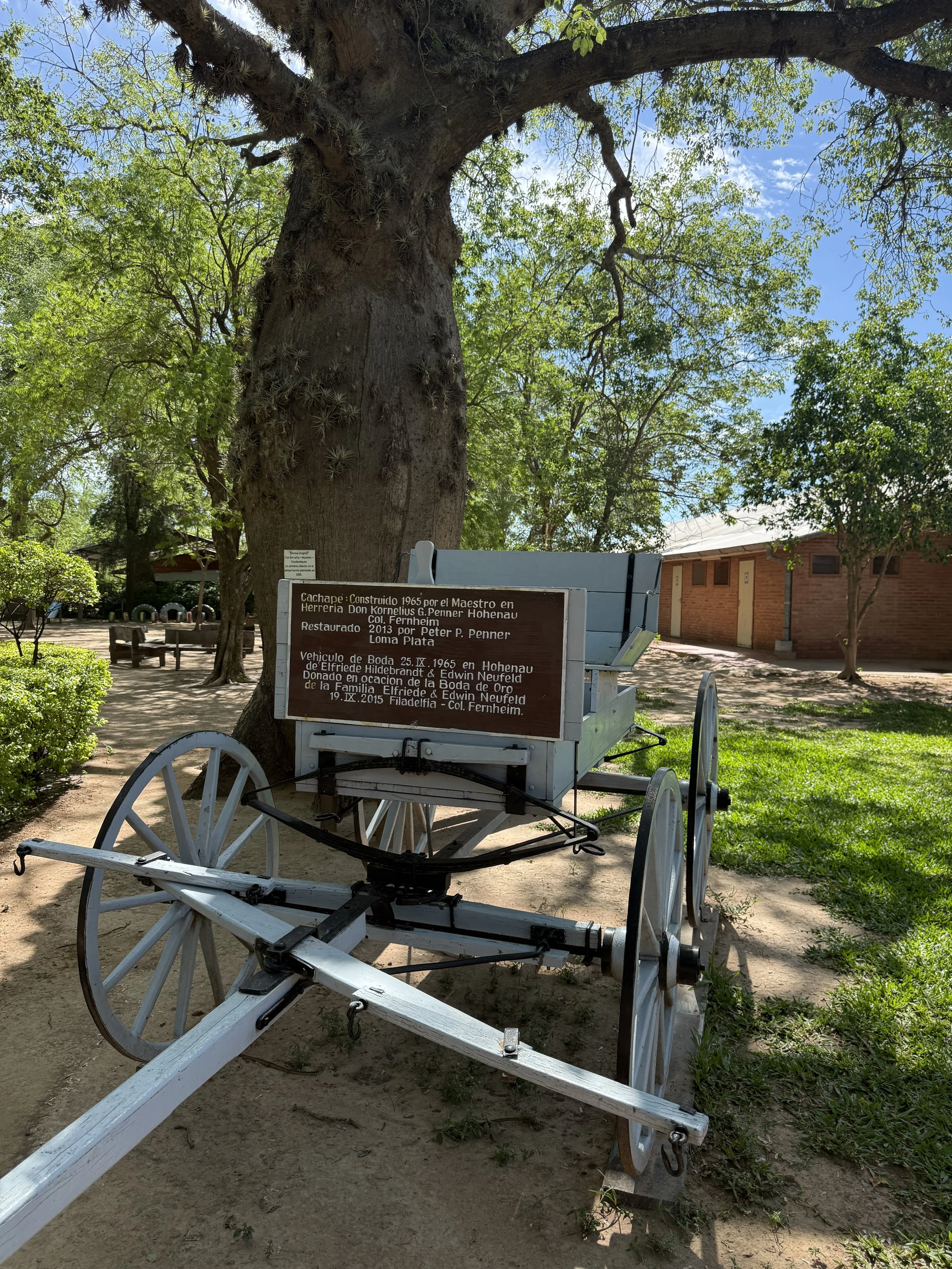
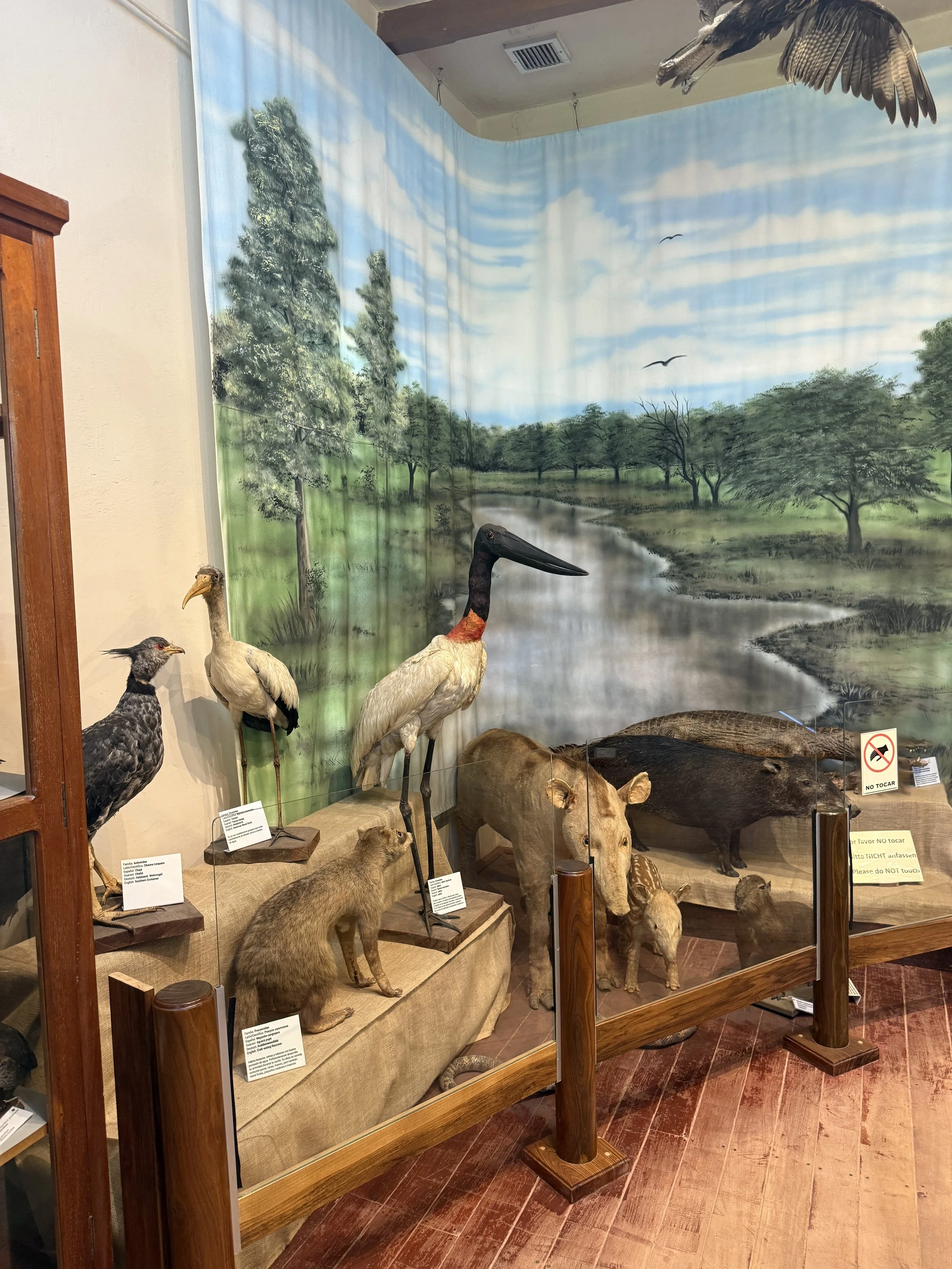
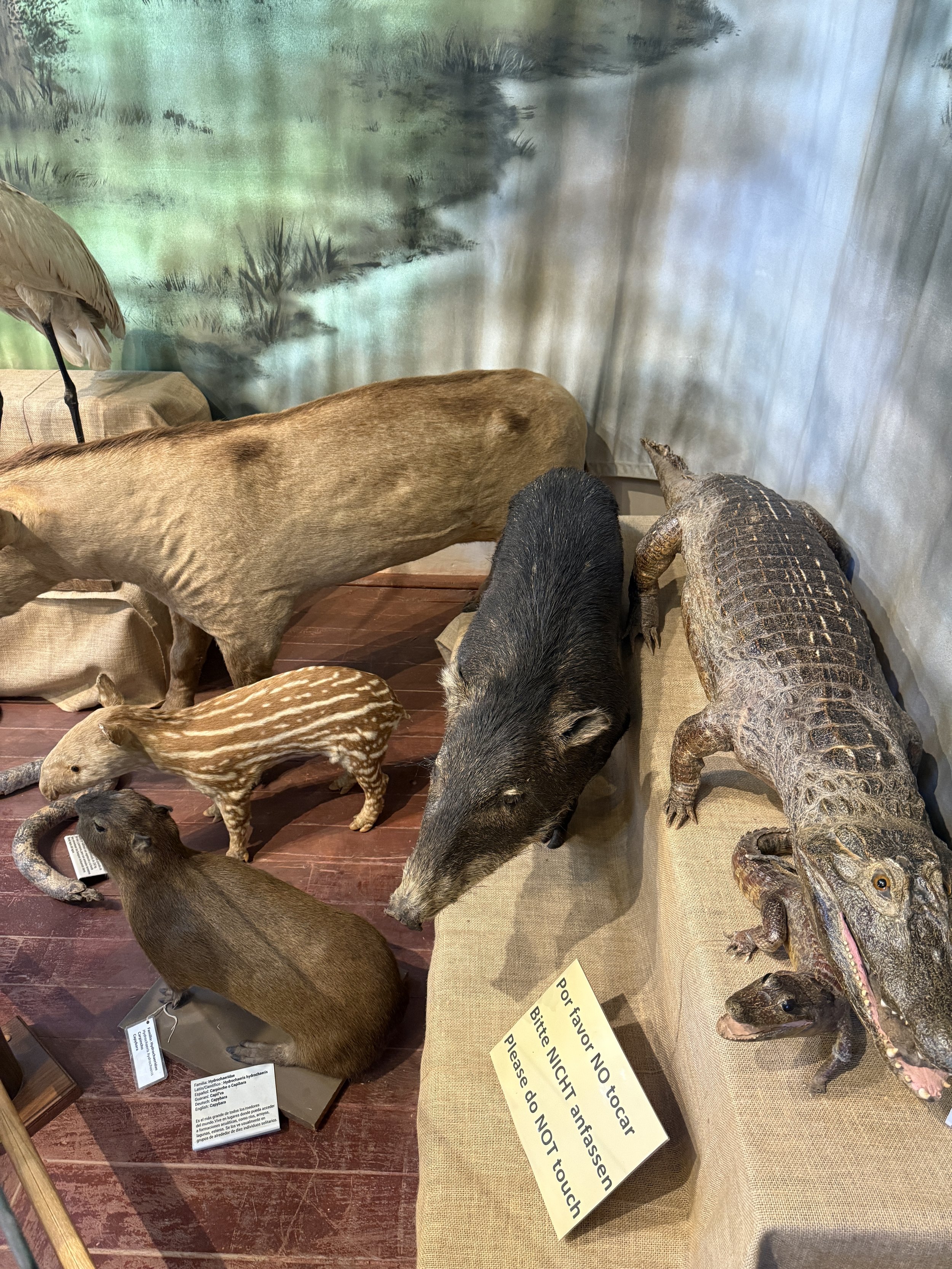
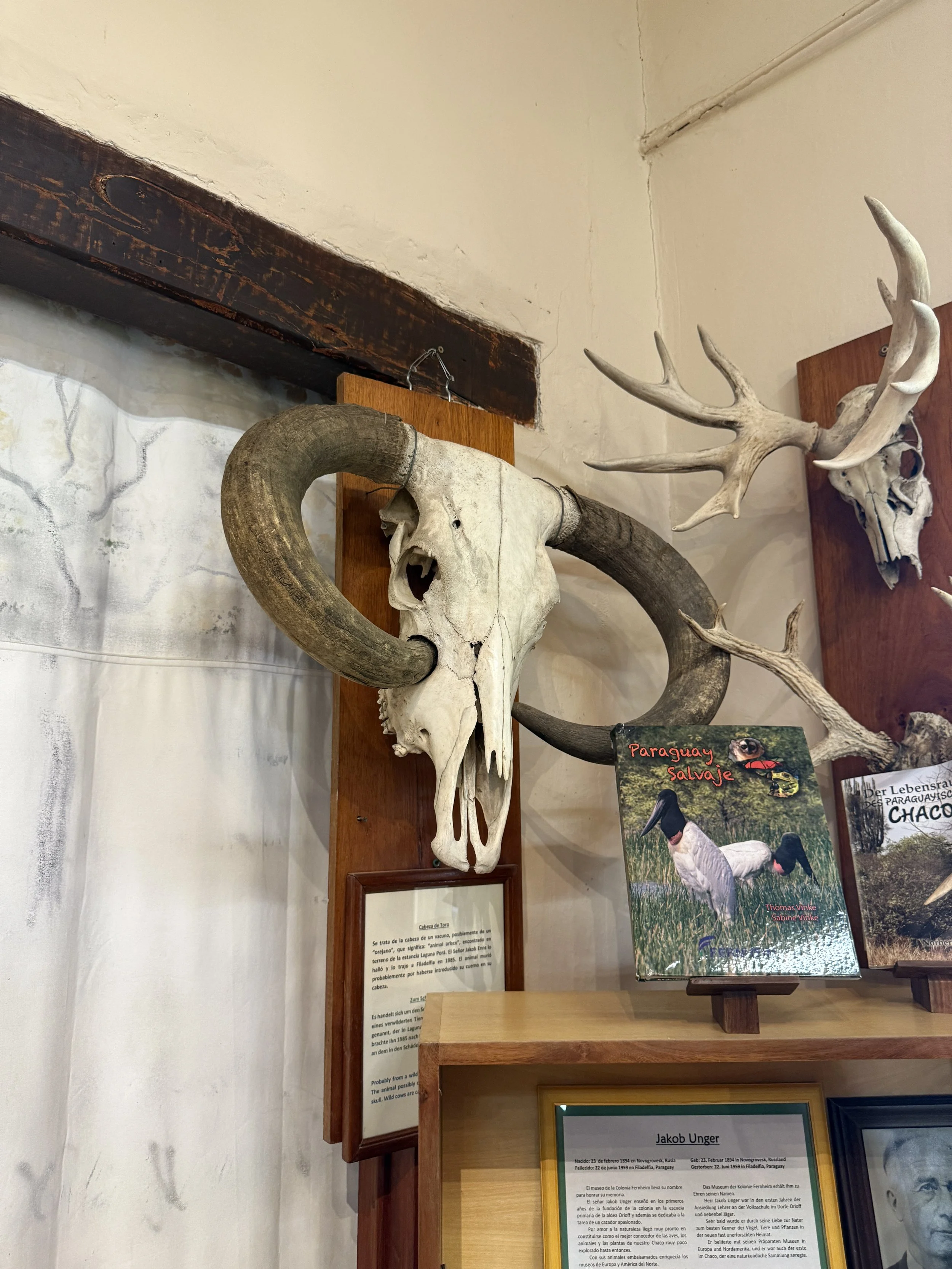
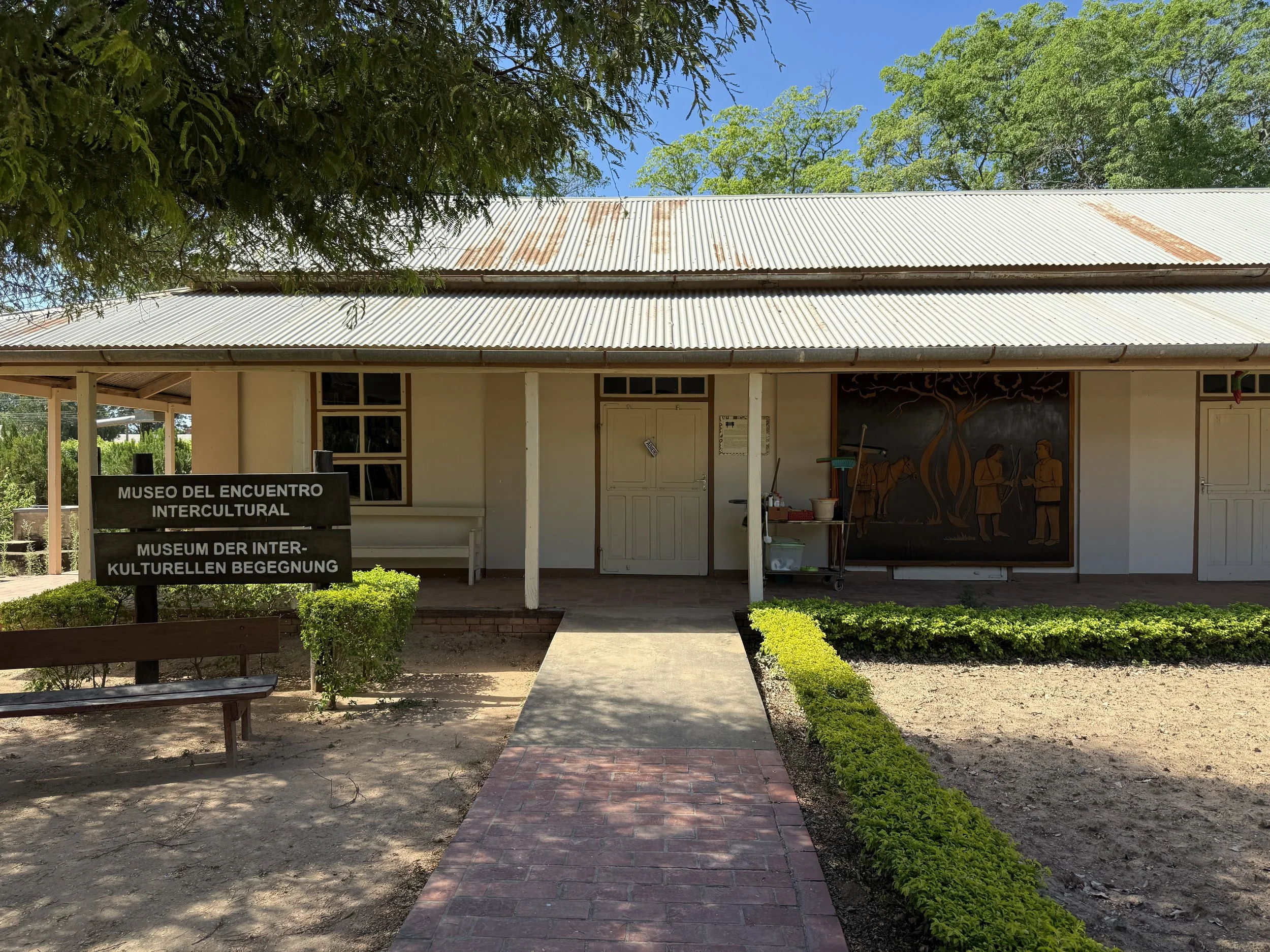
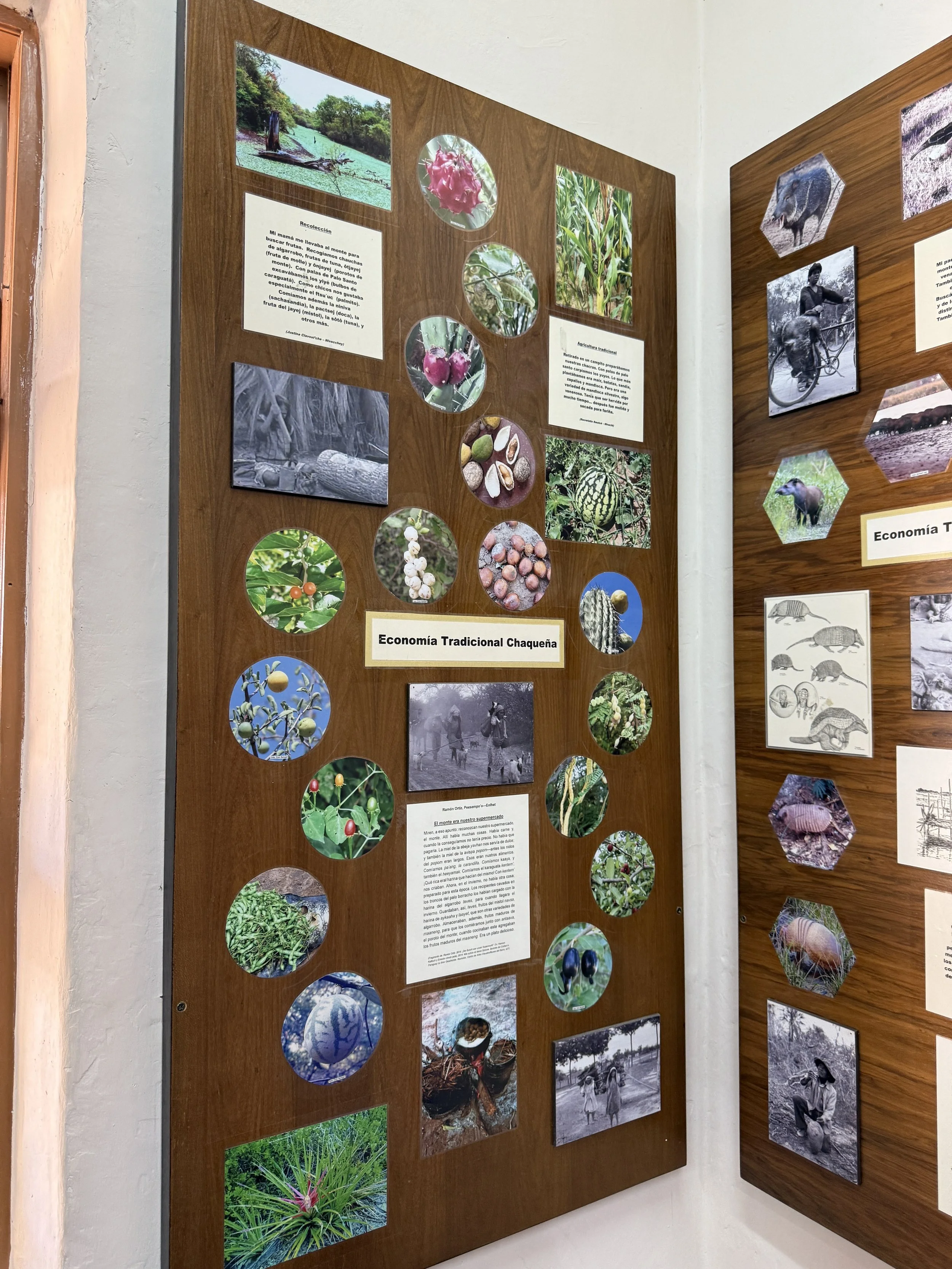
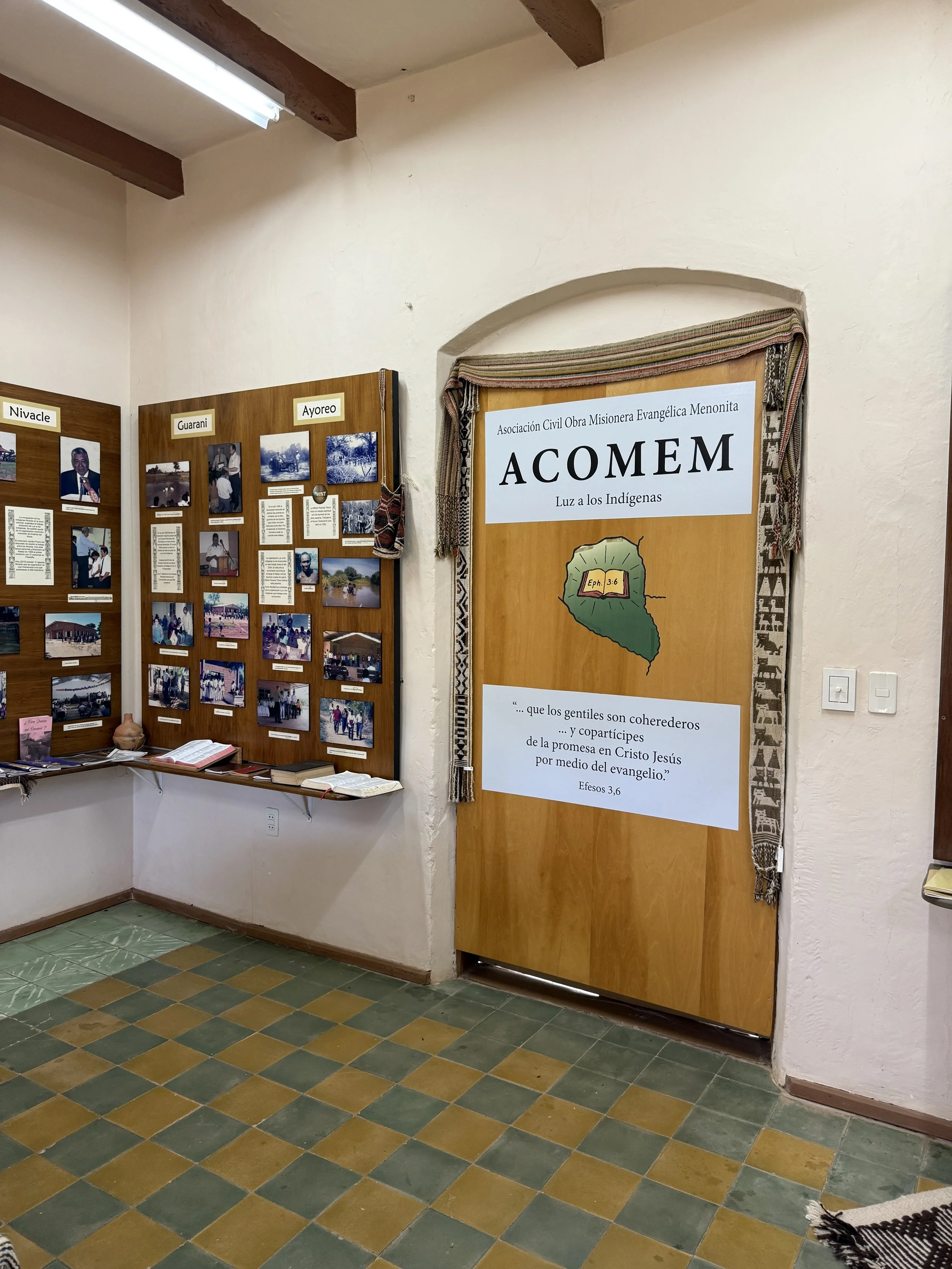
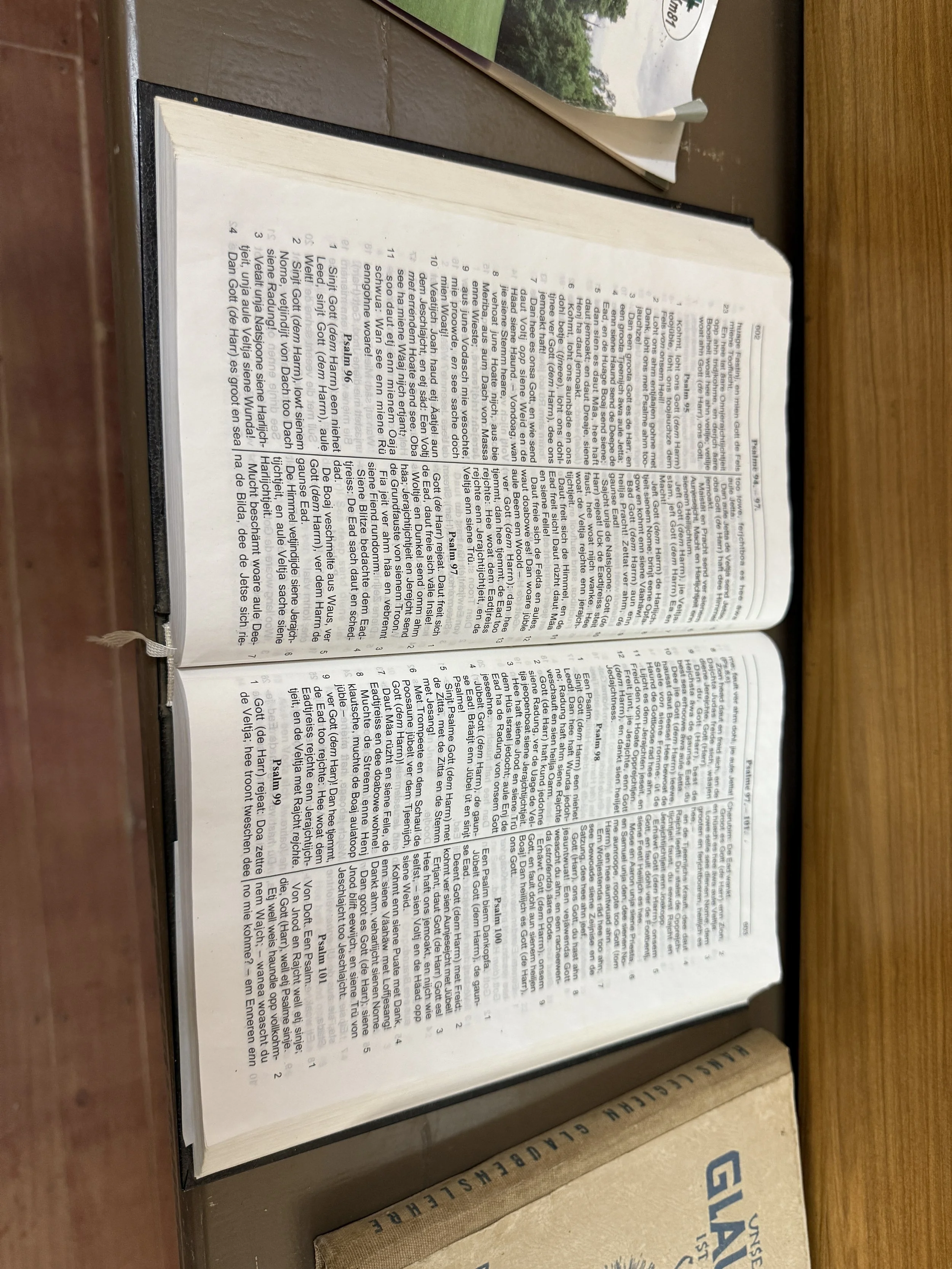
He walked us through the section that discusses the Mennonite relations with the natives of the area. The exhibits showed that the Mennonites generally have had amicable relations with the natives since they provide employment and support religious missions.
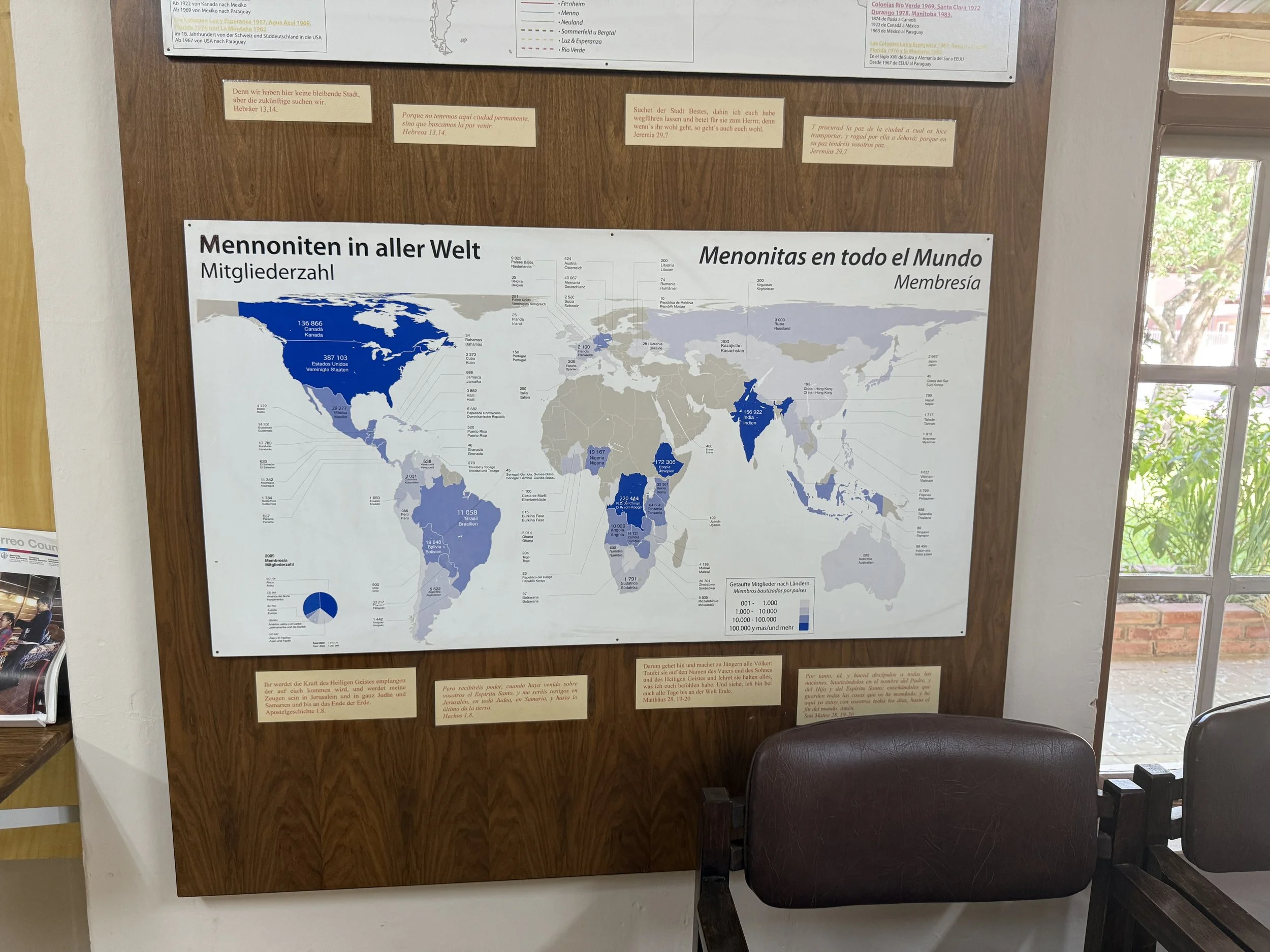
Next, the guide showed us the general history of the Mennonites including how the religious movement formed, their beliefs, historic migration patterns, and the various corners of the world where they are today.
Finally, we saw the collection of local woods. The Chaco is known for having some very beautiful woods, and it was nice to see so many of them in one place.
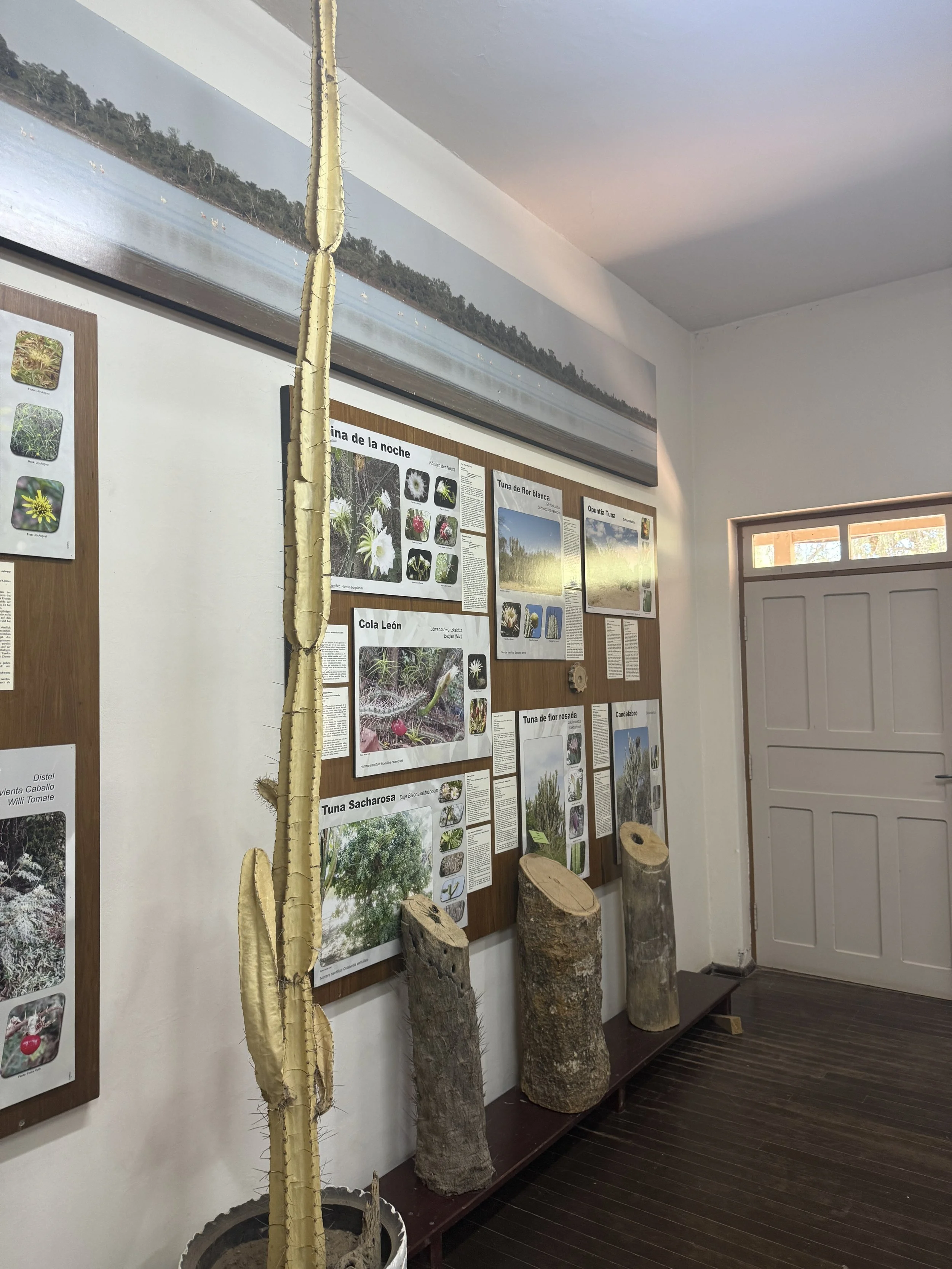
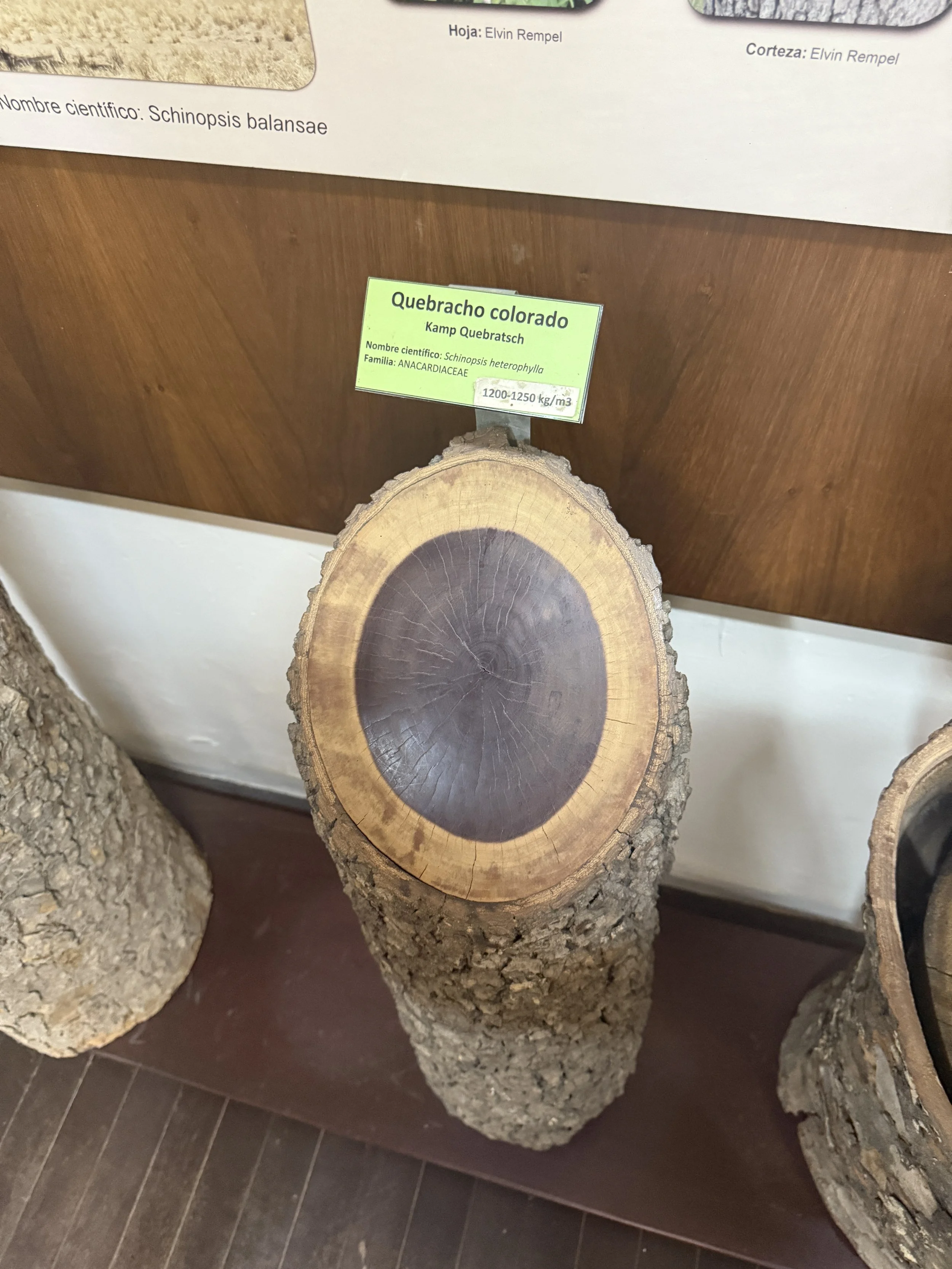
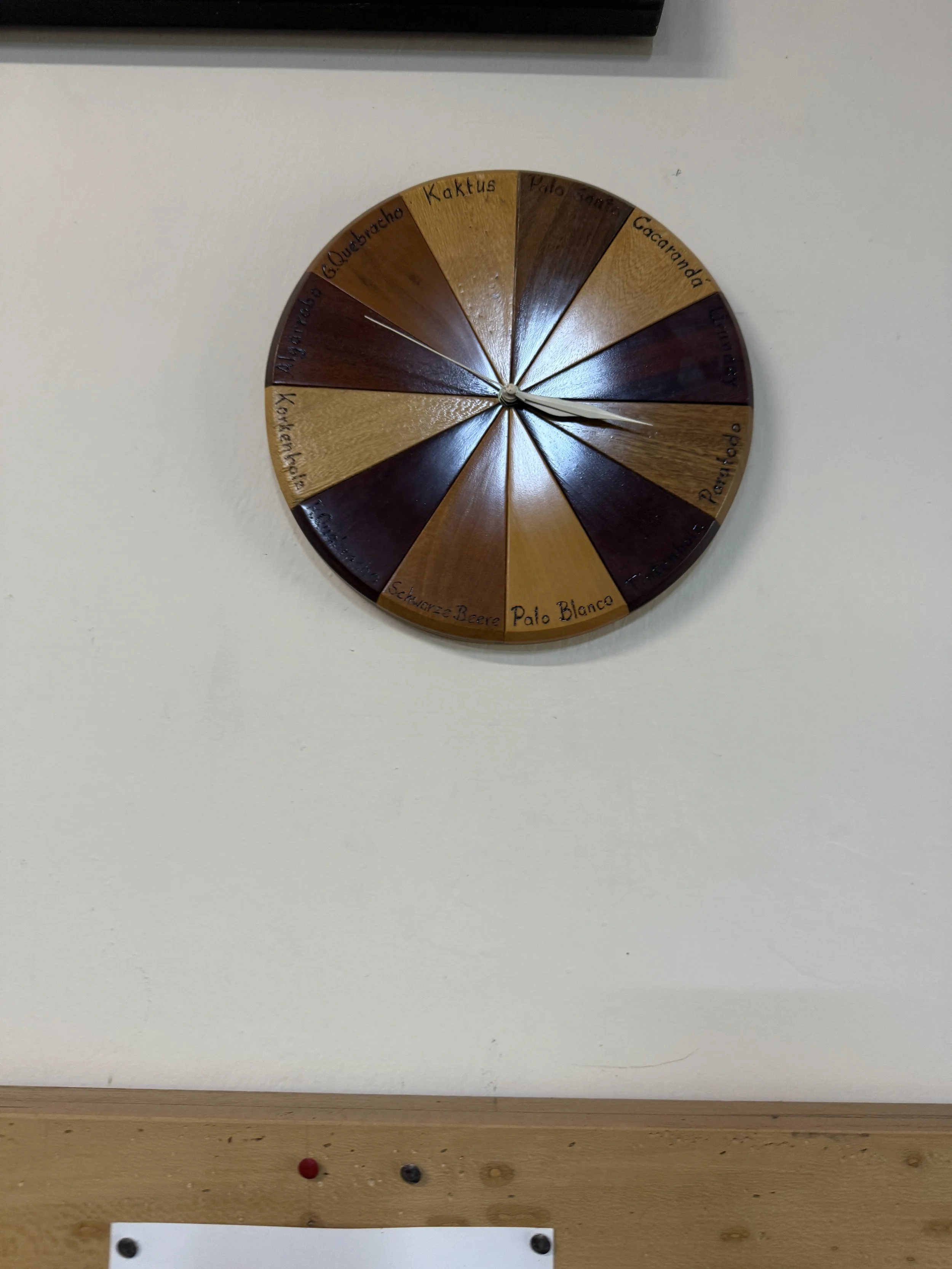
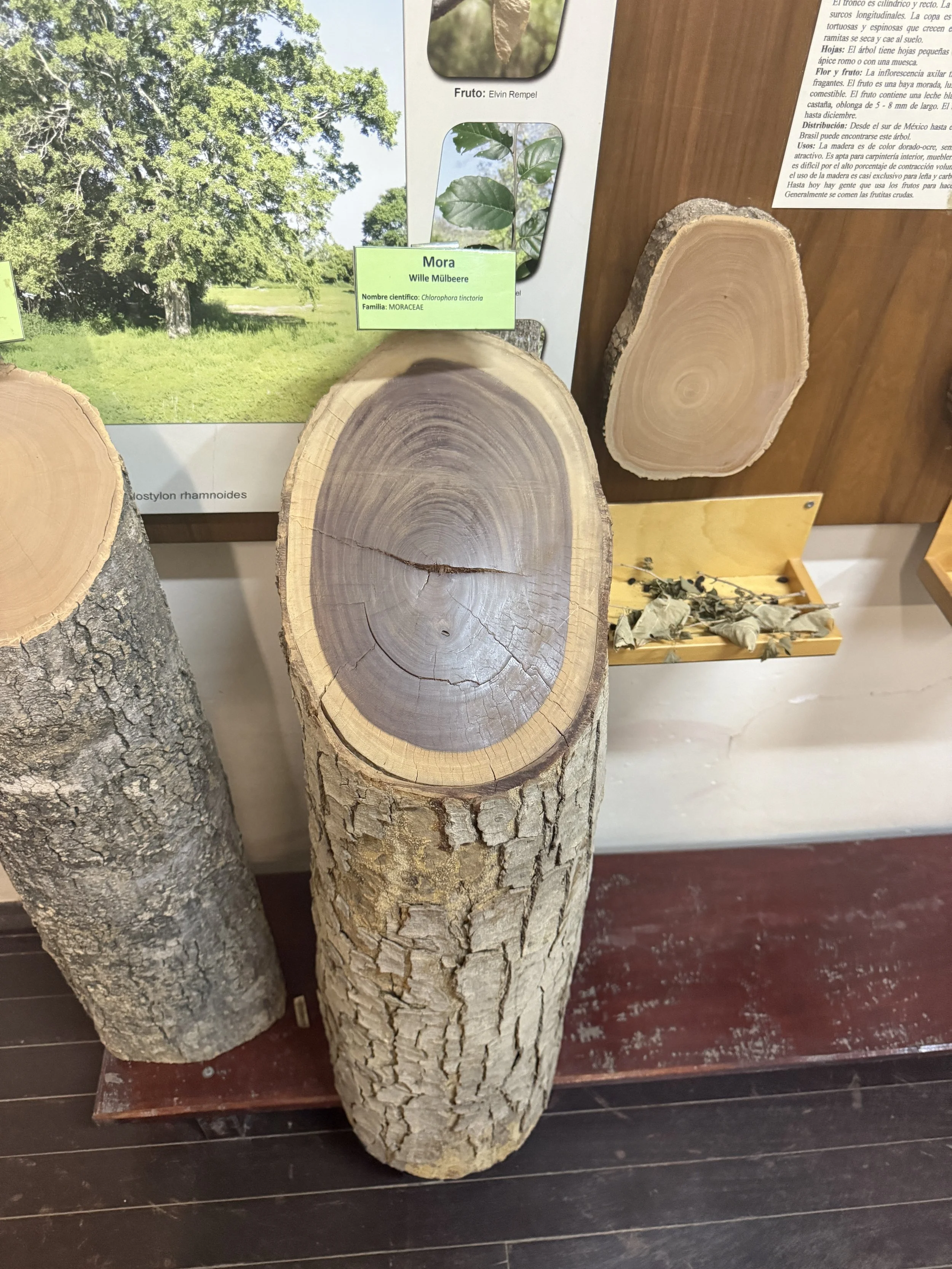
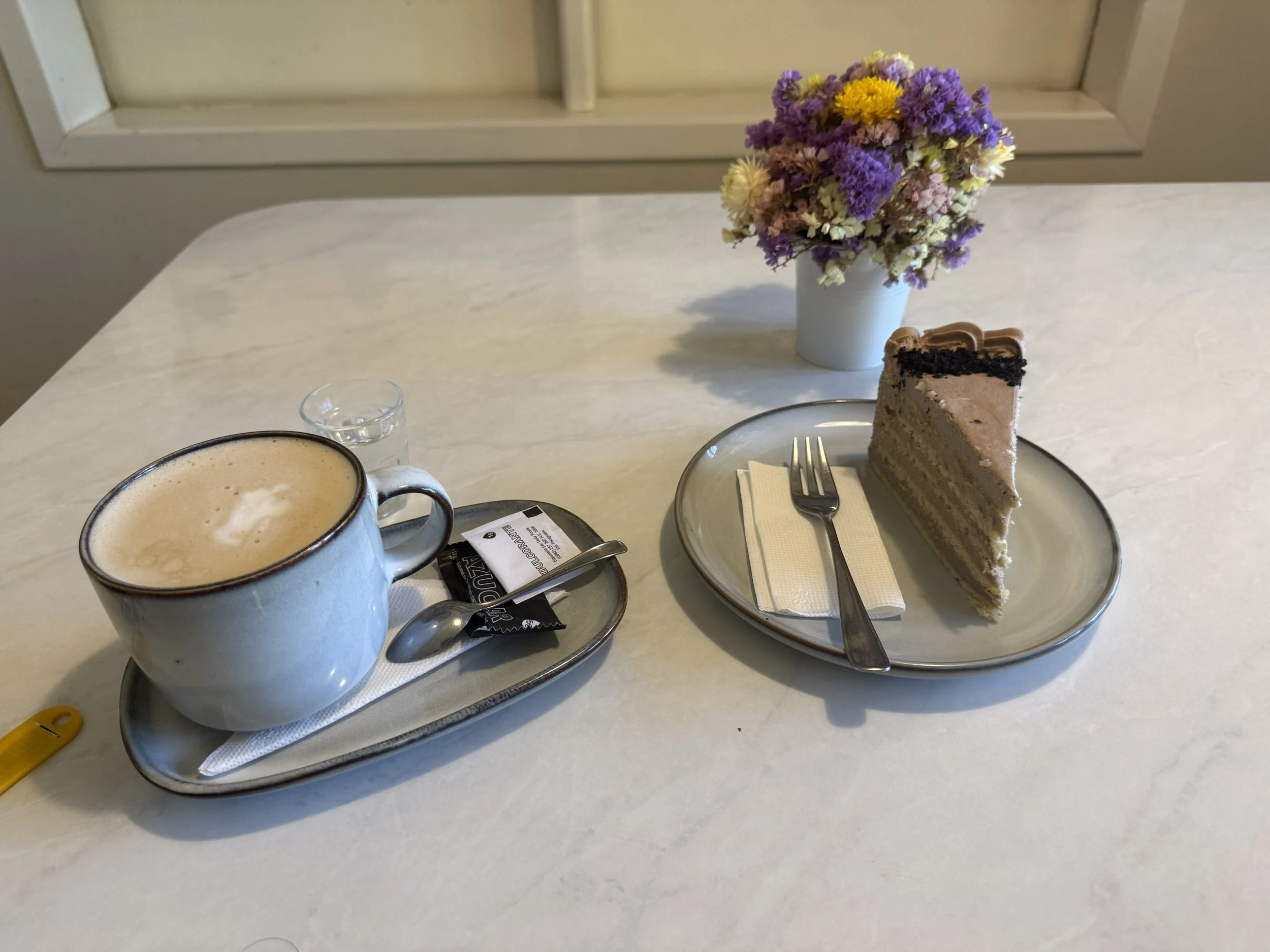
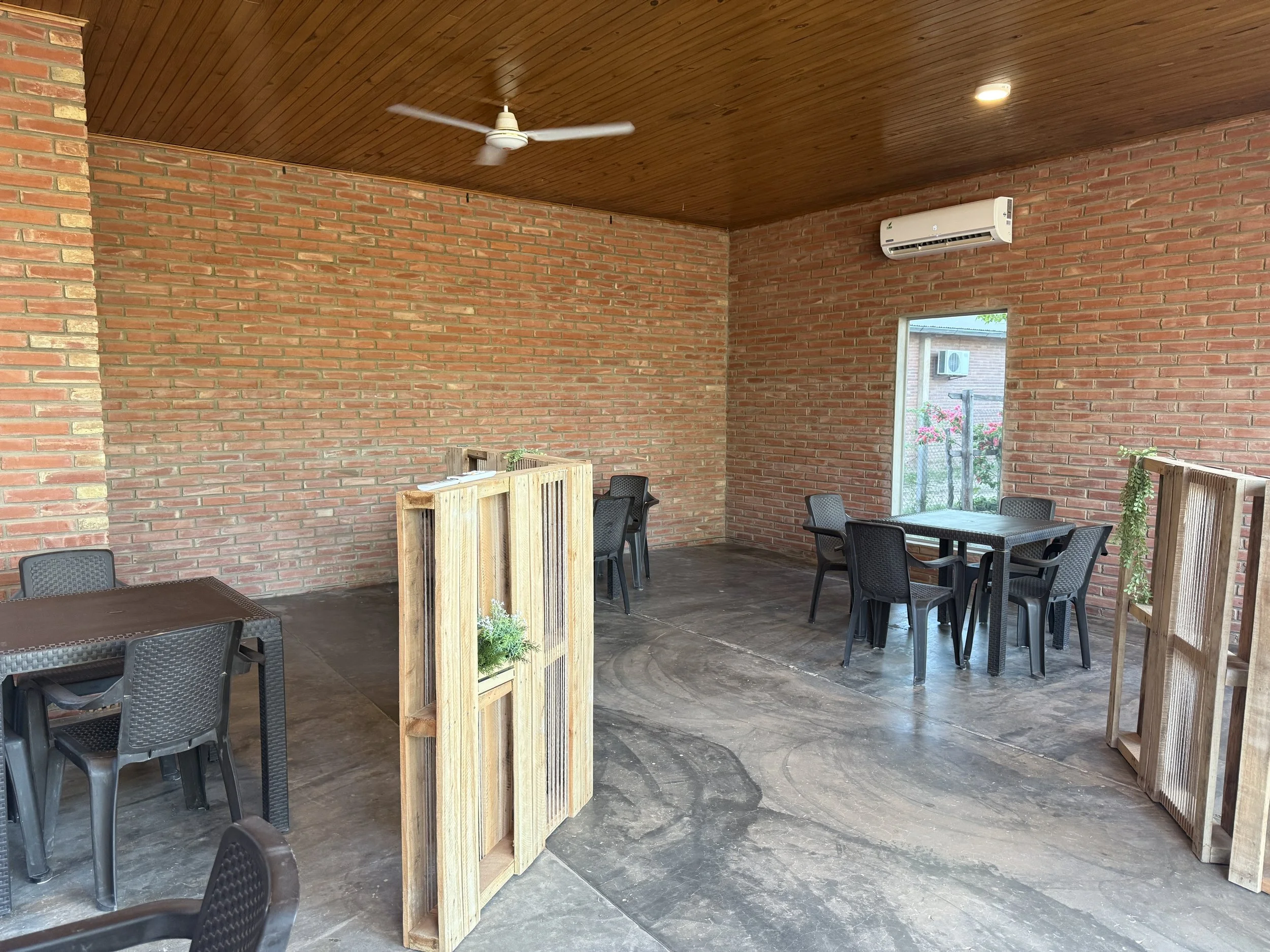
After the museum we decided to have a coffee and cake at Cafeteria Lights. It was a very comfortable atmosphere where you can sit in the open air rooms or inside.
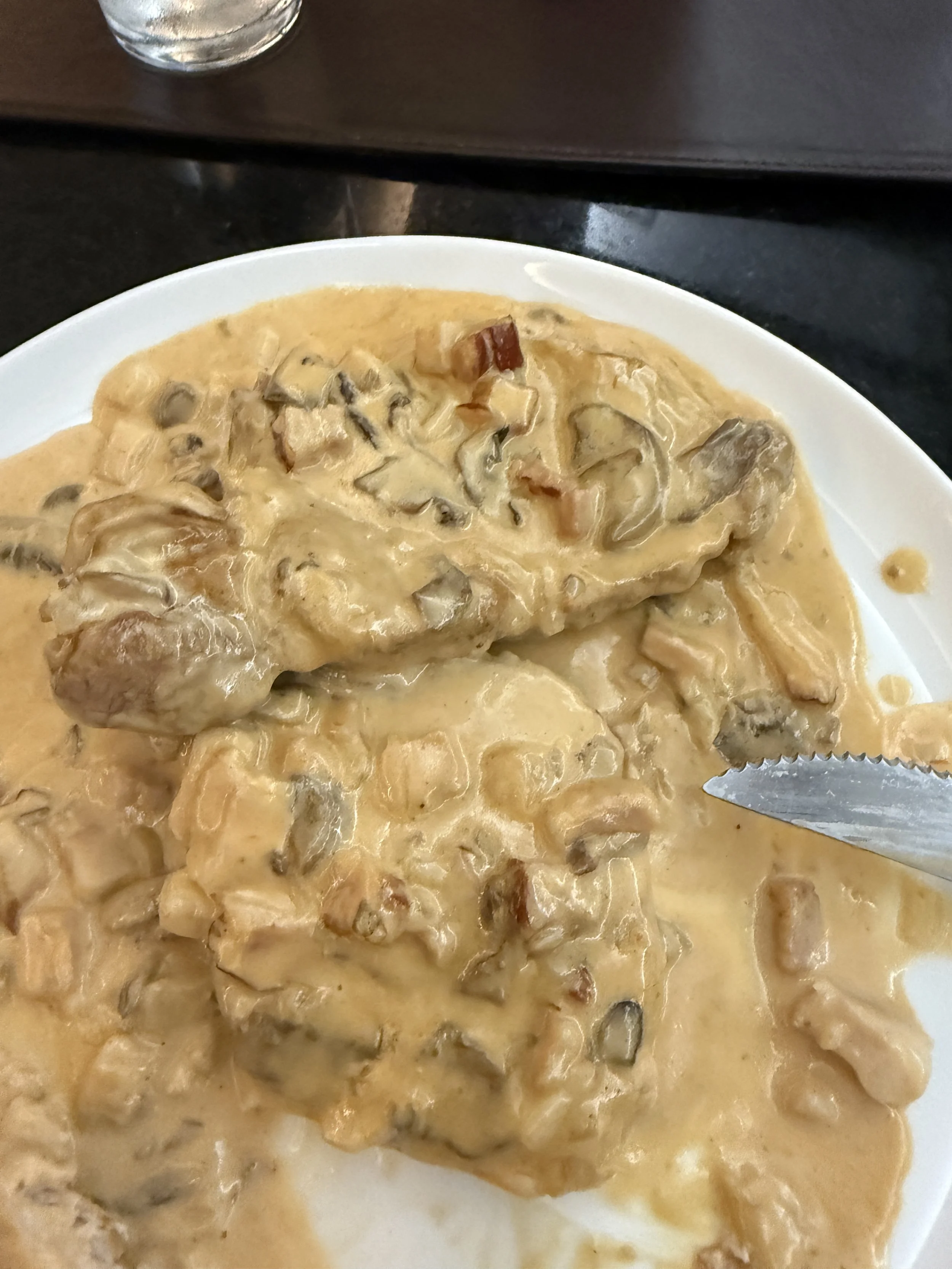
Soon enough, it was time for dinner. We went to the Hotel Florida where I had an excellent pork with mushrooms. Then at night we drove outside town to look at the stars. One of the most attractive parts about visiting the Chaco is that there is almost no light pollution. Just a few kilometers outside town we were able to see amazing stars unlike something I had ever seen before.
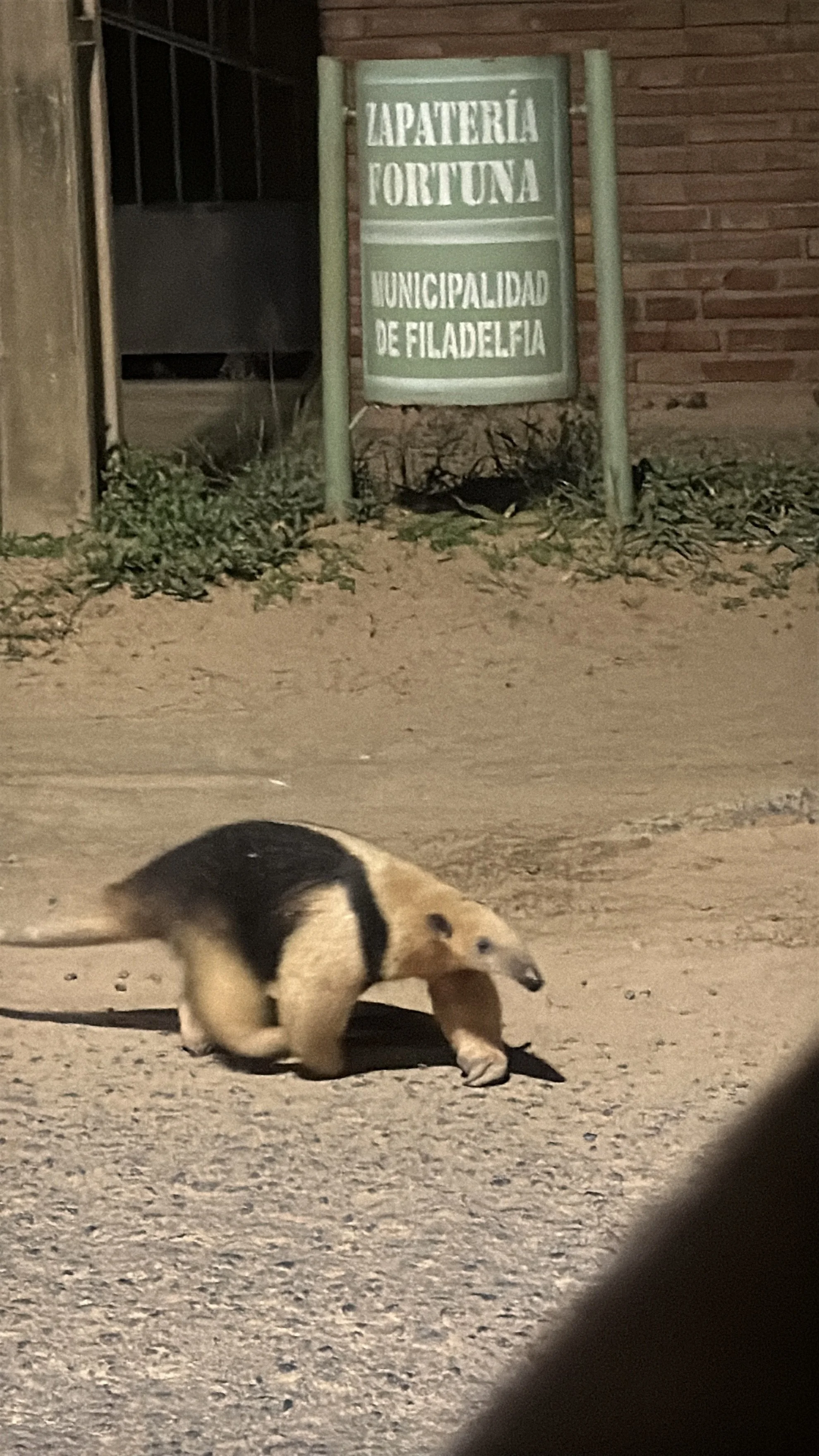
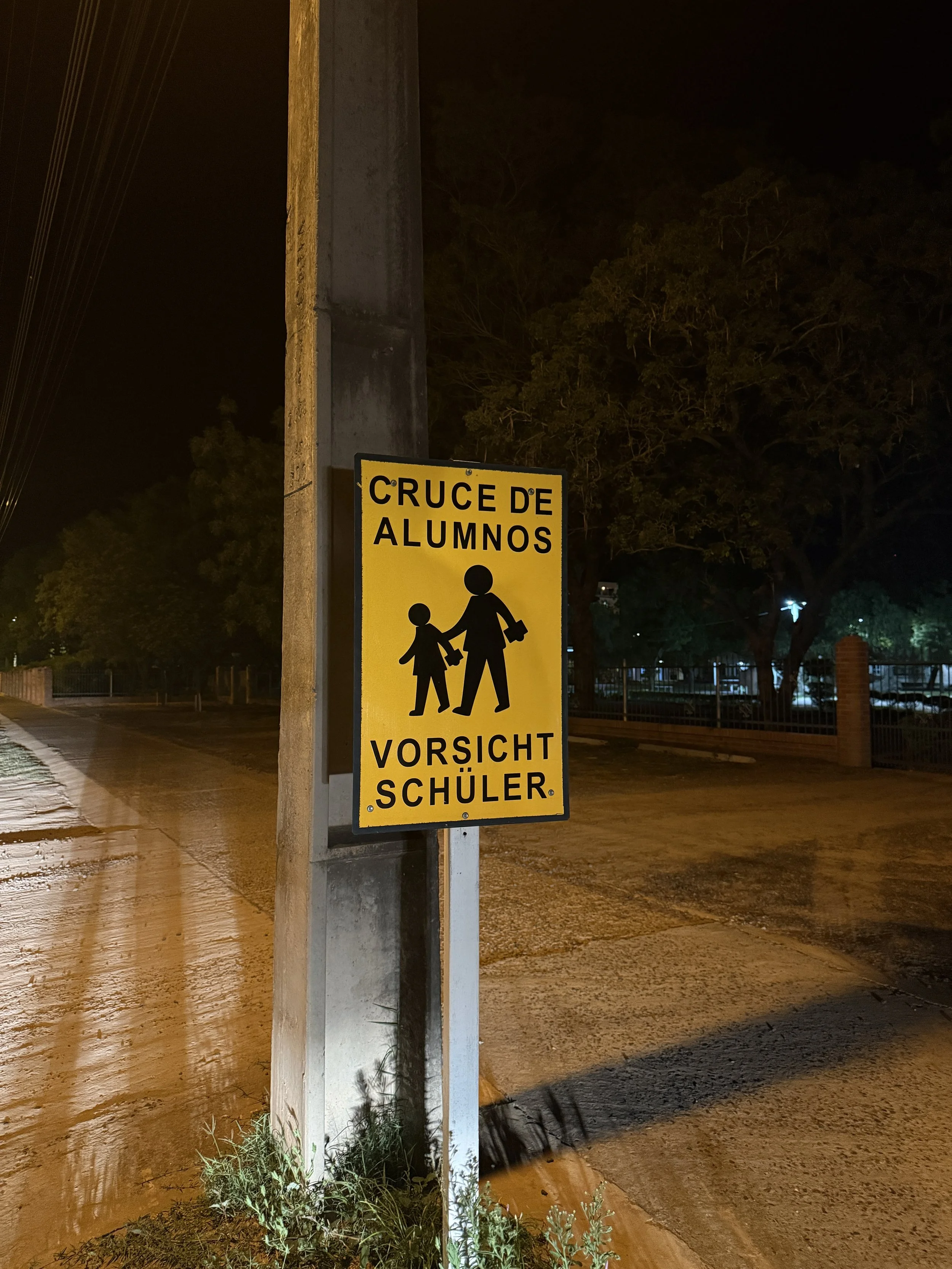
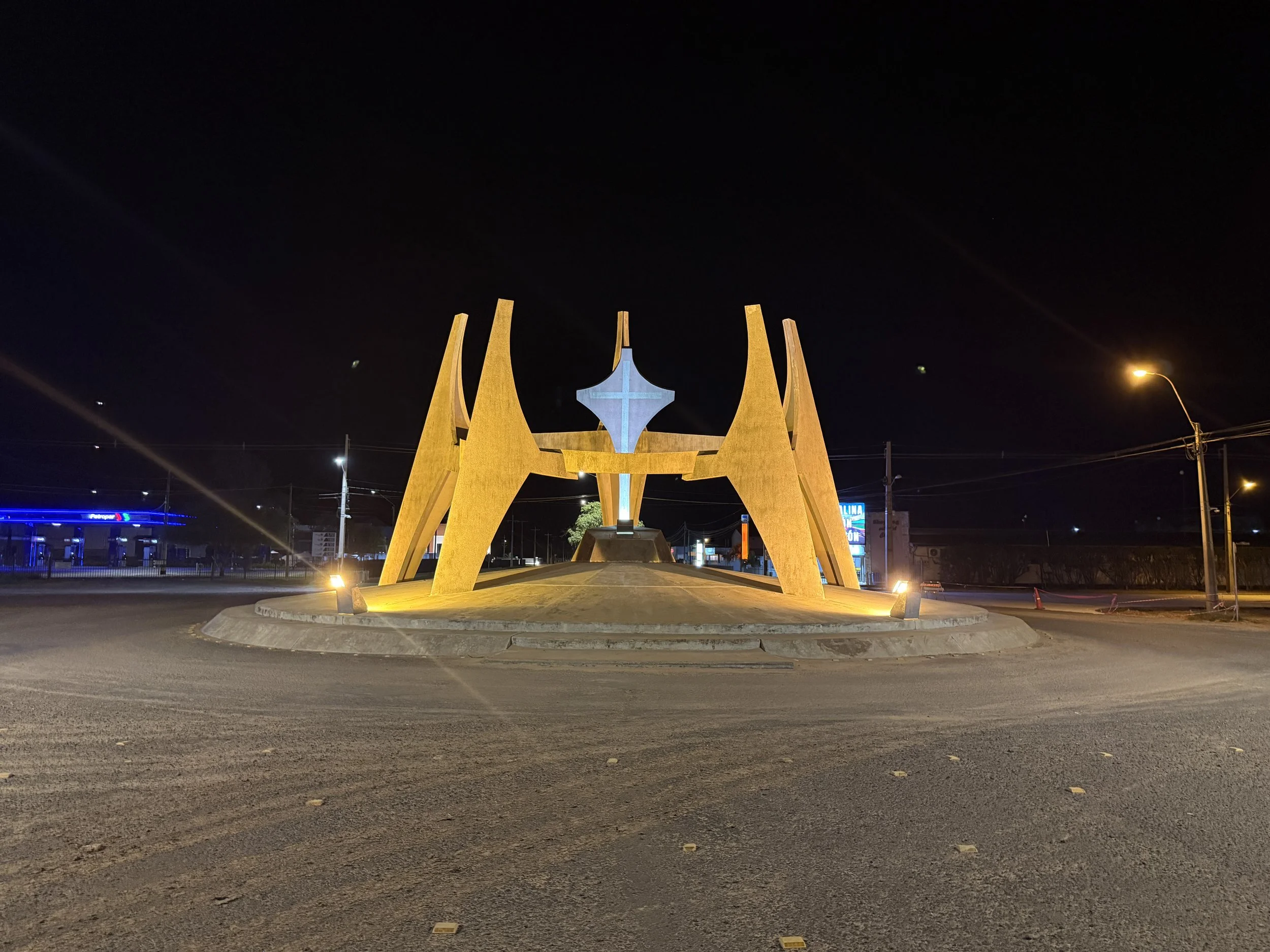
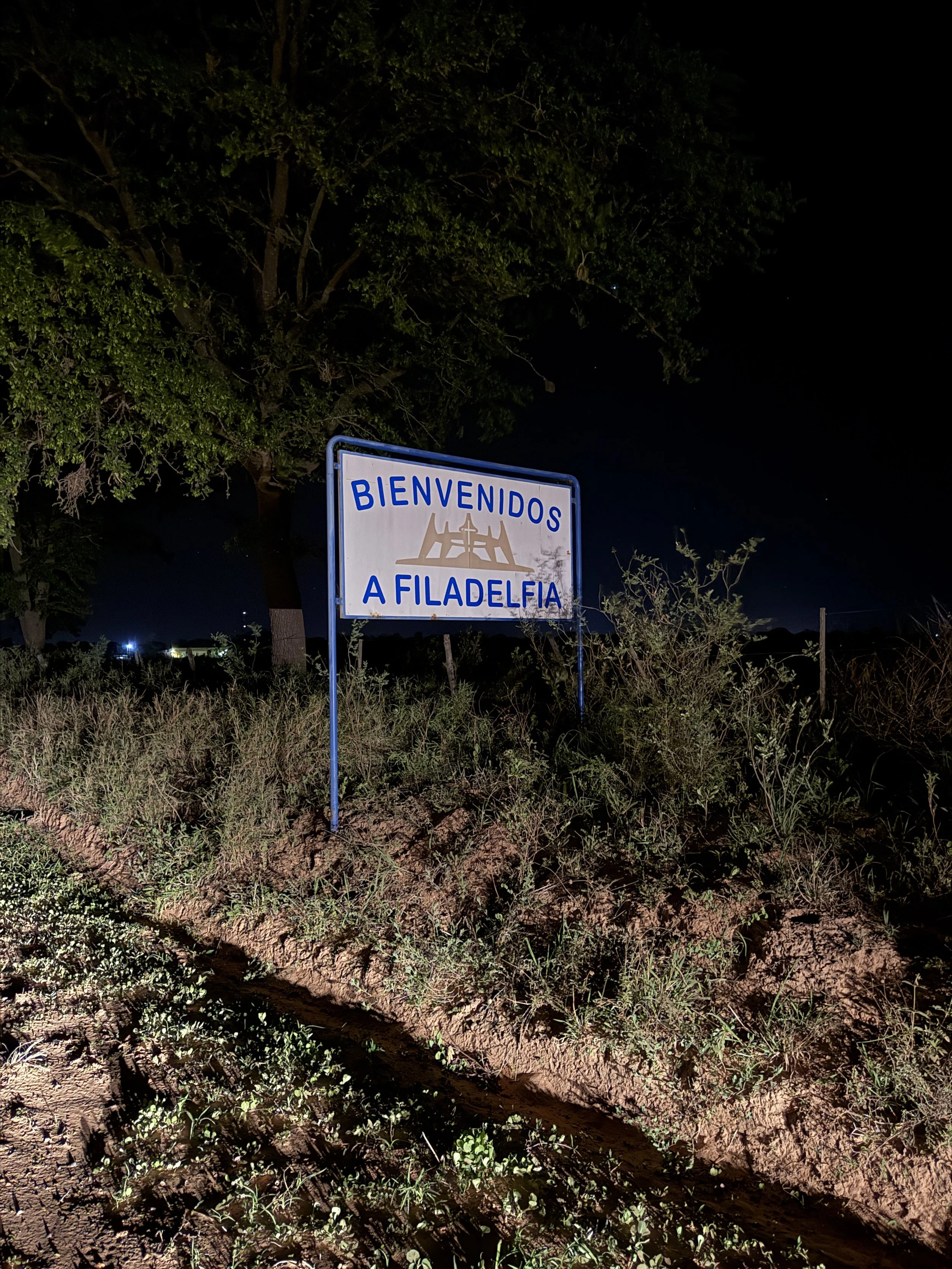
On the way back into town we stopped for photos of a few landmarks and signs as well as to see a very friendly anteater before heading to bed.
Day 2:
After a great sleep, we went to the Hotel Florida for breakfast. They have a pleasant outdoor area where you can sit before the day gets very hot.
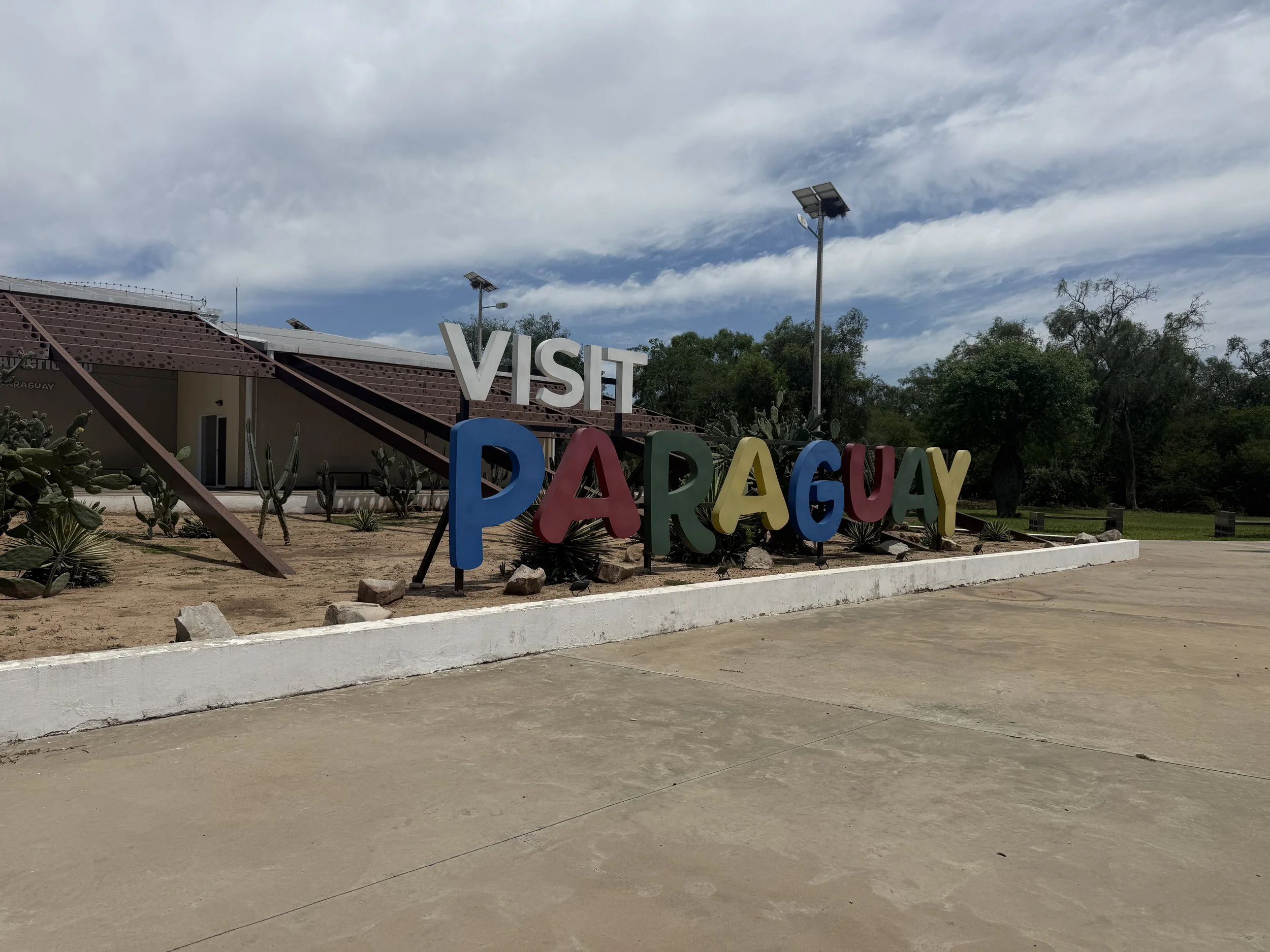
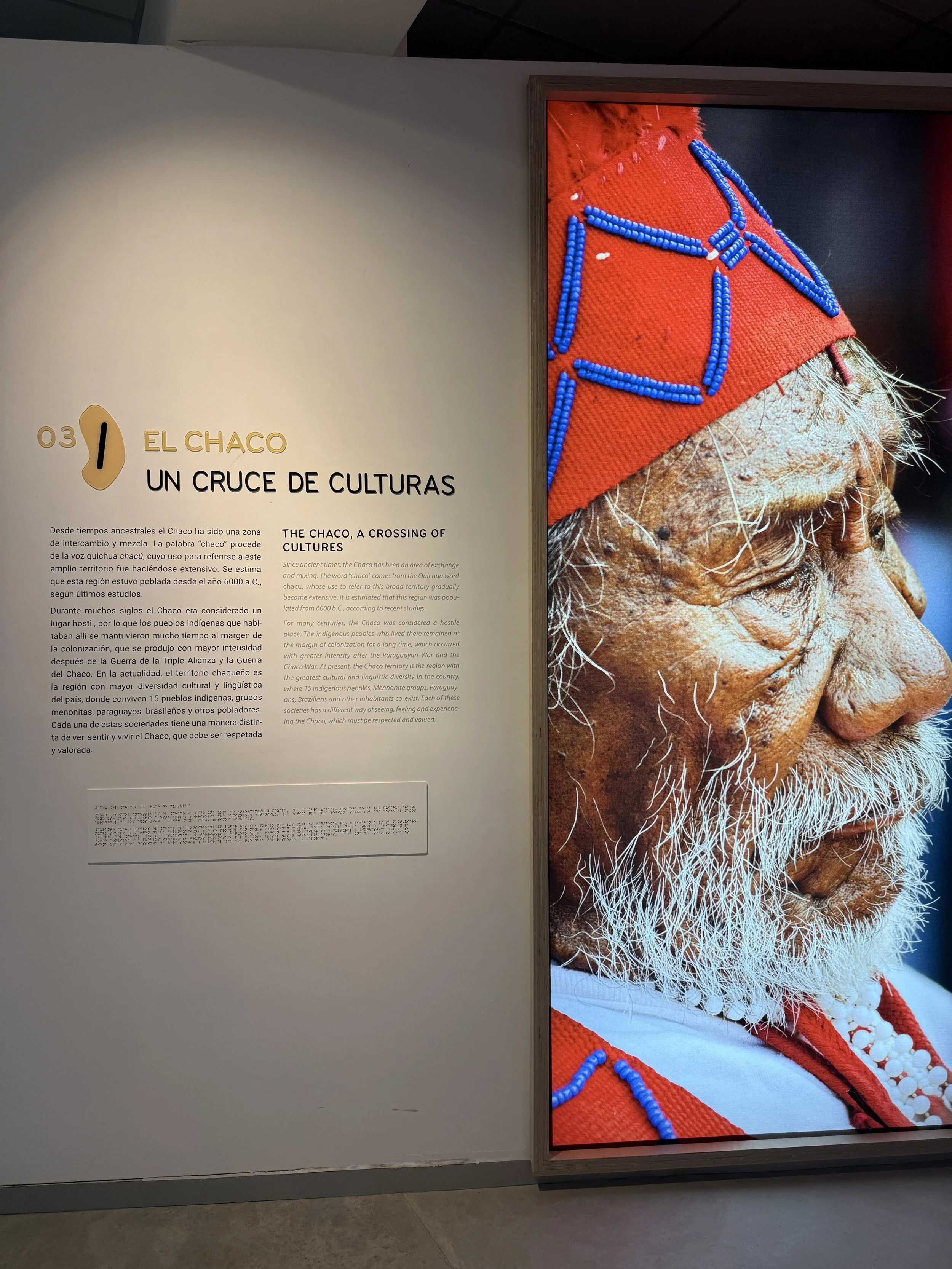
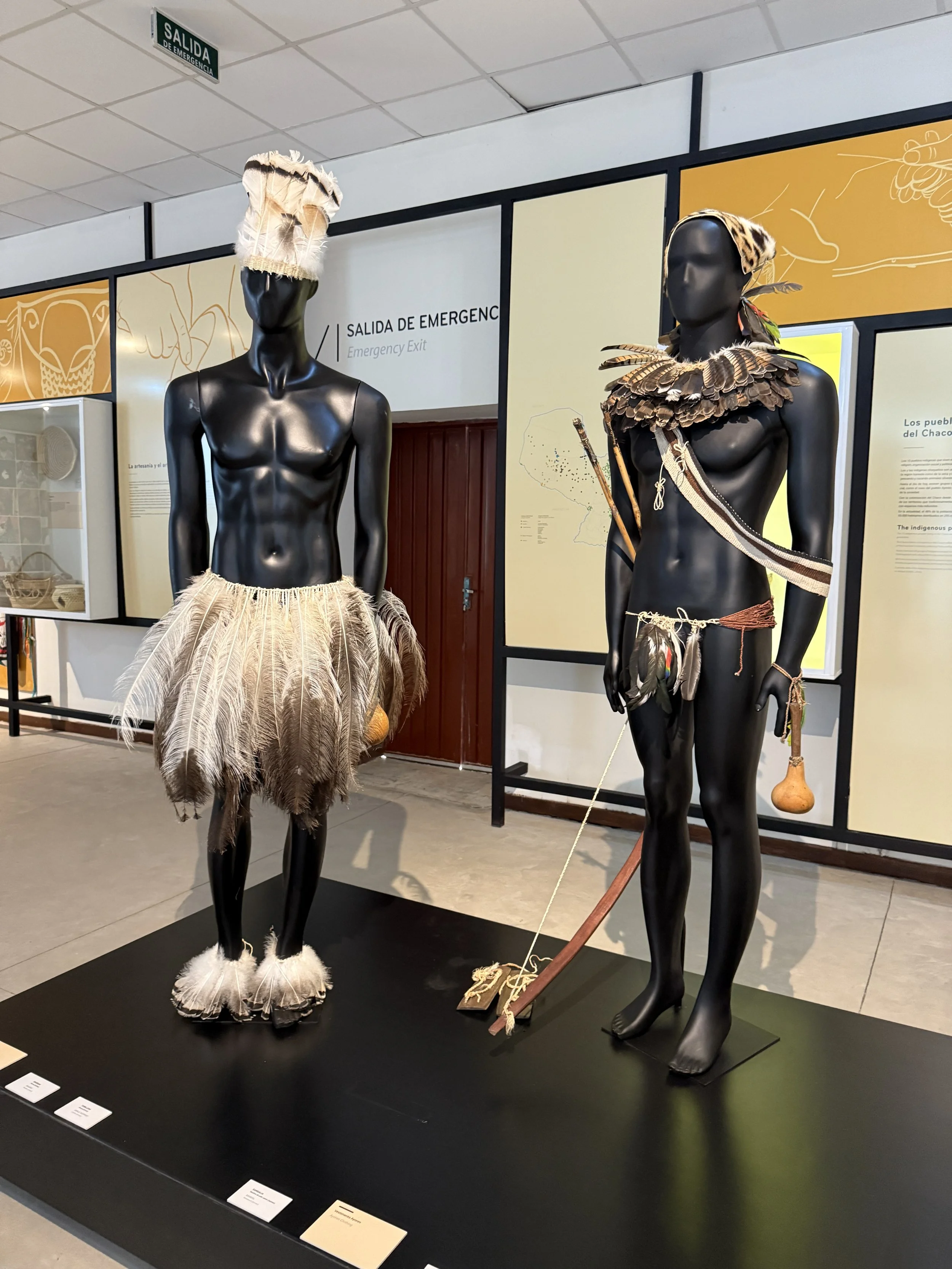
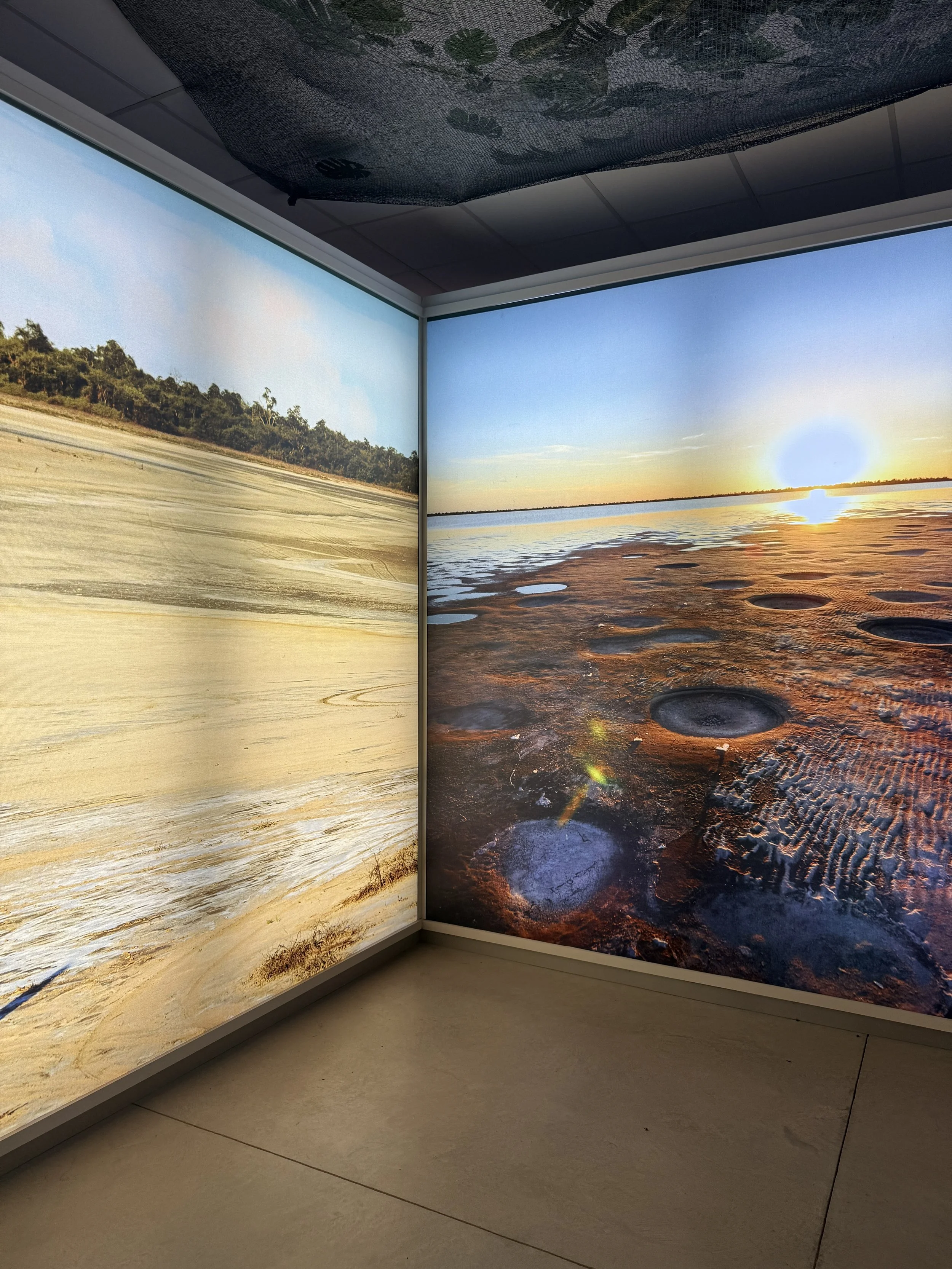
Around 20 minutes from the downtown area is the Interpretation Center of the Chaco. This is run by the Paraguayan government and discusses the nature and people of the Paraguayan Chaco. The center doesn’t recieve too many visitors as based on the guide log book we signed, but it was certainly worth visiting.
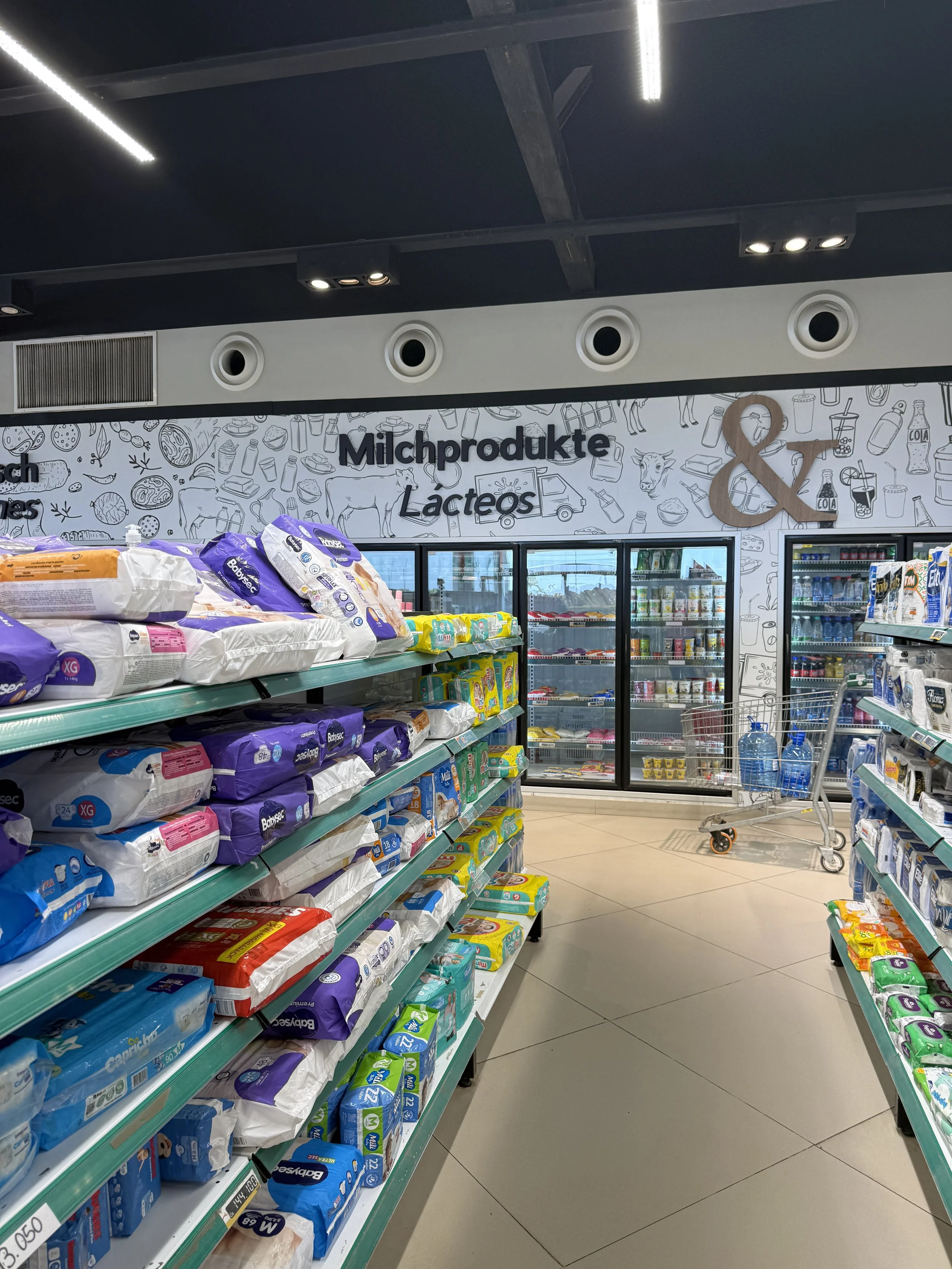
Afterwards, we drove in the direction of Loma Plata, a city where many of the Mennonites came to Paraguay via Canada. We did not spend much time in the town due to time, so it is a place I will definitely return to. We stopped a gas station there also, and many of the signs had German as the primary language.
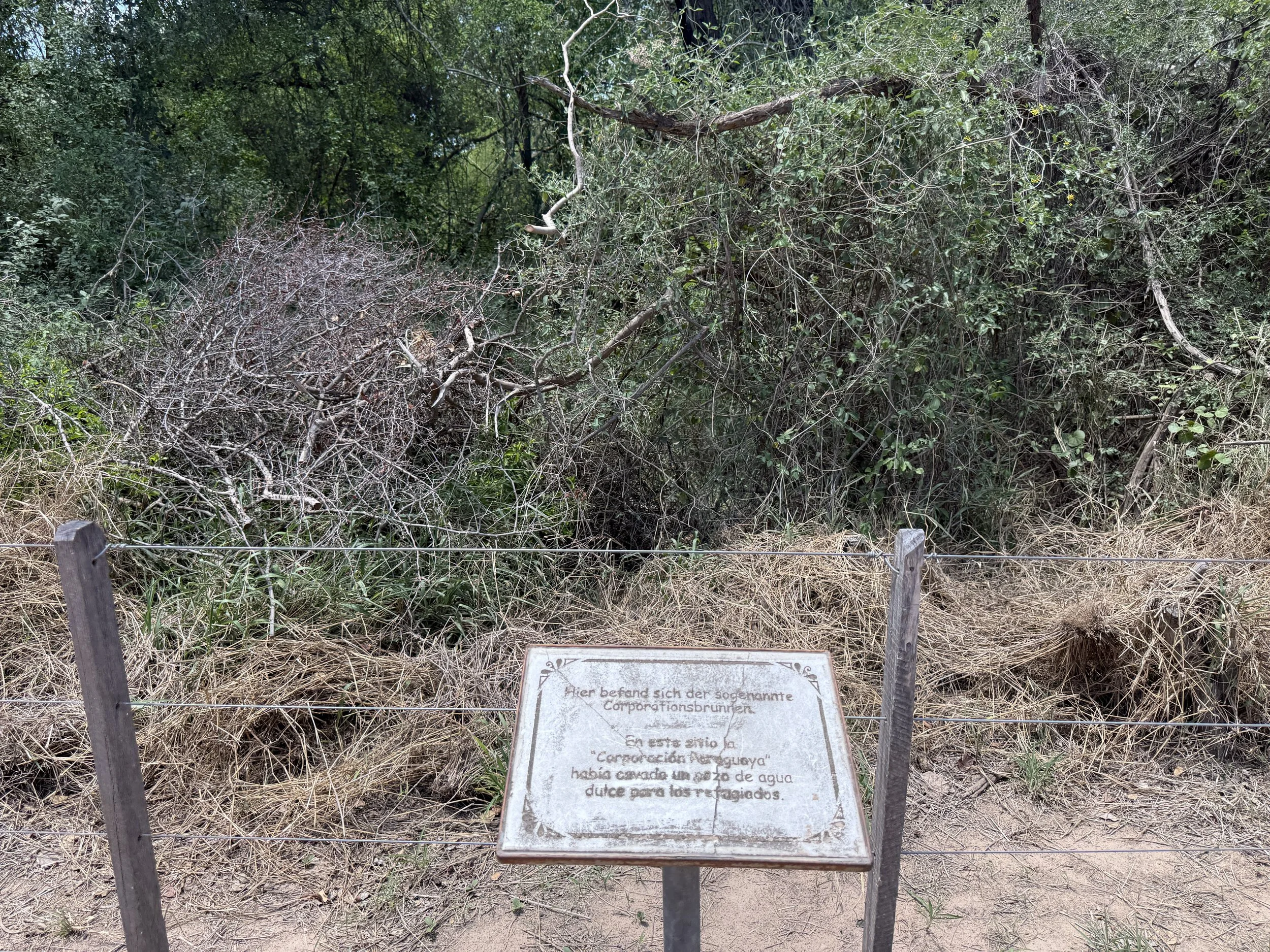
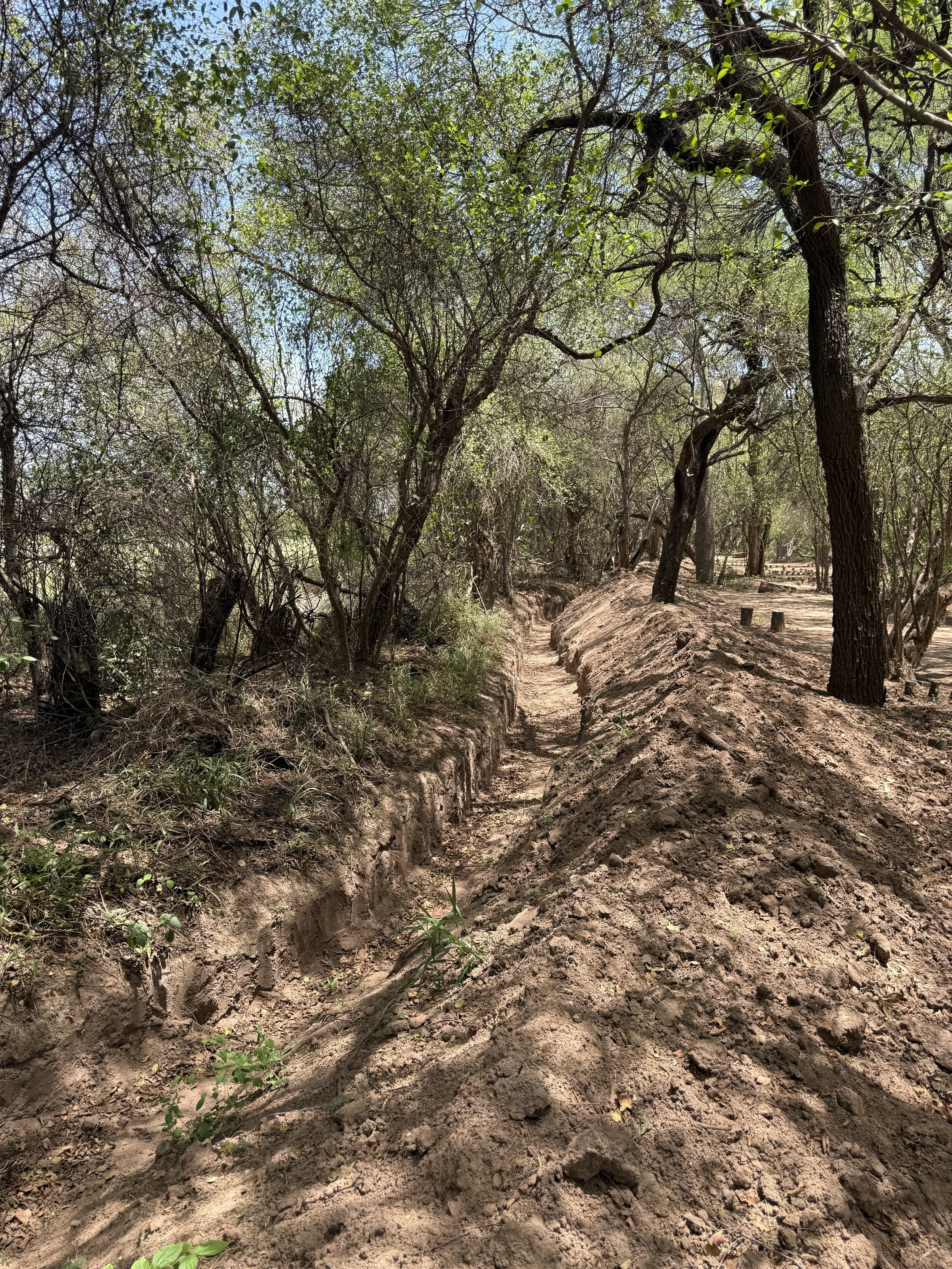
Then, we headed to Fortín Trébol from the War of the Chaco. It is also the site where the Colony Fernheim was formed and some of the first camps of these Mennonites was located.

Soon enough, we headed back down on the road back down to Asuncion. I was very happy to have made this trip, despite the short timeframe. I don’t think it will be my last time to the Paraguayan Chaco. My end goal is to visit the heart of the Paraguayan Pantanal in the area of Bahia Negra.